| |
|
|
|
|
The value of independent evaluation: Shaping Africa's development future through evidence
By Karen Rot-Münstermann, Evaluator General, Independent Development Evaluation (IDEV), African Development Bank
|
|
Across Africa, substantial progress has been made in generating knowledge, measuring results, and strengthening evaluation systems. At the same time, the continent faces increasingly complex development challenges, ranging from fiscal constraints and climate risks to fragility and demographic transitions.Governments, development institutions, and civil society organisations are under growing pressure to deliver tangible
|
|
|
|
improvements
in welfare in the most efficient way possible. In such an environment, ensuring
that credible evidence informs policy, guides investment choices, and
strengthens institutional performance is key.
This notion is critical not only
for us at the African Development Bank (AfDB), but also for governments and
institutions across Africa. We recognise that achieving lasting development
results requires resources, learning, and accountability. While financial,
human, and natural capital can support development interventions, evidence
helps ensure that those interventions are targeted, effective, and responsive
to changing realities.
This is where independent
evaluation plays an essential role.
Credible, transparent, and
impartial evaluation evidence supports both accountability and learning. It
provides trusted assessments that strengthen accountability while helping
decision-makers draw lessons from experience and improve future performance.
Its value lies not only in examining what has been achieved and why, but also
in informing how future development challenges should be addressed.
What distinguishes independent
evaluation at its best is its ability to influence policy- and decision-making.
For instance, IDEV evaluations have informed discussions on the evolution of
the Bank's strategic priorities, helped identify where development
interventions achieve the greatest impact, strengthened quality assurance, and
contributed lessons on institutional effectiveness. The Bank's work in fragile
and transition settings offers a particular example of how evidence can
translate into action. IDEV's independent evaluations underlined the importance
of adaptability, long-term engagement, prevention, and partnerships in
addressing the multidimensional drivers of fragility and building resilience in
Africa’s institutions, programme and policy interventions. They confirmed the
relevance of differentiated approaches for countries facing fragility while
identifying important lessons on selectivity, institutional responsiveness, and
partnership building. These findings and lessons were subsequently taken up in
the next AfDB Strategy for Addressing Fragility and Building Resilience in
Africa. Such efforts reflect the Bank’s broader commitment to supporting
sustainable economic development and social progress on the continent in the
most effective and efficient way possible.
Evaluation evidence also remains
central to the Bank’s emphasis on strengthening Africa's financial architecture
and mobilising its domestic capital to support the continent’s development.
Achieving this ambition will require not only innovative financing mechanisms,
but also confidence in institutions, effective governance, and evidence-based
policymaking. Governments, investors, and development partners must have
confidence that investments, programmes, and policy reforms are delivering their
intended results. Credible evaluation evidence helps provide the reassurance
required by informing decisions, strengthening accountability, and identifying
opportunities to maximise development impact.
Beyond the Bank, independent
evaluation evidence can strengthen programme design, operational effectiveness,
governance, portfolio quality, and results management. In a period of growing
fiscal pressure and competing development priorities, governments and institutions
can no longer afford to make decisions that are not rooted in evidence. Equally
important is the collaboration with parliamentarians, universities, regional
institutions, and evaluation communities. Strengthening evaluation capacity and
promoting a culture of evidence use across Africa are essential for delivering
better development results. The growing engagement of evaluation practitioners
across the continent reflects a broader movement towards learning,
accountability, and evidence-informed policymaking, demonstrating the
increasing maturity of Africa’s evaluation ecosystem. Collaborative initiatives
and networks such as the African Evaluation Association (AfrEA), Twende Mbele, the
Evaluation Platform for Regional Development Institutions (EPRADI), and the African
Parliamentarians’ Network on Development Evaluation (APNODE) are leading
examples of this growing ecosystem.
Against this backdrop, as Africa’s
evaluation community prepares to gather in Marrakech for the 12th AfrEA
International Conference in November, perhaps it is time to challenge ourselves
and ask: how can we make evidence move beyond reports to influence the
decisions that shape Africa’s development future?
For the AfDB, this remains the
enduring value of independent evaluation. And on a continent where development
ambitions continue to grow, evidence must become a strategic resource. Africa’s
future and development effectiveness will be shaped not only by the capital it
mobilises, but by the evidence it chooses to use in policy and investment
decisions.
|
|
|
|
|
|
Registration Now Open for the 12th AfrEA International Conference |
|
|
|
Registration is now open for the 12th AfrEA International Conference, taking place in Marrakech, Morocco, from 23 to 27 November 2026, under the theme "Evaluation in the Era of Polycrisis: The Role of Evaluation in Supporting Africa's Sovereignty and Resilience in the Face of Global Disruptions."
The conference website is now live with everything you need in one place: registration, invitation letters, the concept note, and the logistics note.
We encourage all members to visit the conference website, review the logistics note for full details on travel, accommodation, and what to expect in Marrakech, and complete their registration at their earliest convenience.
Visit the conference website here: https://afrea.org/conf2026/ Register for the Conference here: https://afrea.org/reg-info-12th-afrea-international-conference/
We look forward to welcoming you to Marrakech this November.
|
|
|
|
|
|
The African Evaluation Association (AfrEA) invites evaluators, researchers, institutions, VOPEs, and organisations across Africa and beyond to join our growing continental community. Membership offers discounted registration for AfrEA conferences, access to the African Evaluation Journal, membership of the Young and Emerging Evaluators (YEE) Network, subscription to AfrEA Insights, invitations to webinars and capacity-building events, contribute to AfrEA Governance, and a platform within the Made in Africa Evaluation community. Register to become a member
|
|
|
|
|
|
|
|
Promoting Evaluation and Use of Evidence
for African Countries and Continental Priorities
|
|
|
|
French Edition of the Made in Africa Evaluation Handbook Launched |
|
|
|
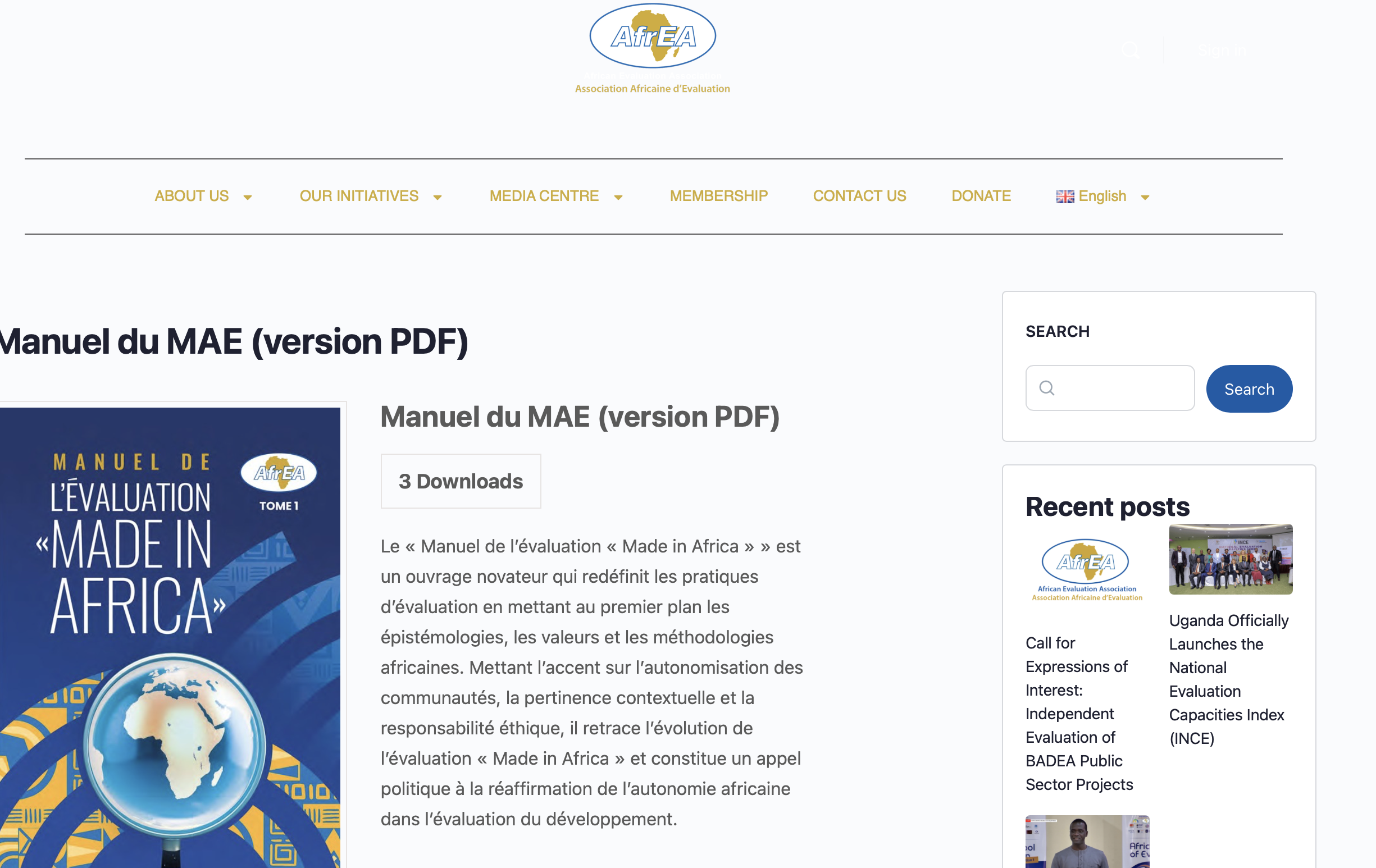
AfrEA marked a significant milestone on 24 September 2026 with the launch of the French edition of The Handbook on Made in Africa Evaluation, Volume 1, during a dedicated webinar. First published in English in 2025, the Handbook brings together concepts, theories, and scholarship on evaluation grounded in African realities. The French edition extends access to this important resource for AfrEA's Francophone community of evaluators, researchers, and practitioners across the continent. The launch was formally declared by Dr Abdrahamane Dicko, Director of Programs and Impact at the African Capacity Building Foundation (ACBF), on behalf of AfrEA and ACBF, and featured a distinguished panel, including several of the Handbook's editors. The French edition is now available for download
|
|
|
|
AfrEA Launches the YEE Hub |
|
|
|
AfrEA has officially launched the YEE Hub, a dedicated newsletter for its Young and Emerging Evaluators (YEE) network, made possible with the support of the Mastercard Foundation.
The YEE Hub spotlights the voices, achievements, and opportunities shaping the next generation of African evaluators, featuring member profiles, career and funding opportunities, event updates, and reflections from young evaluators across the continent.
The launch was marked by a dedicated webinar featuring both YEE leaders, representing the Anglophone and Francophone sides of the network, with the YEE Hub now hosted on the AfrEA website for members to read and download. Read the YEE Hub here
|
|
|
|
|
|
AfrEA Joins Rwanda's Validation of the National M&E Landscape Assessment and Evaluation Week 2026 Findings
|
|
|
|
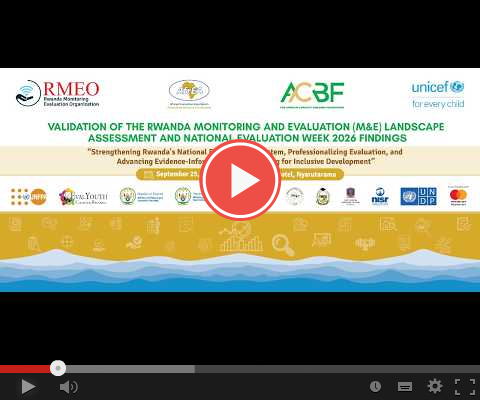
AfrEA was invited to participate in the Validation of the Rwanda Monitoring and Evaluation (M&E) Landscape Assessment and National Evaluation Week 2026 Findings, convened by the Rwanda Monitoring and Evaluation Organization (RMEO) in partnership with UNICEF Rwanda, which took place on 25 September 2026 at Gorillas Hotel, Kigali. The event brought together the findings of Rwanda's M&E Landscape Assessment with lessons emerging from the National Evaluation Week 2026, which placed particular focus on the perspectives of Young and Emerging Evaluators. Government representatives, development partners, academia, civil society, and the wider evaluation community gathered to validate key findings, identify priority actions, and agree on practical next steps to strengthen Rwanda's national evaluation ecosystem and advance the professionalisation of evaluation in the country. Watch the Program on YouTube using the link below.
Learn More |
|
|
|
CLEAR-AA Concludes Partner Visit and Regional Convening
|
|
|
|
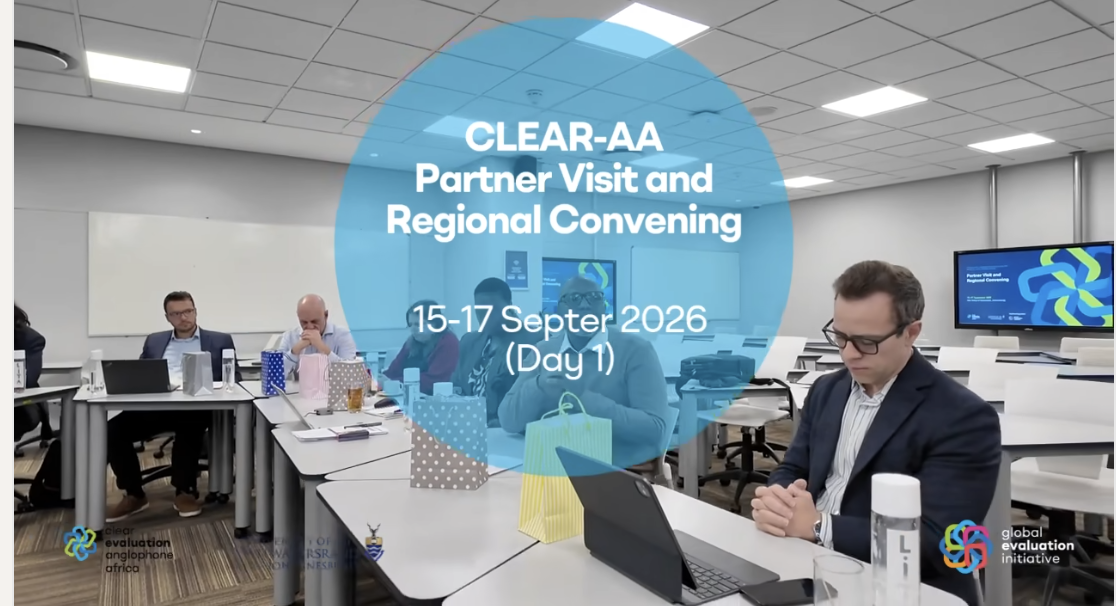
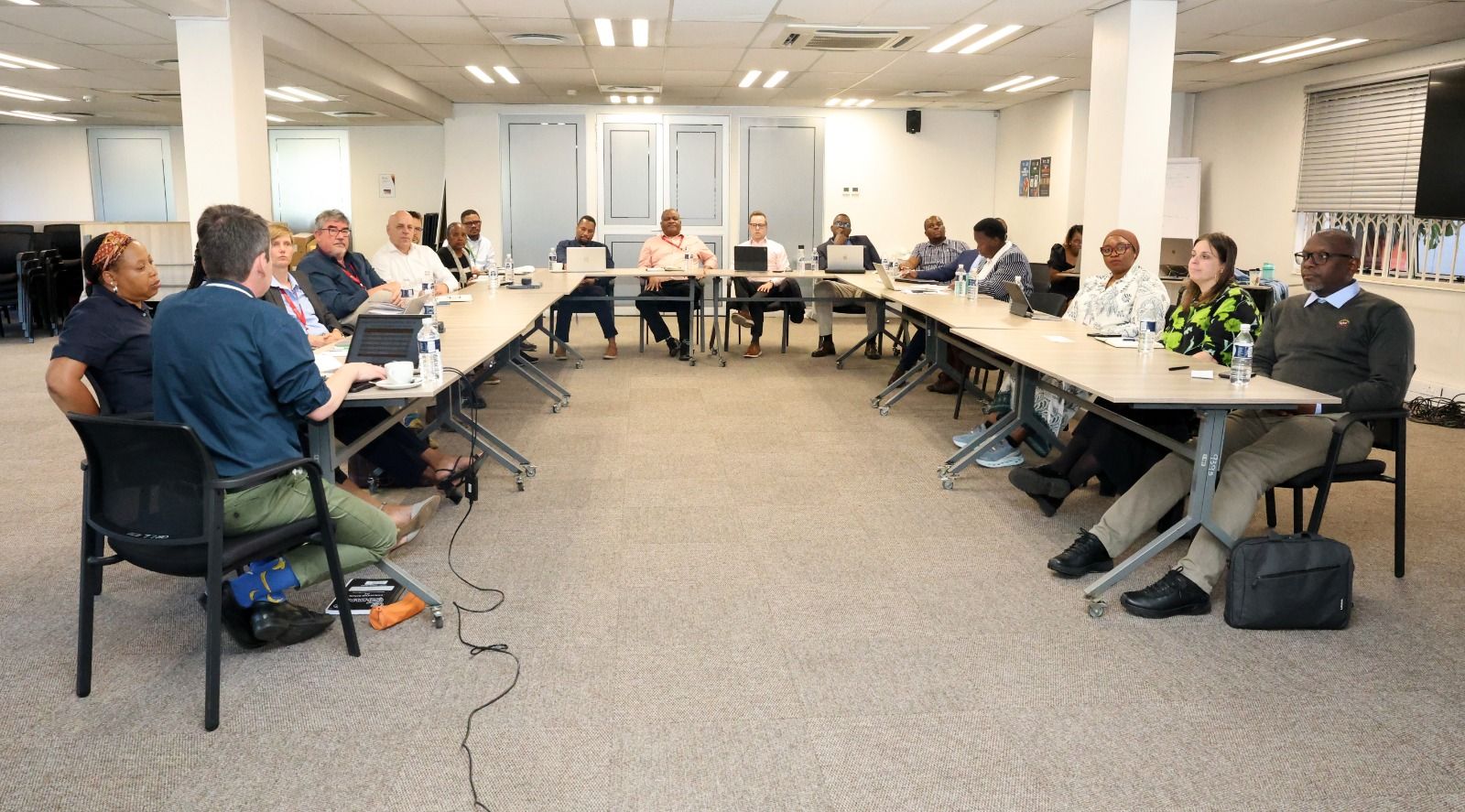
CLEAR-AA has concluded its three-day Partner Visit and Regional Convening, hosted at the University of the Witwatersrand, bringing together rich discussions, country experiences, shared learning, and ideas for taking the conversations forward.
Day one focused on placing CLEAR-AA's strategy, results, and learning in context, while creating space for partners to share their perspectives on strengthening evaluation systems and capacity across the region. |
|
|
|
Across the three days, discussions explored the intersection of good governance, monitoring, evaluation and learning (MEL), evaluation capacity development, and evidence-informed decision-making, while highlighting CLEAR-AA's contribution and the lessons emerging from its work.
Read More |
|
|
|
5th Tanzania MEL Conference 2026 |
|
|
|
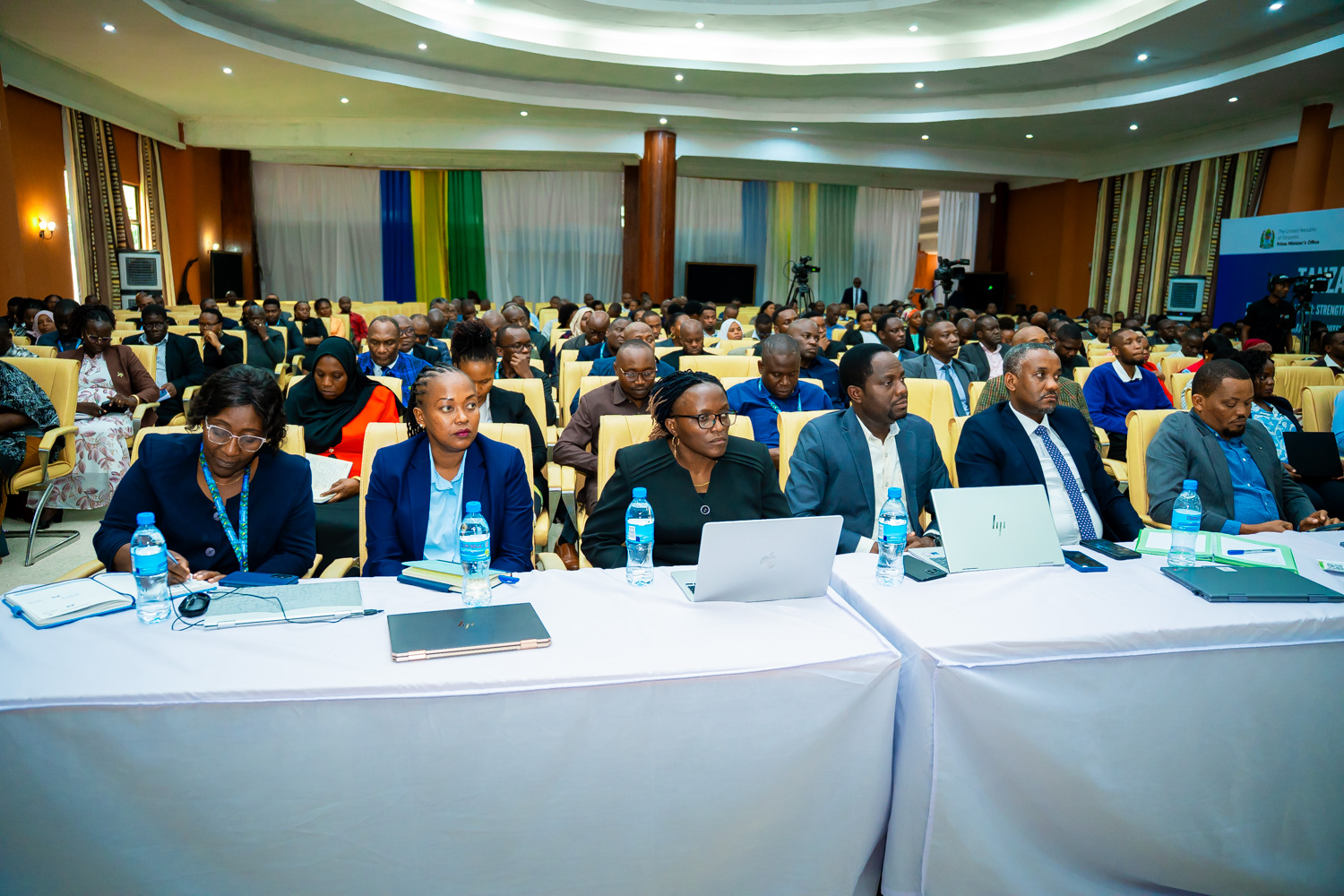
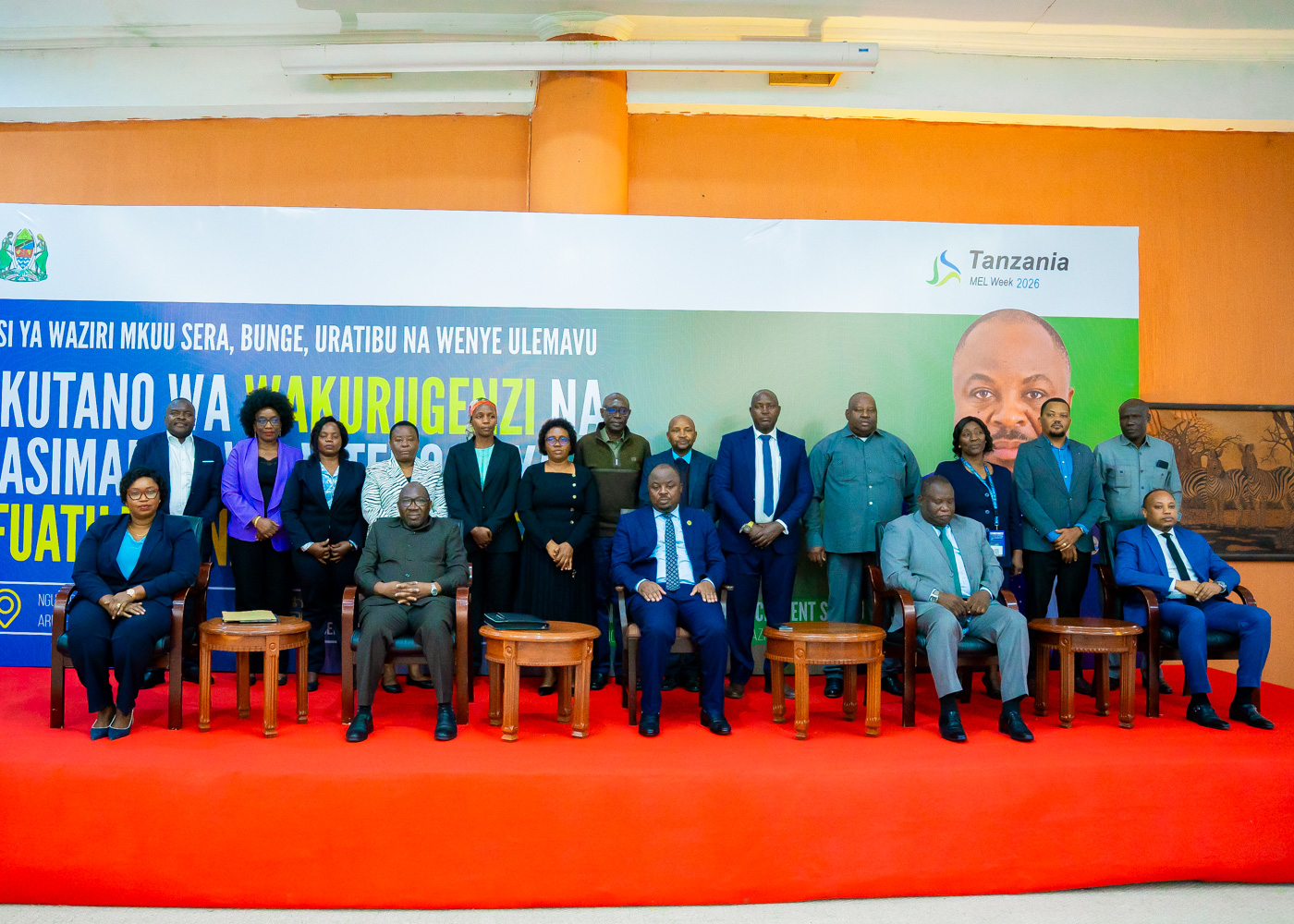
The 5th Tanzania MEL Conference 2026 took place from 22 to 26 September 2026 at Ngurdoto Mountain Lodge, Arusha, under the theme "From Evidence to Action: Strengthening Human-Centred Evaluation for Sustainable Development."
The conference brought together decision-makers, evaluators, researchers, and development practitioners, alongside partner organisations, development partners, academic institutions, the private sector, and civil society, who collaborated to make the event a success and to strengthen professional networks and strategic partnerships across the region.
For more information, visit: https://lnkd.in/dYNn8nXB |
|
|
|
Zimbabwe's MEL Week 2026: Charting the Way Forward for the Country's Evaluation Ecosystem |
|
|
|
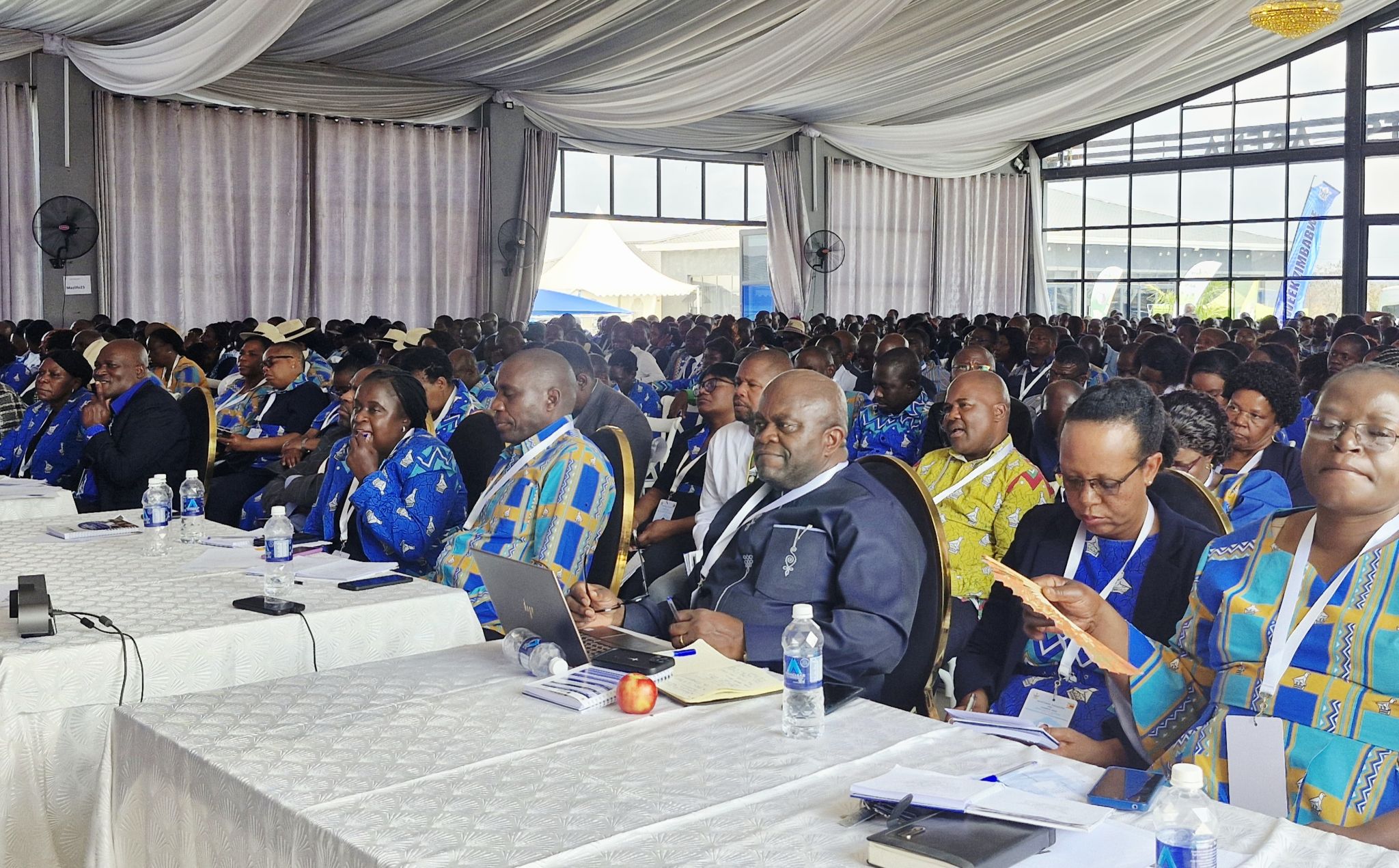
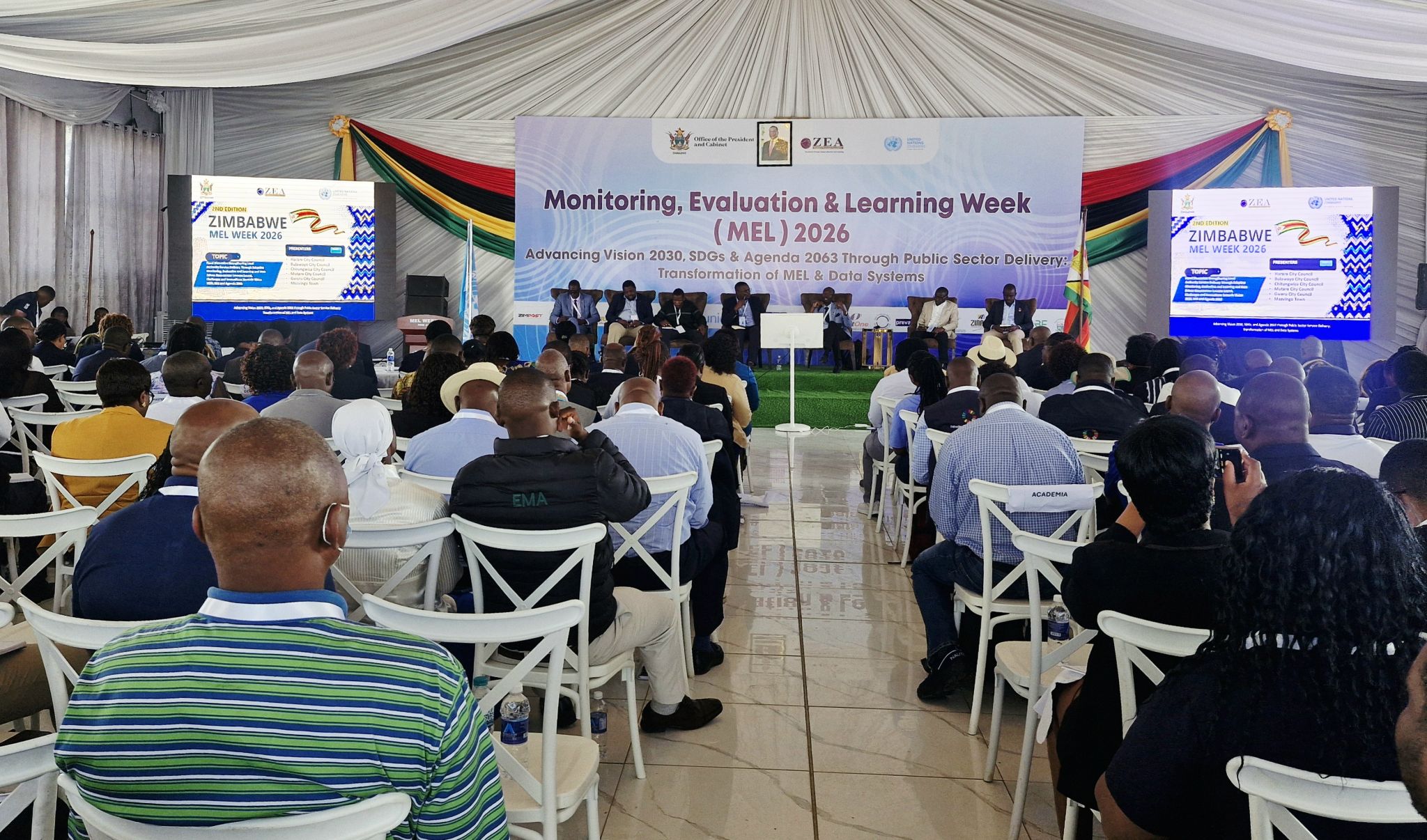
AfrEA is pleased to share an update from the Zimbabwe Evaluation Association (ZEA) on MEL Week 2026, held recently in Masvingo.
Convened under the theme "Advancing Vision 2030, SDGs, and Agenda 2063 through Public Sector Service Delivery: Transformation of MEL and Data Systems," the week brought together evaluators, government, academia, civil society, and development partners for a working session on how Zimbabwe tracks its own progress, particularly as NDS2 (2026–2030) now guides the next chapter of national development across its 10 priority areas.
Read more here |
|
|
|
SOMES and EEVA Strengthen Bilateral Collaboration |
|
|
|
|
|
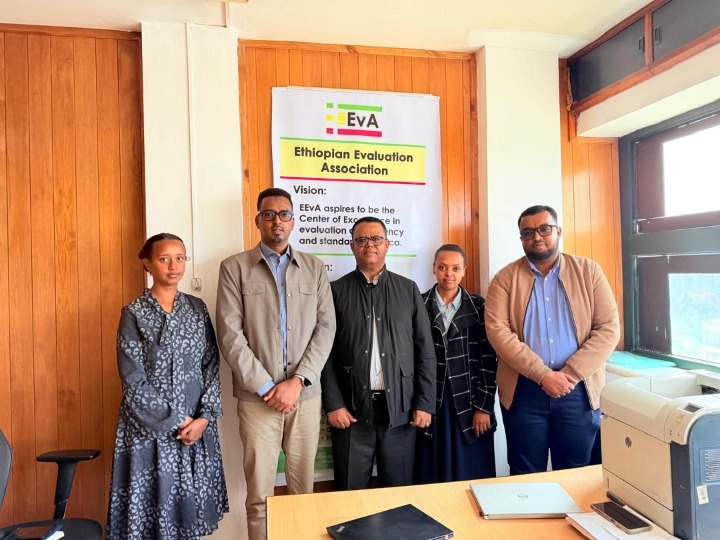
AfrEA is excited to see how its VOPEs are collaborating among themselves to strengthen evaluation practice across the continent. A delegation from the Somali Evaluation Society (SOMES), led by Secretary-General Dr Abduljalil Abdullahi Ali, paid an official visit to the office of the Ethiopian Evaluation Association (EEVA), where they met with EEVA President Mr Dereje Mamo Tsegaye and his team.
The discussions focused on strengthening collaboration between the two national evaluation societies through joint capacity-building, knowledge and experience sharing, professional networking, and regional evaluation initiatives.
Both societies reaffirmed their commitment to advancing evaluation standards, strengthening national evaluation systems, and promoting evidence-informed decision-making in Somalia, Ethiopia, and across the region.
Read More |
|
|
|
|
|
|
|
|
|
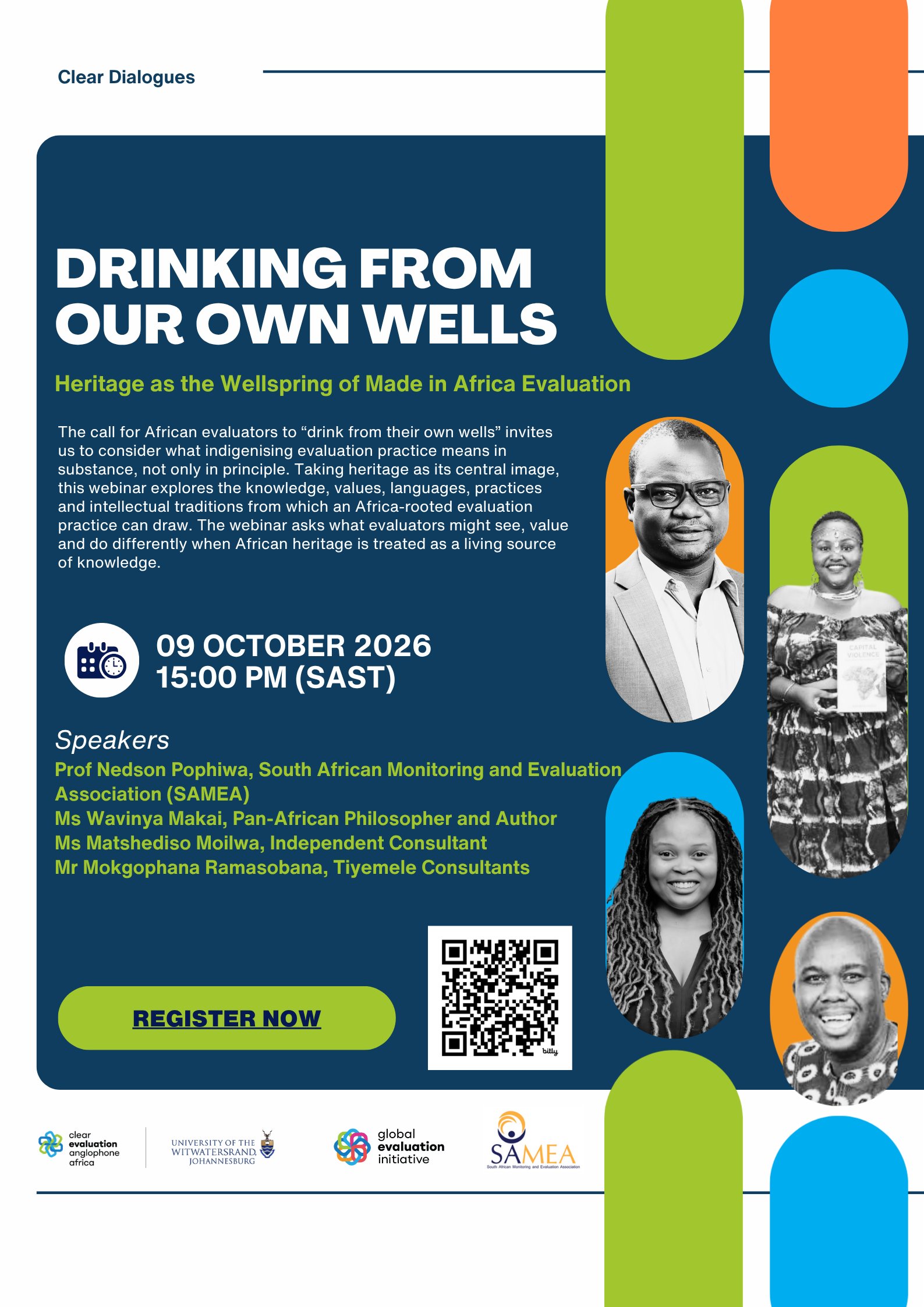
Join this thought-provoking conversation on what it means to indigenise evaluation practice in substance, not only in principle, and to consider what evaluators might see, value and do differently when African heritage is treated as a living source of knowledge.
📅 09 October 2026 ⏰ 15:00pm SAST Regster here |
|
|
|
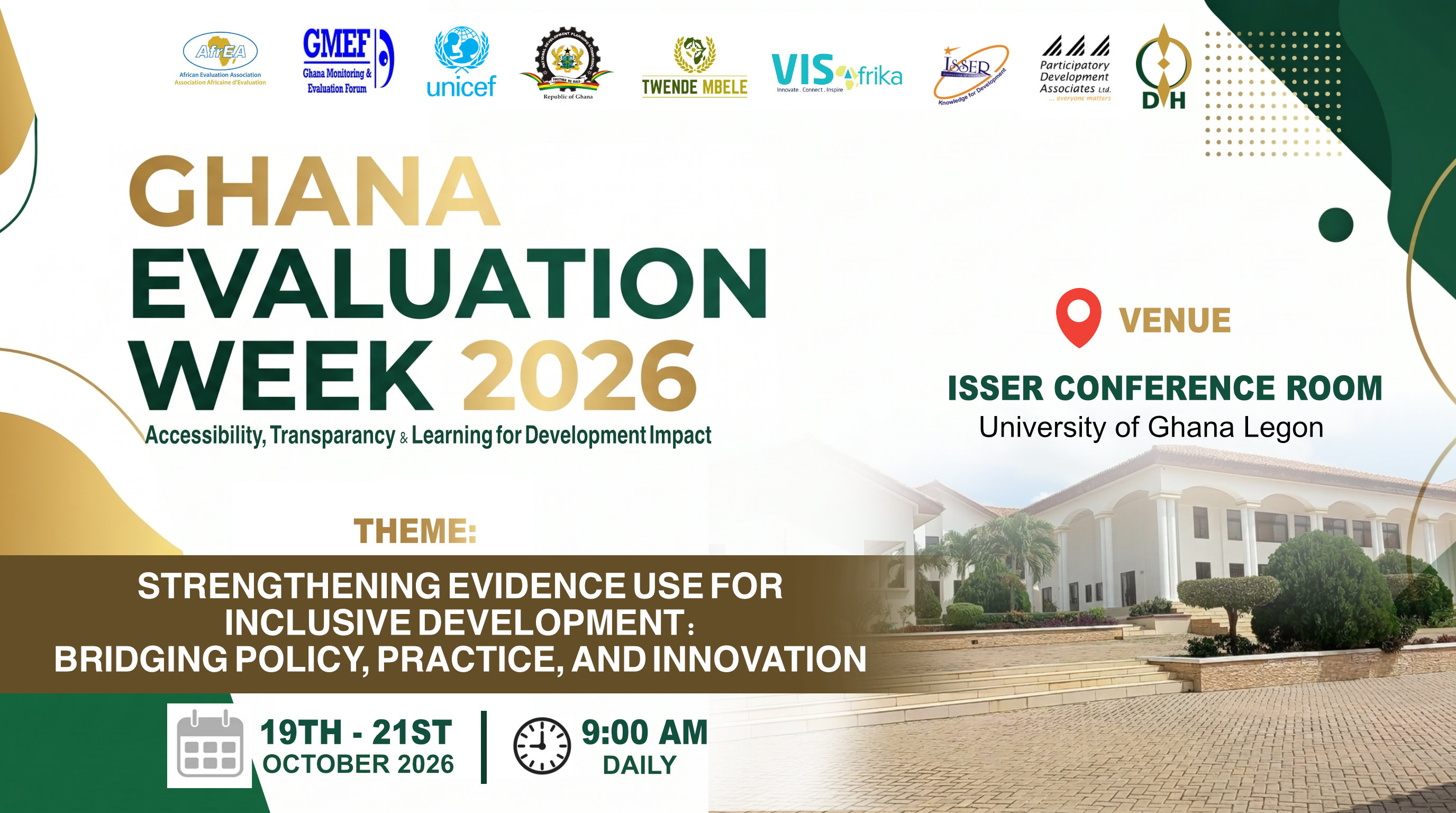
Ghana Evaluation Week 2026
|
|
|
|
Mark your calendars for Ghana Evaluation Week 2026, taking place from 19 to 21 October 2026, daily from 9:00 AM, at the ISSER Auditorium, University of Ghana, Accra.
The week will bring together evaluators, policymakers, researchers, and development practitioners to explore how evaluation evidence can be strengthened to inform policy, improve programmes, and support inclusive development in Ghana, alongside opportunities for dialogue and professional networking.
All are invited to attend.
Learn More |
|
|
|
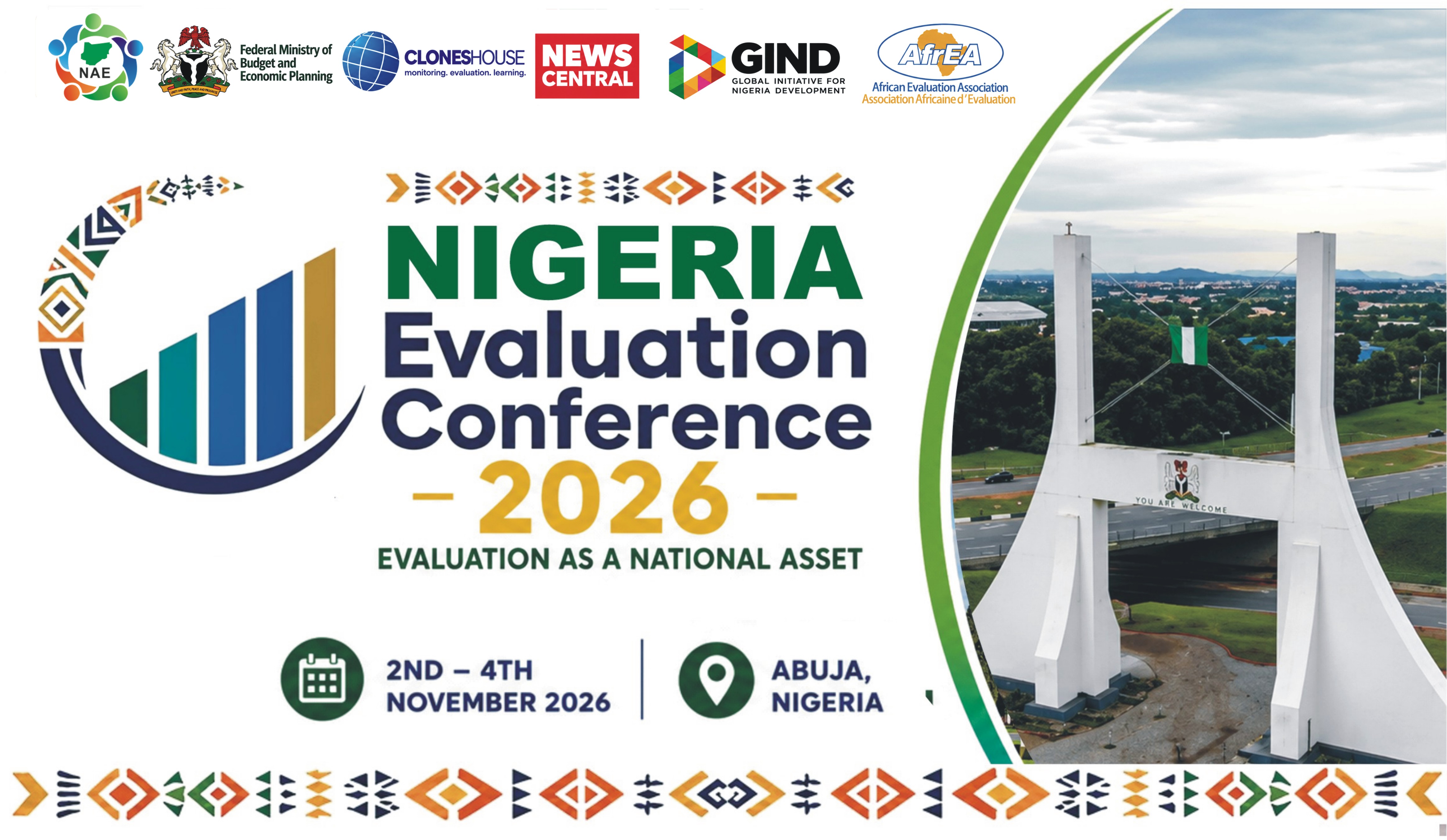
Registration Now Open: Nigeria Evaluation Conference (NAE 2026) |
|
|
|
The Nigerian Association of Evaluators (NAE) is pleased to announce that registration is now open for the Nigeria Evaluation Conference (NAE 2026).
The conference will take place in Abuja, Nigeria, from 2 to 4 November 2026, under the theme "Evaluation as a National Asset." The conference will bring together evaluators, policymakers, researchers, development partners, academics, students, and practitioners from Nigeria and across the world to share knowledge, exchange ideas, and strengthen evaluation practice.
Members are encouraged to register early to benefit from the discounted rates and secure their place at Nigeria's premier evaluation conference.
For registration, abstract submission, and further conference updates, visit: www.nigeriaevaluators.org/conferences |
|
|
|
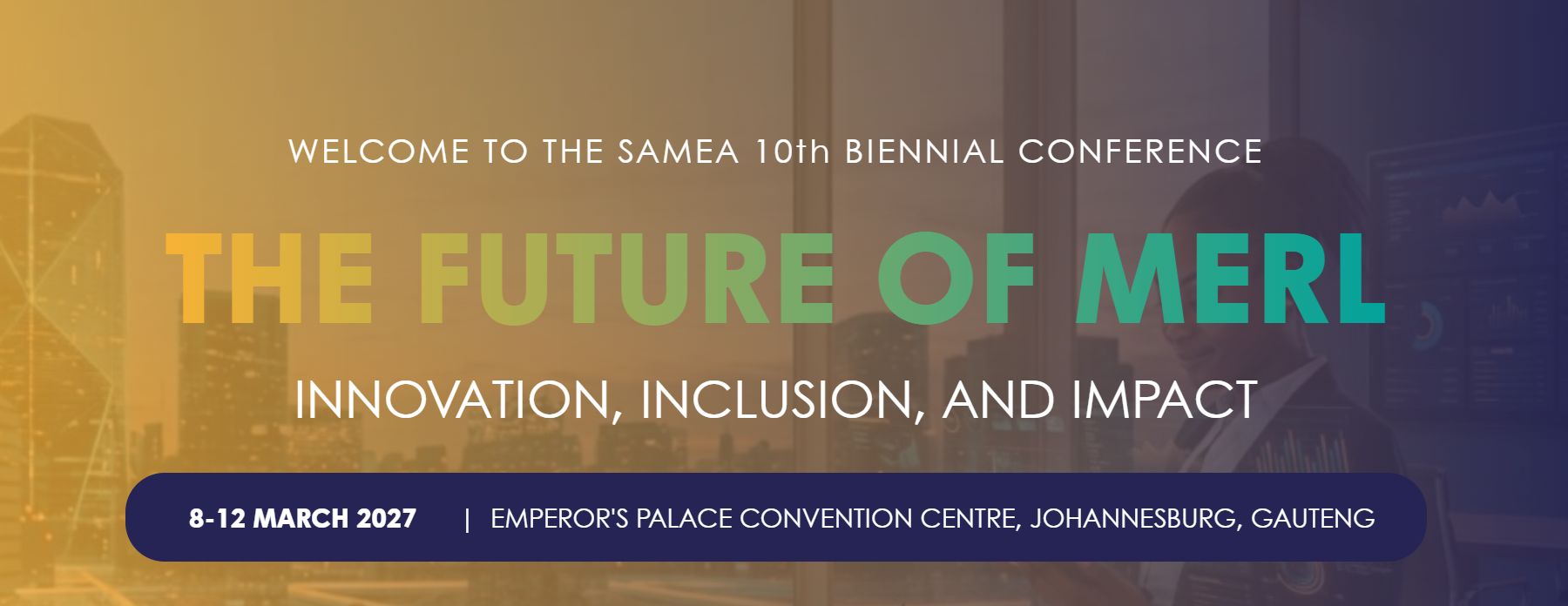
SAMEA 10th Biennial Conference 2027 |
|
|
|
Registration is open for the SAMEA 10th Biennial Conference, taking place from 8 to 12 March 2027 at the Emperors Palace Convention Centre in Johannesburg. Register early to save on conference fees.
Under the theme "The Future of MERL: Innovation, Inclusion, and Impact," the conference will bring together monitoring, evaluation, research and learning (MERL) professionals, policymakers, academics, and development practitioners from across Africa and beyond.
Review the Conference Prospectus for full pricing and details. Visit: sameaconference2027.co.za
Visit the conference website for registration information, abstract submission updates and everything you need to know.
|
|
|
|
|
|
|
|
|
|
Food and Agriculture Organization (FAO): Evaluation Officer | Rome, Italy.The Evaluation Officer will support evaluations of various programs and projects, assist in preparing evaluation reports, and contribute to the development of evaluation methodologies.
Speaks Chinese, Arabic, English, French, Russian, Spanish Ph.D. degree is highly desirable.
Application Deadline: October 5, 2026
Apply here |
|
|
|
|
|
|
|
|
|
|
|
|
|
|
|
|
|
September, 2026 African Evaluation Association (AfrEA) 36 Kofi Annan Avenue, North Legon, Accra, Ghana |
|
|
|
|
|
|



.png)
.png)

.jpeg)




.png)