
Description
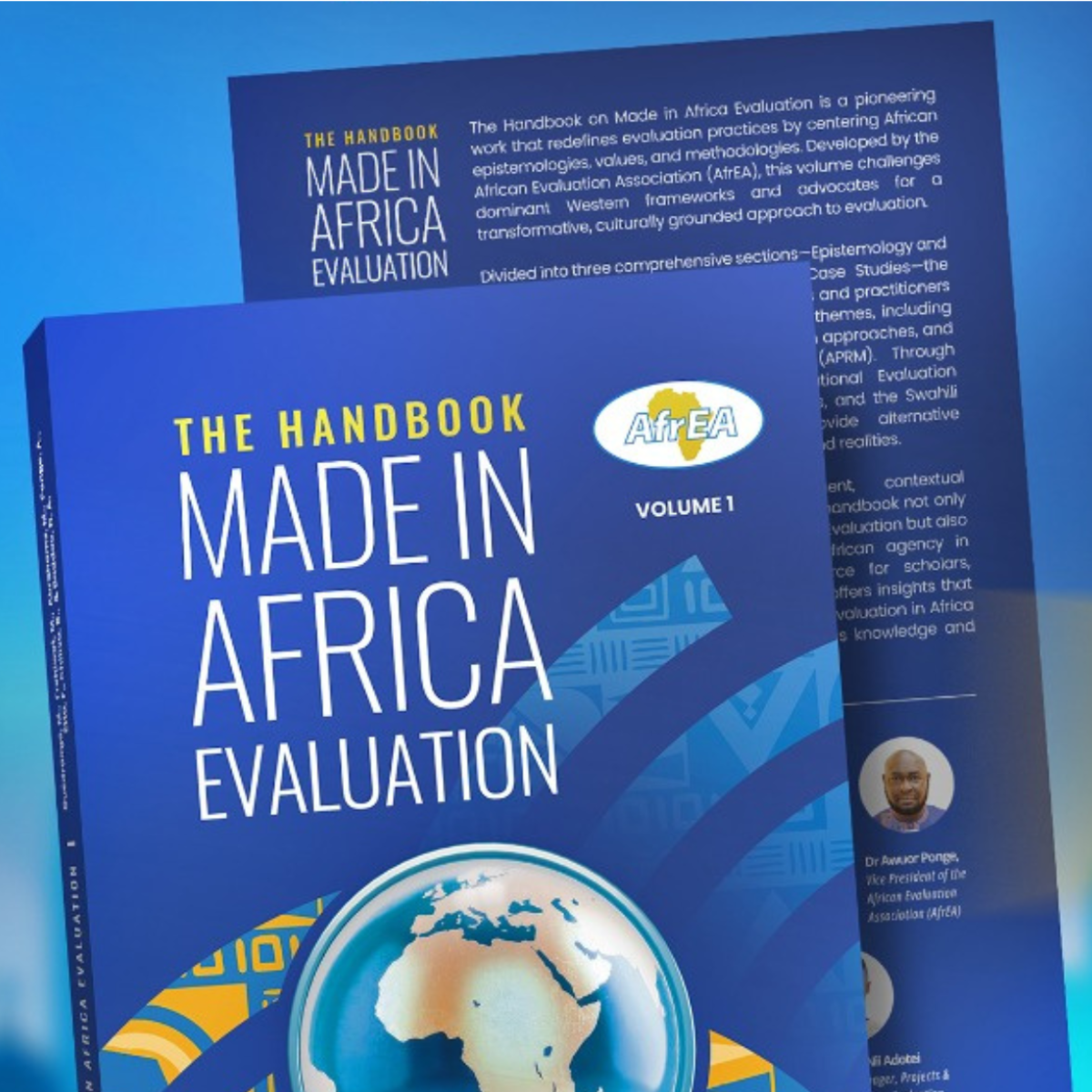
The Handbook on Made in Africa Evaluation is a pioneering work that redefines evaluation practices by centering African epistemologies, values, and methodologies. Developed by the African Evaluation Association (AfrEA), this volume challenges dominant Western frameworks and advocates for a transformative, culturally grounded approach to evaluation.
Divided into three comprehensive sections — Epistemology and Foundations, Theory and Methods, and Case Studies — the handbook brings together leading scholars and practitioners from across Africa. It explores a range of themes, including epistemic injustice, participatory evaluation approaches, the African Peer Review Mechanism (APRM), Indigenous Knowledge Systems, the Swahili Evaluation Approach, and the African Relational Evaluation Paradigm — providing alternative perspectives that reflect African contexts and realities.
Emphasizing community empowerment, contextual relevance, and ethical accountability, this handbook not only documents the evolution of Made in Africa Evaluation but also serves as a political call to reclaim African agency in development evaluation. A vital resource for scholars, policymakers, and practitioners, this work offers insights that bridge theory and practice, ensuring that evaluation in Africa remains authentically rooted in indigenous knowledge and transformative change.
