
AfrEA Defends Decolonization and Endogenization at the Journée Béninoise de l’Évaluation


The narrative of African evaluation took center stage as the African Evaluation Association (AfrEA) joined a pivotal convergence of practitioners, policymakers, and thought leaders for the Journée Béninoise de l’Évaluation (Benin Evaluation Days). Represented by Executive Director Carlos AKLIGO, AfrEA’s presence highlighted a critical juncture in the continent’s development sector: the shift from external validation to internal empowerment.
A Call for Endogenization
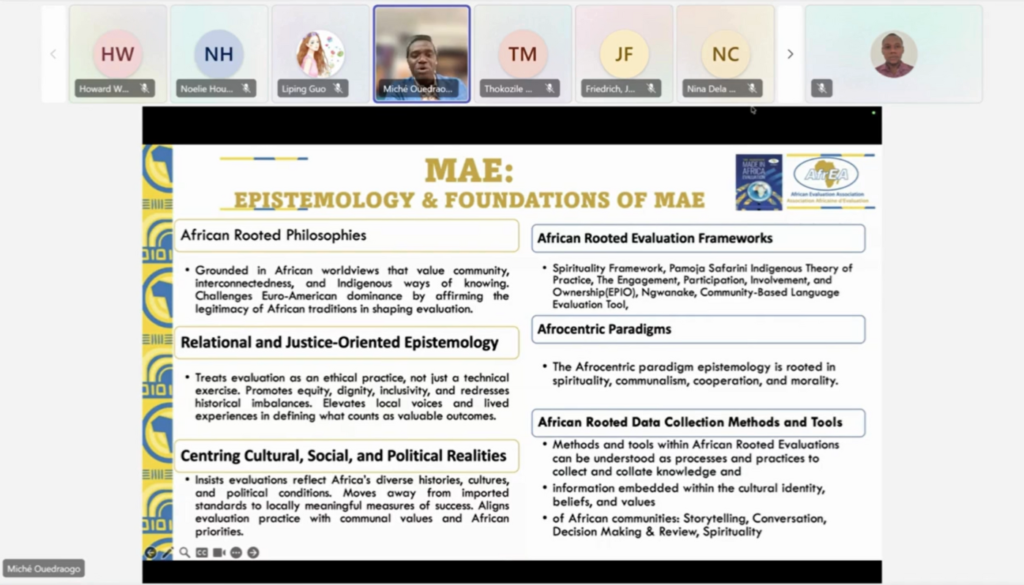
During his intervention, Mr. AKLIGO provided a comprehensive look at the practical application of evaluation within the African context. Moving beyond theoretical discourse, he shared specific case studies from AfrEA’s portfolio that demonstrate the “decolonization” of data.
The core of his message focused on the necessity of endogenization—the process of rooting evaluation practices in the local realities they intend to measure. Mr. AKLIGO detailed how AfrEA is operationalizing this through:
- Community-Led Learning Systems: Shifting the power dynamic so that communities are the primary generators of knowledge, rather than passive subjects of study.
- Culturally Grounded Methodologies: Adopting frameworks that recognize African traditions, languages, and social structures as legitimate and necessary metrics for success.
Strategic Implications
The discussions in Benin underscored a broader continental movement. By championing approaches that elevate local voices, AfrEA is working to ensure that evaluation becomes a tool for genuine ownership and relevance for African societies. The event reinforced the idea that how knowledge is valued is just as important as how it is collected.

Responses