

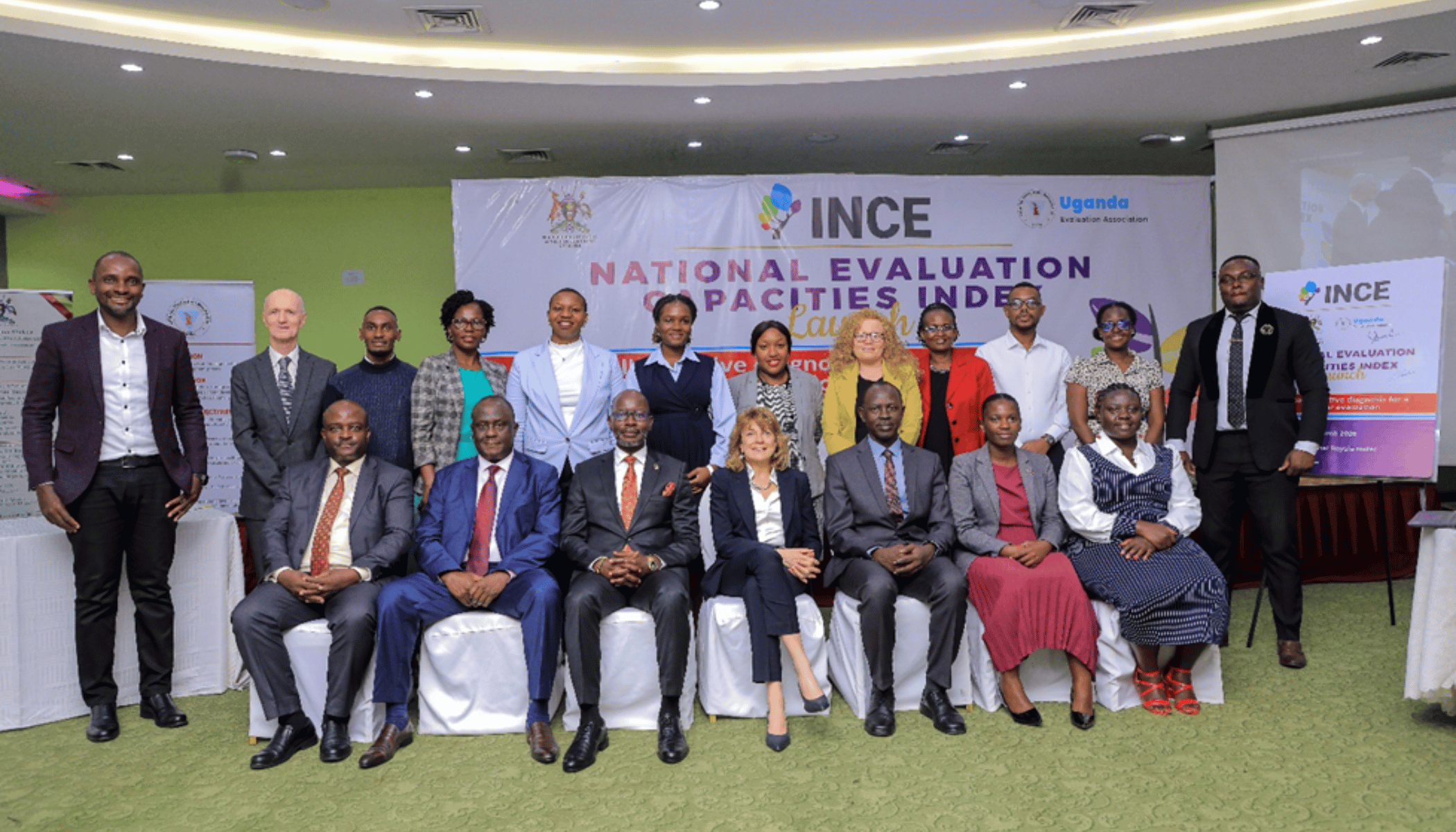
Uganda Officially Launches the National Evaluation Capacities Index (INCE)
Uganda has taken a bold step toward reinforcing its national development framework with the official launch of the National Evaluation Capacities Index (INCE) diagnostic. Following a successful inception period from November 2025 to March 2026, the launch event on March 25, 2026, marked the formal activation of a comprehensive assessment designed to move the country from anecdotal evaluation to data-driven systemic reform.
Moving Beyond Architecture to Impact
For over two decades, Uganda has built a robust evaluation architecture, including the National M&E Policy and the National Integrated Monitoring and Evaluation System (NIMES). However, the INCE diagnostic poses a critical question: Is this architecture functioning as a truly integrated system?
Current evidence suggests that while the foundations are in place, structural gaps remain. Evaluation mandates are often fragmented, financing is frequently project-dependent, and the utilization of findings for legislative and budgetary decisions remains ad hoc. The INCE process will provide the benchmarked evidence needed to address these weaknesses.
A Collaborative Effort
Uganda is participating in INCE Phase 2 alongside Côte d’Ivoire, Gabon, and Zimbabwe. The initiative is a collaborative powerhouse led by:
- The Office of the Prime Minister (OPM): Government Lead
- Uganda Evaluation Association (UEA): Ecosystem Mobilizer
- Partners: Supported by the African Evaluation Association (AfrEA), DEval, WFP, and ACBF under the CADAST project.
Road Map to Reform
With the inception phase complete—highlighted by stakeholder mobilization and institutional buy-in—the project now enters its most critical stages:
- April 2026: Intensive data collection phase.
- May 2026: National Validation Workshop, aligned with Uganda Evaluation Week.
- September 2026: Final publication of the Uganda National Evaluation Capacities Assessment Report.
The INCE is a commitment to ensuring that public decisions are shaped by evidence and that every investment in evaluation drives real accountability for Ugandan citizens.