| |
|
|
|
|
Evaluation as Africa’s Own: A Reflection for Our Times |
|
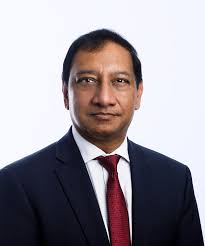
By Dr Indran A. Naidoo, Director, Independent Office of Evaluation,
International Fund for Agricultural Development (IFAD), Rome; former Director,
Independent Evaluation Office, United Nations Development Programme (UNDP), New
York.
|
|
Every profession reaches a defining moment when it must ask not only what it has achieved, but what the times demand of it. For evaluation, that moment is now. In a world marked by climate change, economic uncertainty, health emergencies, conflict, inequality, and shifting geopolitics, evidence is not a luxury, logic is not an abstraction, and accountability is not merely procedural. They are conditions for justice, democracy, and human dignity. Yet information flows often distract from what matters most, while fact and reason are too frequently distorted.
|
|
|
|
This is precisely why evaluation matters.
At its best, it empowers people, strengthens democracy, deepens transparency, and makes accountability real. The field is now well developed across Africa. The 25th anniversary of the African Evaluation Association (AfrEA) showed that the continent stands
confident in its expertise, rooted in deep experience and hard-won
wisdom. This journal seeks to tell those stories of courage, learning, and possibility, and I am honoured to write this editorial as one who has witnessed AfrEA’s growth since its inception.
Over the past three decades, I have watched evaluation evolve
across the continent and have been privileged to contribute to many of its iterations.
The first Monitoring and Evaluation Department at South Africa’s National
Department of Land Affairs, established in 1995 during the post-apartheid democratic transition, shaped my
understanding of M&E when it was still nascent in Africa. Its role
was to track land reform, intended to redress
the legacies of
colonialism, apartheid, and racially skewed ownership patterns. It brought previously
censored information to the surface and made visible
the socio-political realities surrounding land
reform. Evaluation gave
evidence a public role and opened space for scrutiny in a young democracy. Later, at the Public Service Commission, I helped develop systems that created
conversations about state performance and good governance. If evaluation is about the public good, integrity, citizen-centred
development, and corruption-free environments, then it must measure these ideals and report
where claims fall short. I carried
this African experience into my work at UNDP, where the evaluation programme was transformed to improve coverage and impact, and now at IFAD, where our focus is on how funds support government efforts to strengthen agriculture, particularly smallholder agriculture.
This journey has reinforced one conviction: while evaluation must
uphold independence, credibility, and
utility, it is never
detached from context or values. It is shaped by the questions we
ask, the voices we privilege, the evidence we recognise, and the purposes we
serve. We
must therefore
question narrow notions of objectivity and remain alert to paradigms, frameworks, and even
artificial intelligence systems that may not be locally relevant. This is why the Made
in Africa Evaluation movement matters.
From the
call in Niamey in 2007 to make evaluation our own, to the
scholarship and practice being consolidated today, African evaluators have been
reclaiming a fundamental right: to define what counts as evidence, whose voices
are heard, and what transformation truly means. Africa need not ask permission
to lead this thinking. Its intellectual depth, indigenous knowledge systems, practitioner networks, lived experience, scholarship, and courage
are already here. I have long believed that independence and
engagement are not opposites, but forms of dynamic coexistence. An evaluation function must be free enough to
speak the truth and close enough to
be useful. African institutions, often
grounded in communities, are well placed to translate this
balance into meaningful change.
To the
young and emerging evaluators who give our community so much of its energy, I
offer this with conviction:
you are not inheriting a finished discipline; you are
shaping one. You are not merely
applying tools; you are helping define the questions that matter. Your task is to use borrowed frameworks critically and build
approaches that reflect African realities, leave no one behind, and treat
evaluation as an act of accountability and hope.
So, as we open
this edition of AfrEA Insight, I do so with optimism and responsibility. Evaluation
in Africa is progressive, growing, and transformational.
|
|
|
|
|
|
|
|
Supporting the Made in Africa evaluation agenda |
|
|
|
Made in Africa Evaluation Convening 2026 Concludes in Johannesburg
|
|
|
|
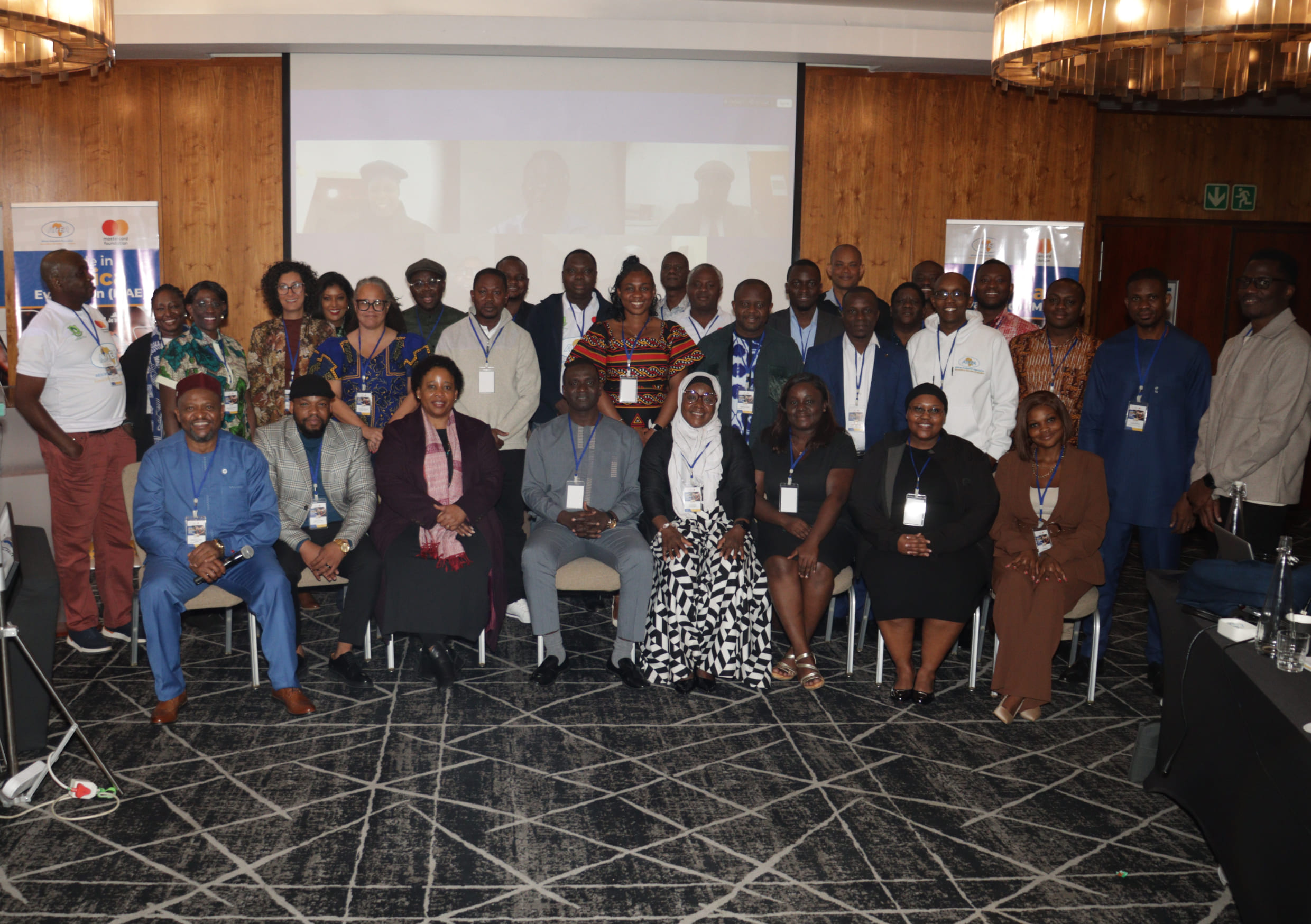
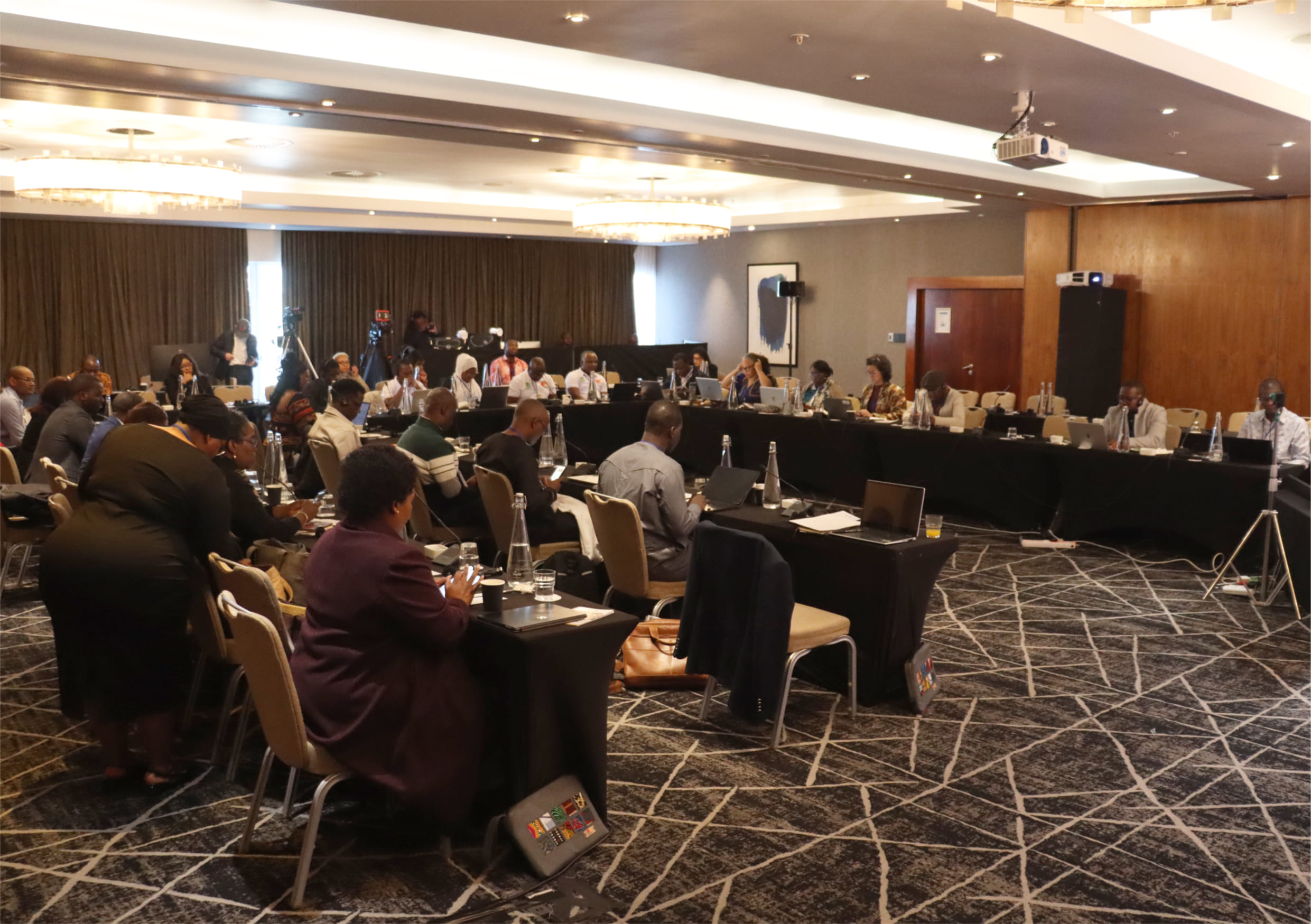
The Made in Africa Evaluation (MAE) Convening 2026 has successfully concluded in Johannesburg, South Africa, bringing together evaluation leaders, academics, development partners, youth evaluators, policymakers, and practitioners from across Africa and beyond. Convened by AfrEA with support from the Mastercard Foundation, the two-day gathering centred on validating and strengthening a unified Made in Africa Evaluation Framework. A standout moment was the presentation of a consolidated framework drawing on the University of Botswana's indigenous and philosophical approaches to evaluation and the University for Development Studies' practical monitoring and evaluation workflow.
The resulting framework is grounded in African values, indigenous knowledge systems, community ownership, transformational learning, and sustainability. Participants reached broad consensus that the time has come not only to advocate for African-centred evaluation approaches but to demonstrate their value through implementation, learning, and evidence generation. Universities, development finance institutions, evaluation associations, and development partners made encouraging commitments to pilot, teach, and mainstream the framework across diverse contexts. Notably, the Mastercard Foundation has already begun implementing the framework. The convening reaffirmed a shared vision: that evaluation in Africa must be rooted in African realities, responsive to communities, and driven by local knowledge and aspirations. As AfrEA looks ahead to the 12th International Conference in Marrakech, Morocco, the Association anticipates the emergence of early implementation experiences, lessons learned, and evidence from this collective effort. |
|
|
|
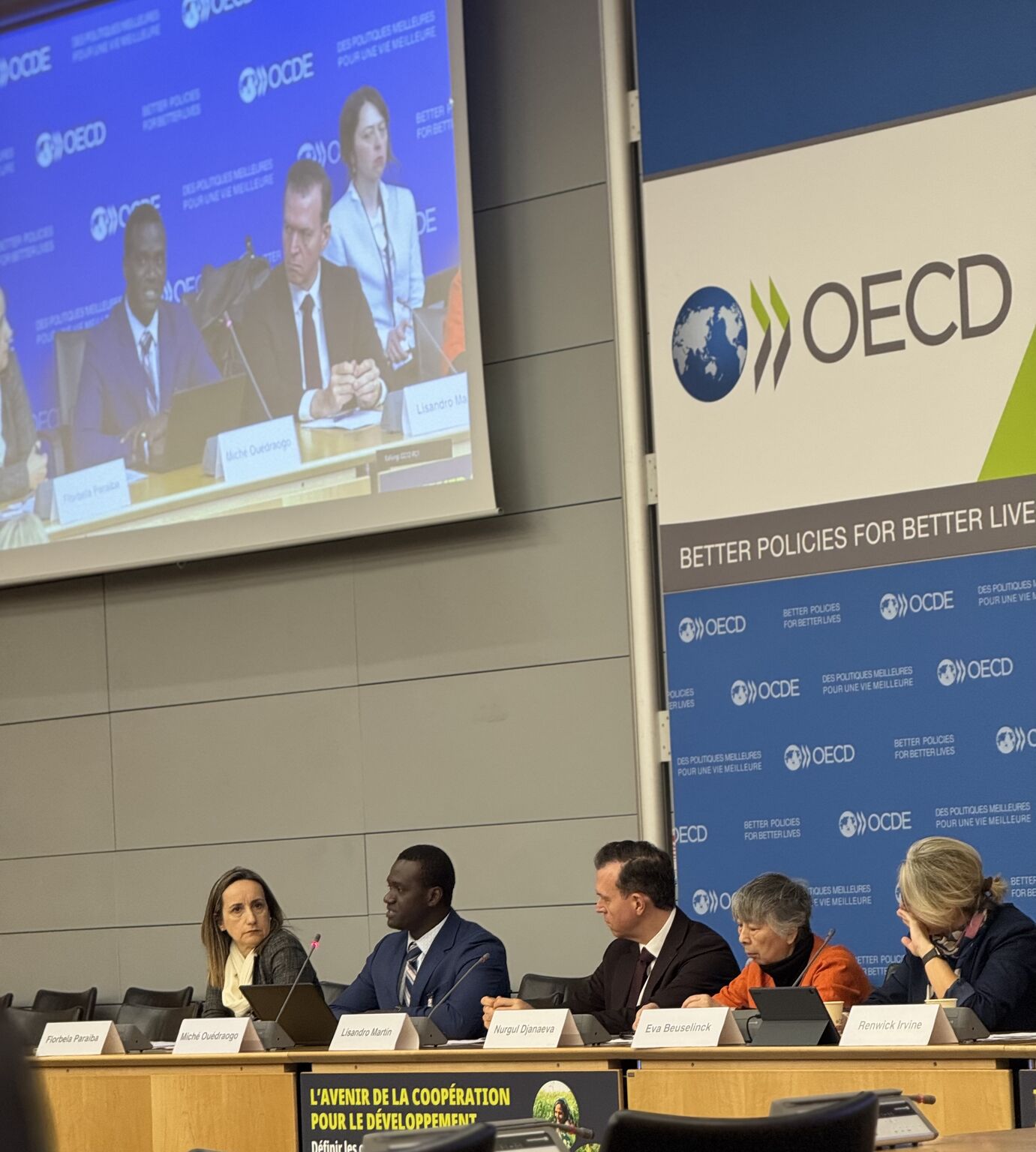
AfrEA President Advocates for African-Led Evaluation at OECD High-Level Conference in Paris |
|
AfrEA President Dr. Miché Ouédraogo represented the African Evaluation Association at a high-level conference organised by the Organisation for Economic Co-operation and Development (OECD) in Paris on 11 and 12 May 2026. The conference, titled "The Future of Development Cooperation: Setting the Strategic Direction," brought together major actors in international development to reflect on the far-reaching |
|
|
|
transformations reshaping the global landscape, against a backdrop of multiple crises and significant geopolitical shifts. Dr. Ouédraogo participated in a high-level roundtable on "Maximizing Impact and Managing Trade-offs in Decision-Making," where he articulated AfrEA's position on the future of evaluation and development cooperation. He underscored that traditional models of development impact assessment, historically shaped by donor country approaches, have not adequately addressed the ownership, learning, and transformation needs of African countries. He called for the full recognition of African evaluation approaches, emphasising the importance of local knowledge, social realities, and African visions of progress and change. At the heart of his address was AfrEA's flagship initiative, Made in Africa Evaluation, which seeks to reposition African experts and institutions at the centre of the design, conduct, and use of evaluations. Dr. Ouédraogo also highlighted the co-construction of evaluations between African and international partners as a critical lever for strengthening national capacities and improving the integration of evaluation findings into public policy. Looking ahead, he affirmed that the future of international development cooperation must be grounded in more balanced partnerships, built on mutual trust, sovereignty, and the recognition of Africa as a co-producer of knowledge, solutions, and change. AfrEA extends its appreciation to the OECD for convening this important dialogue and for creating a platform for substantive reflection on the future of international cooperation.
Read More |
|
|
|
AfrEA Strengthens Global Partnerships and Diaspora Engagement at the Canadian Evaluation Society Conference |
|
|
|
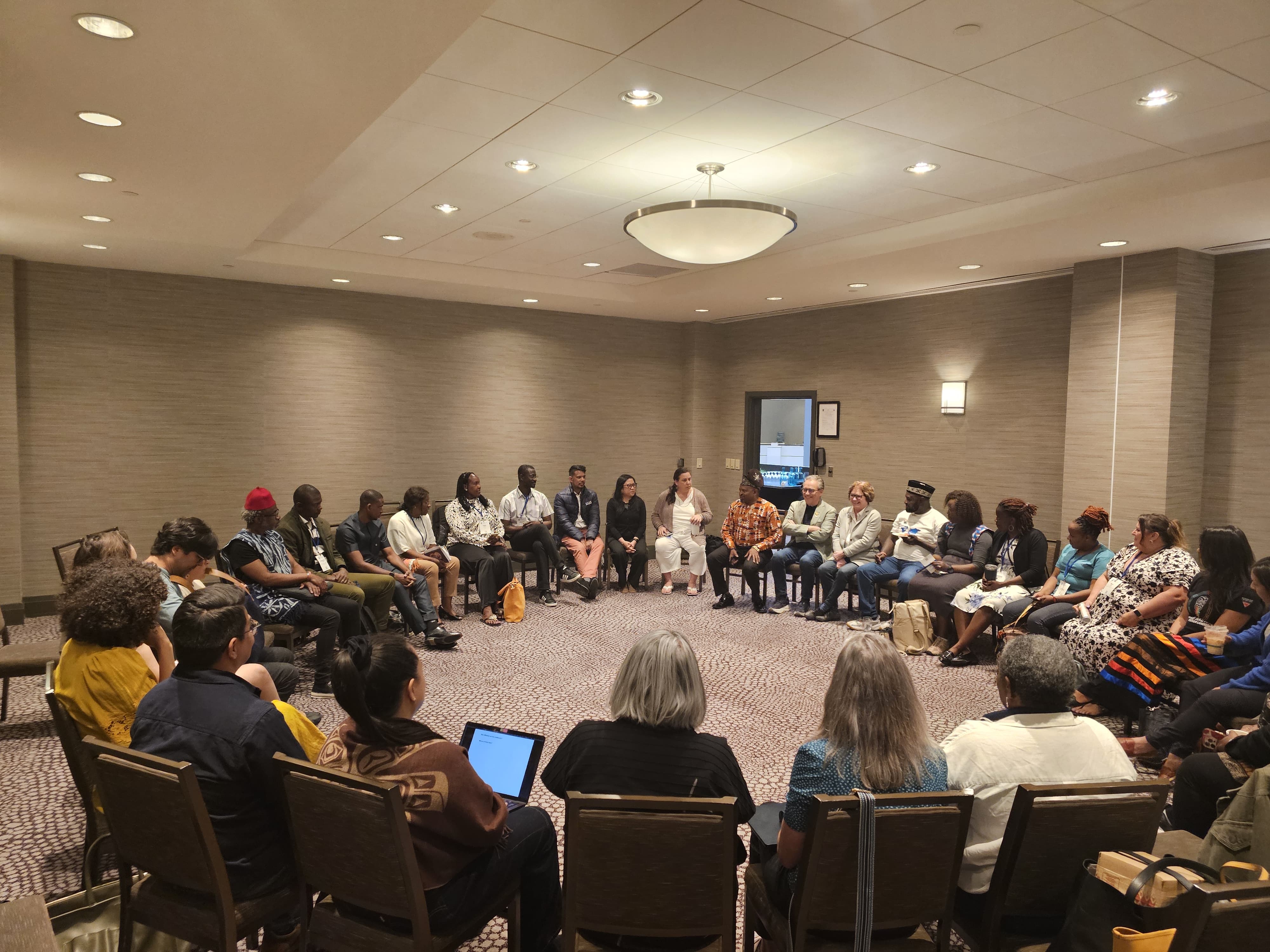
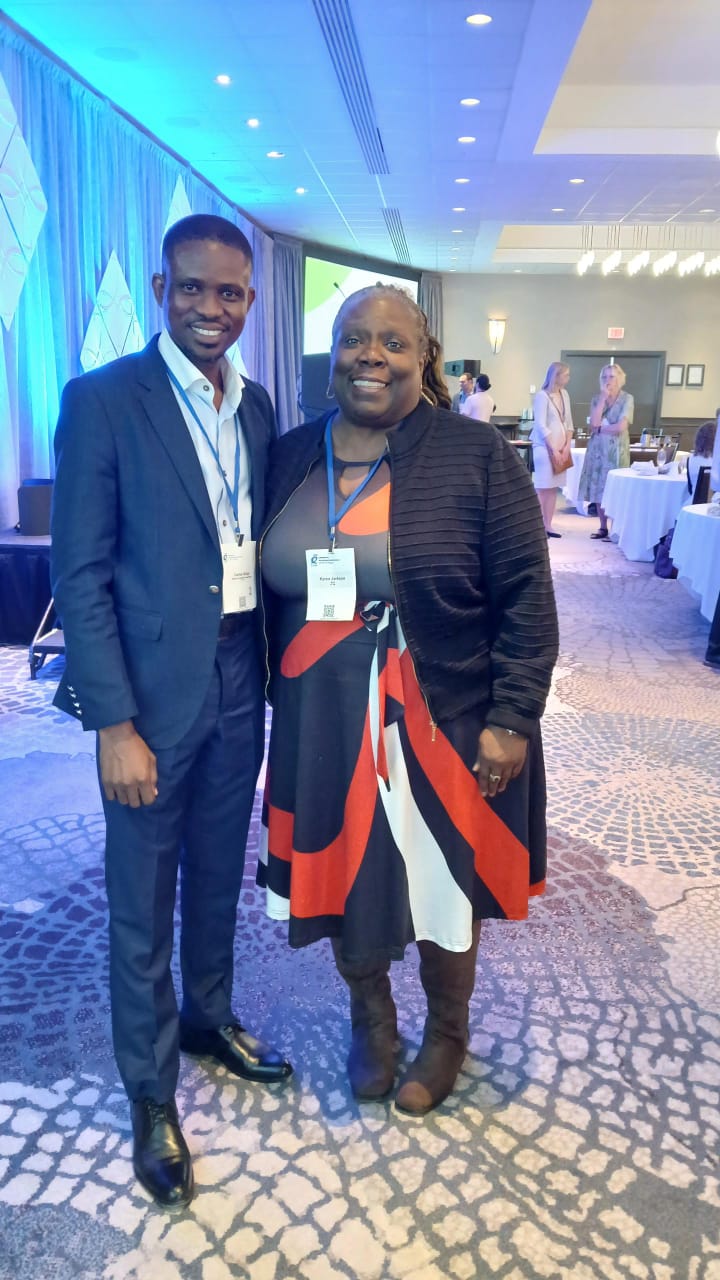
On 26 May 2026, AfrEA's
Executive Director, Mr Carlos Akligo, represented the African Evaluation
Association at the Canadian Evaluation Society (CES) Conference, held at the
Westin Hotel in Edmonton, Canada. The conference convened evaluators,
researchers, policymakers, and development practitioners from across the world
under the theme Impactful
evaluation in a complex world.
The conference provided an
important platform for advancing dialogue on the future of African-centred
evaluation and for strengthening partnerships between evaluation communities
across continents. Discussions focused on expanding collaboration between AfrEA
and evaluation associations across North America and Asia, while exploring
practical pathways for deeper cooperation on culturally responsive and
decolonial evaluation practice.
A major area of discussion
centred on strengthening the participation of people of African descent and the
African diaspora in Africa's evaluation ecosystem. Participants explored
opportunities for Afro-descendant evaluators to become active members of AfrEA,
contribute their expertise to African evaluation practice, and support the
continued development of Made in Africa Evaluation. The conversations highlighted
the value of building stronger connections between evaluators on the continent
and those in the diaspora, to enrich knowledge exchange, professional
development, and collaborative learning.
During the conference, Mr.
Carlos Akligo highlighted AfrEA's leadership in advancing the Made in Africa
Evaluation (MAE) agenda. He shared updates on the Association's efforts to
promote evaluation approaches rooted in African knowledge systems, values, and
contexts, while reinforcing the importance of international collaboration in
advancing the profession.
Mr. Akligo also promoted the
upcoming 12th AfrEA International Conference, emphasizing its role as a key
platform for advancing African evaluation practice, fostering knowledge
exchange, and strengthening partnerships across the global evaluation community.
The discussion encouraged broader international participation and reinforced
the conference's role as a meeting point for evaluators committed to
strengthening evaluation across Africa and beyond.
Together with the 5th AfrEA
President, Dr. Florence Etta, the 7th AfrEA President, Serge Eric Yakeu, the
Executive Director held strategic discussions with Dr. Karen Terrell Jackson,
Immediate Past President of the American Evaluation Association; Andrealisa
Belzer, National Past President of the Canadian Evaluation Society; and Matthew
Sanscartier, President of the Canadian Evaluation Society. The discussions
explored opportunities to strengthen collaboration between AfrEA and regional
Voluntary Organizations for Professional Evaluation (VOPEs), including the
American Evaluation Association and the Canadian Evaluation Society. The
partnership is envisioned as a mutually beneficial collaboration that will
create shared value for AfrEA, its members, and the broader evaluation
community.
The visit also provided an
opportunity to discuss broader avenues for global advocacy. Among the issues
raised was the importance of strengthening the representation of African
evaluators within international policy and governance spaces, including advocating
for AfrEA's engagement with the Permanent Forum on People of African Descent at
the United Nations. Such engagement, he noted, would create further
opportunities to elevate African perspectives on evaluation and to contribute
to global conversations on equity, inclusion, and sustainable development.
AfrEA's participation in the
Canadian Evaluation Society Conference reflects the Association's continued
commitment to building strategic global partnerships, strengthening
relationships with the African diaspora, and advancing Made in Africa
Evaluation as an internationally recognised approach rooted in African
realities and contributing meaningfully to global evaluation practice.
|
|
|
|
|
|
|
|
Leadership and Governance |
|
|
|
President Ouédraogo Re-elected for a Second Term
|
|
The election of the AfrEA Board of Directors for 2026, held from 1 to 7 April 2026, has concluded, and the result reflects the confidence of the AfrEA community as well as the integrity of the electoral process. Overseeing the election was the Independent Electoral Committee, whose mandate was to ensure the transparency, credibility and impartiality of the process at every stage. The election featured sixteen eligible candidates and recorded an impressive turnout of 84 per cent, a strong indication of the confidence members have in the Committee's management and in the electoral process itself.
|
|
|
|
Throughout, the Committee upheld strict standards of independence and transparency, ensuring that every vote was conducted fairly and that the outcome genuinely reflects the will of the AfrEA membership. The Committee has extended its sincere congratulations to all elected candidates, its appreciation to every candidate who stood for election, and its thanks to all members who cast their vote. Detailed results are available on the AfrEA website. Among the results declared, Dr Miché Ouédraogo was re-elected to a second term as President of AfrEA. Following the announcement, he shared the following reflection:
"I would like to express my deep gratitude and sincere appreciation following my re-election to a second term as President of AfrEA. This result reflects the confidence you have placed in the track record and achievements of the outgoing Board of Directors, and I congratulate all its members for their commitment and the scope of the work accomplished in service of our organisation. Beyond this vote of confidence, this new term is a call to resolutely continue the structural reforms we have initiated and to strengthen the implementation of our 2024 to 2028 strategic plan, with a view to further promoting the practice of evaluation across the continent. I reiterate my thanks for the trust you have placed in me. May God bless Africa and AfrEA." |
|
Meet the AfrEA Board Members |
|
|
|
|
|
|
|
Promoting evaluation and use of evidence
for African countries and continental priorities
|
|
|
|
AfrEA Launches Partnership to Strengthen Evaluation Capacity in Lusophone Africa
|
|
|
|
As part of its ongoing efforts to strengthen and expand evaluation practice across the continent, AfrEA continues to deepen its partnerships and broaden access to quality evaluation training in every region and language community it serves. The recent partnership with CLEAR Lusophone Africa and Brazil is a clear expression of this commitment, extending AfrEA's reach into Portuguese-speaking Africa.
The collaboration began with a specialised course on Monitoring and Evaluation of Public Policies, delivered in partnership with FGV EESP. The course brought together twenty participants from four Lusophone African countries, focusing on enhancing technical skills while promoting peer learning and regional collaboration.
This partnership reflects AfrEA's continued commitment to expanding access to quality evaluation training and strengthening professional networks across Africa's diverse linguistic communities. |
|
|
|
AfrEA Hosts ACBF and Grant Thornton Supervision
Mission
|
|
|
|
AfrEA was honoured to host a delegation from the African Capacity Building Foundation (ACBF) and Grant Thornton International for a supervision mission under component 1.7.3 of the Capacity Development for Africa’s Structural Transformation (CADAST) project. The visit enabled a review of technical and financial reports, discussion of implementation challenges, and alignment on future support. The review was highly satisfactory, resulting in renewed momentum and a strengthened partnership with ACBF. |
|
|
|
INCE Welcomes Four New Countries to a Growing African Network to Strengthen National Evaluation Systems
|
|
|
|
The National Evaluation Capacities Index (INCE) initiative continues to expand across the continent, with four new countries now joining the network: Gabon, Côte d'Ivoire, Zimbabwe, and Uganda, two Anglophone and two Francophone nations, bringing the total number of participating African countries to ten.
Of the four newest entrants, two have already completed data collection, while the remaining two are now working through their findings. Their addition builds on strong momentum already established within the network, where six countries have completed and validated their assessments, with results publicly available on the INCE website.
Each new country that joins does more than complete a diagnostic exercise. The INCE is a country-led learning framework, owned and driven by participating nations, bringing together governments, national evaluation associations, universities, and other key stakeholders to reflect collectively on strengthening the evidence base for public decision-making. Regionally coordinated by AfrEA, with technical and financial support from the African Capacity Building Foundation (ACBF), the initiative continues to show that its true value lies not only in the diagnosis itself, but in the conversations and peer learning it generates across borders.
As Gabon, Côte d'Ivoire, Zimbabwe, and Uganda begin their journey within the INCE community, they join a growing network already exchanging experiences, discussing common challenges, and sharing how findings are being used to strengthen national evaluation systems. With ten countries now part of this initiative, each new experience continues to widen a shared community of practice across the continent.
|
|
|
|
Promoting young people and Women in evaluation |
|
|
|
Youth in Evaluation Forum 2026: From Voice to Power
|
|
|
|
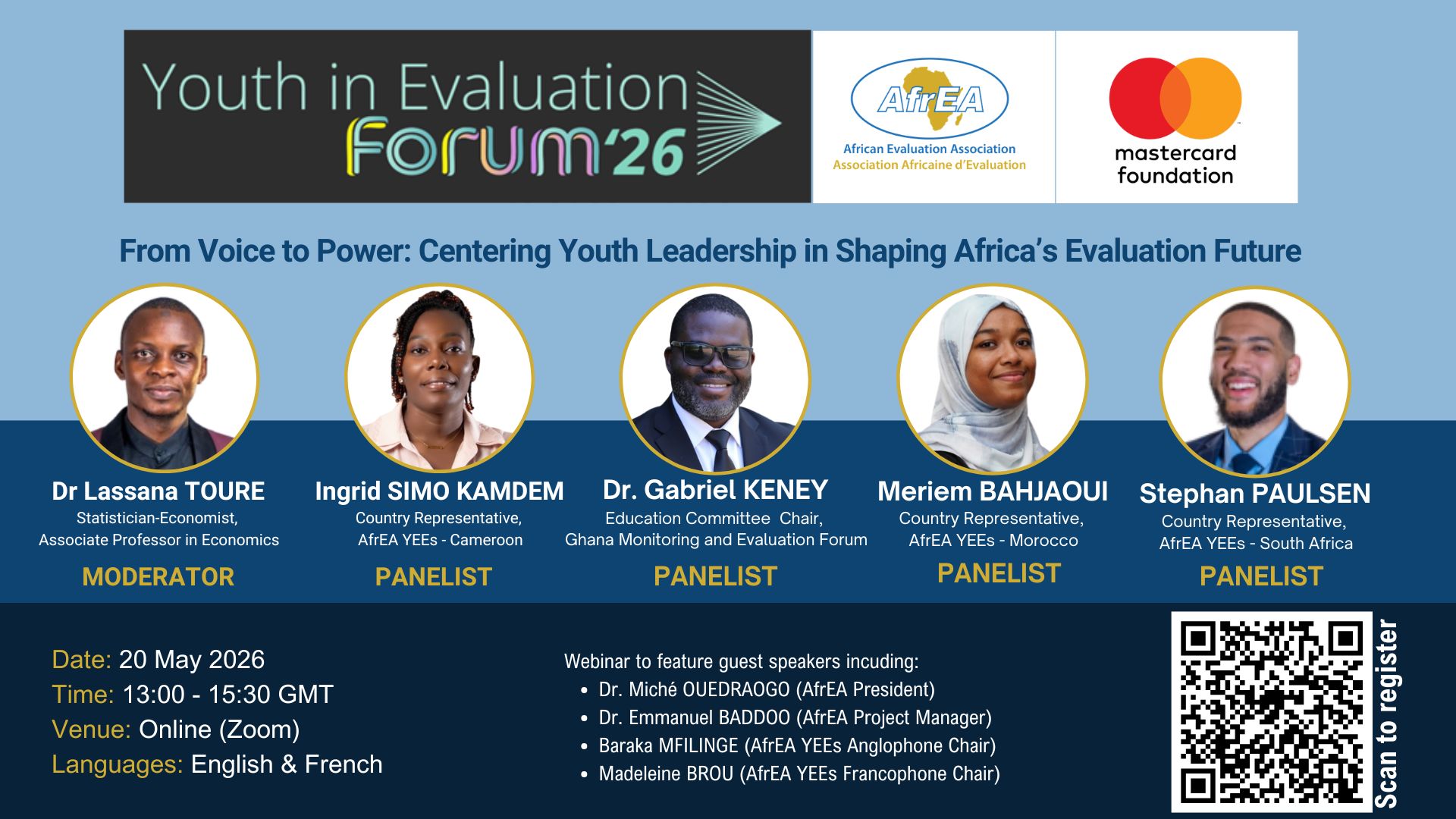
AfrEA reaffirmed its commitment to nurturing the next generation of African evaluators through the successful Youth in Evaluation Forum 2026, held virtually on 20 May 2026 under the theme "From Voice to Power: Centering Youth Leadership in Shaping Africa's Evaluation Future."
Organised with support from the Mastercard Foundation, the forum brought together young and emerging evaluators, experienced practitioners, and evaluation leaders from across both Anglophone and Francophone Africa, reflecting the continent's full linguistic and professional diversity, to explore how youth can play a more influential role in shaping Africa's evaluation agenda.
Moderated by Dr Lassana Touré, the forum featured an engaging panel comprising Ingrid Simo Kamdem (Cameroon), Dr Gabriel Keney (Ghana), Meriem Bahjaoui (Morocco), and Stephan Paulsen (South Africa). Drawing on their diverse experiences, the panellists discussed pathways for strengthening youth leadership, expanding professional opportunities, and ensuring that young evaluators actively contribute to evidence-informed decision-making across Africa.
The webinar also featured remarks from Dr Miché Ouédraogo, President of AfrEA, and Dr Emmanuel Baddoo, AfrEA's Project Manager, alongside Young and Emerging Evaluators (YEE) Network co-leads Baraka Mfilinge and Madeleine Brou. Together, they underscored AfrEA's commitment to investing in young professionals and creating inclusive spaces where emerging evaluators can learn, lead, and influence evaluation practice.
Discussions centred on three key areas: the importance of mentorship and intergenerational collaboration in equipping young evaluators with the knowledge and confidence to address Africa's evolving development challenges, the need for stronger professional networks to expand opportunities for youth participation, and practical strategies for deepening youth involvement within Voluntary Organizations for Professional Evaluation (VOPEs), national evaluation systems, and the broader Made in Africa Evaluation movement.
Looking ahead, participants called for sustained mentorship structures linking young evaluators with experienced practitioners, clearer pathways for youth representation within VOPEs and national evaluation systems, and continued platforms, such as this forum, to keep youth leadership central to the evaluation agenda. AfrEA and the YEE Network are expected to build on these discussions in the coming months, translating the forum's insights into concrete opportunities for youth engagement ahead of the 12th AfrEA International Conference in Marrakech.
The Youth in Evaluation Forum 2026 reflects AfrEA's broader vision of building a vibrant and inclusive evaluation community where young professionals are recognised not only as future leaders, but as active contributors to shaping the future of evaluation across the continent. |
|
|
|
Strengthening AfrEA and VOPE capacities, visibility and influence |
|
|
|
SOMES Signs Strategic Partnership with Benadir University |
|
|
|
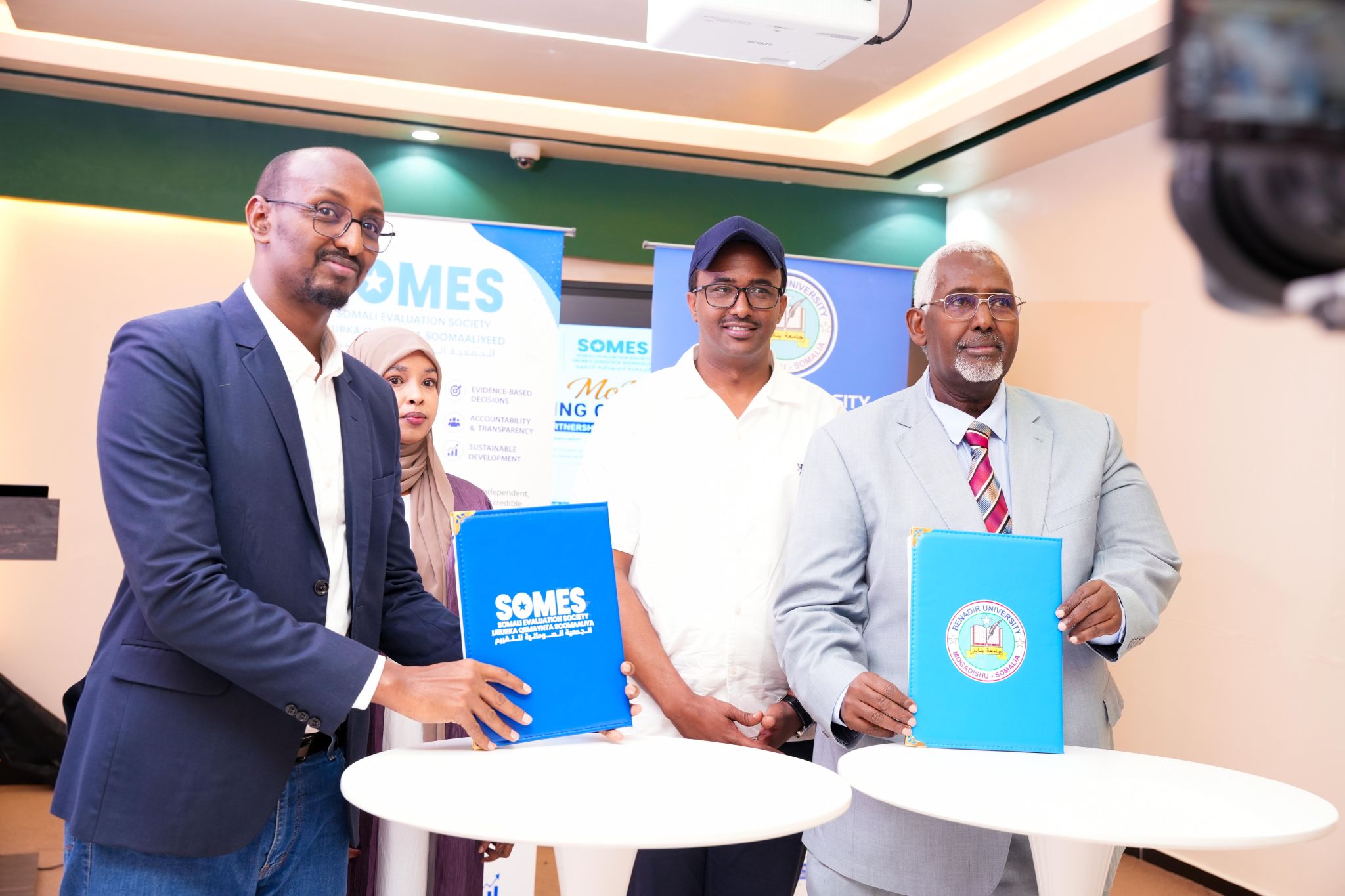
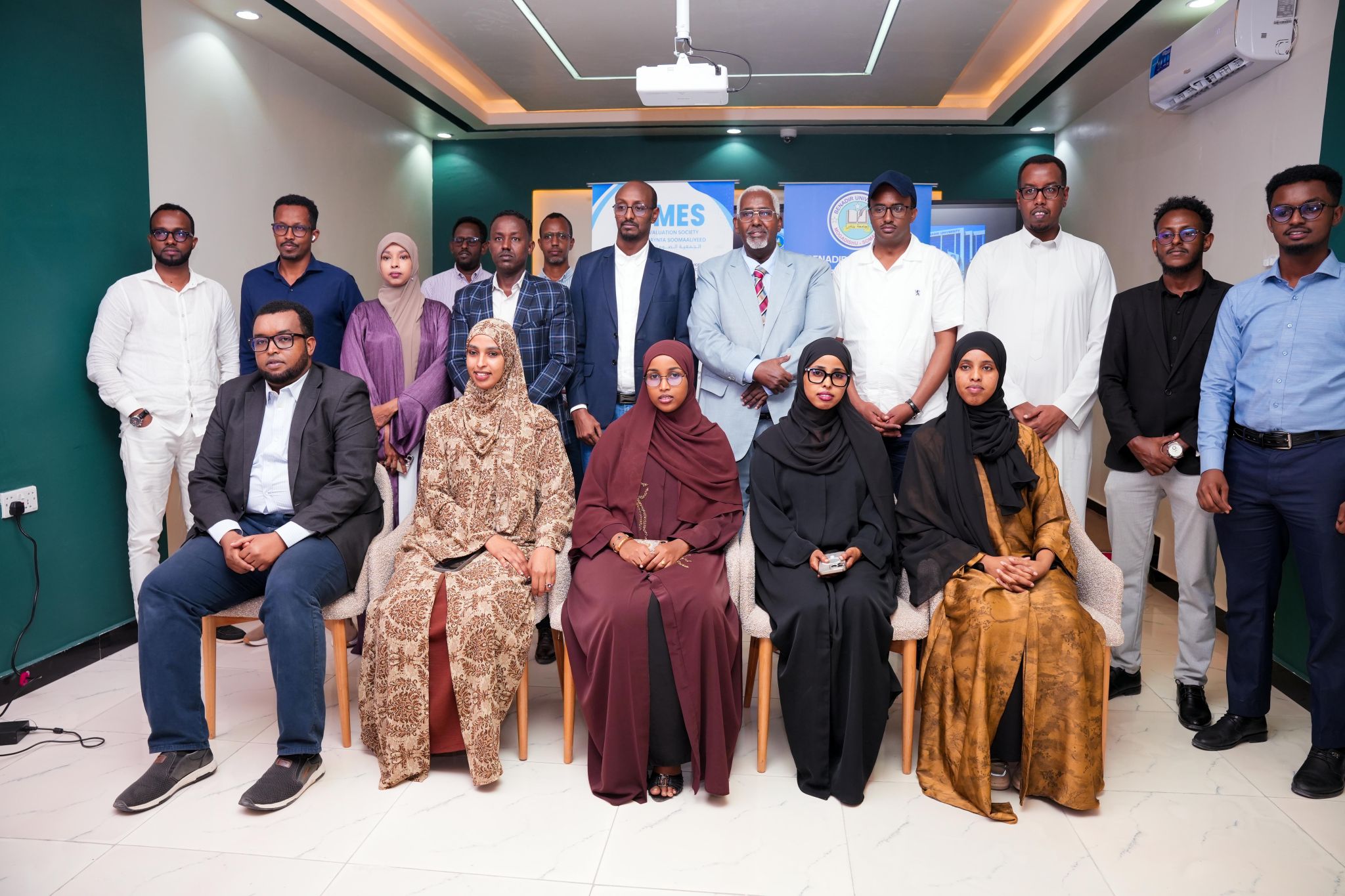
The Somali Evaluation Society (SOMES) is pleased to announce the successful signing of a Memorandum of Understanding (MoU) with Benadir University on 23 July 2026, marking the beginning of a strategic partnership to advance evaluation, research, innovation, and capacity development in Somalia.
The partnership reflects a shared commitment to strengthening evaluation capacity, promoting research excellence, and fostering evidence-based decision-making. By bringing together the expertise of academia and the evaluation profession, the collaboration will create opportunities for knowledge exchange, professional development, joint research, and institutional learning that contribute to sustainable development in Somalia.
As SOMES continues to strengthen the national evaluation ecosystem, it remains committed to building strategic partnerships with universities, research institutions, government entities, civil society organisations, and development partners, to advance a culture of evaluation, accountability, learning, and evidence use across the country.
This partnership marks an important milestone toward a stronger, more collaborative, and evidence-driven future for Somalia.
Read More |
|
|
|
Guinea Launches the ELITE Programme |
|
|
|
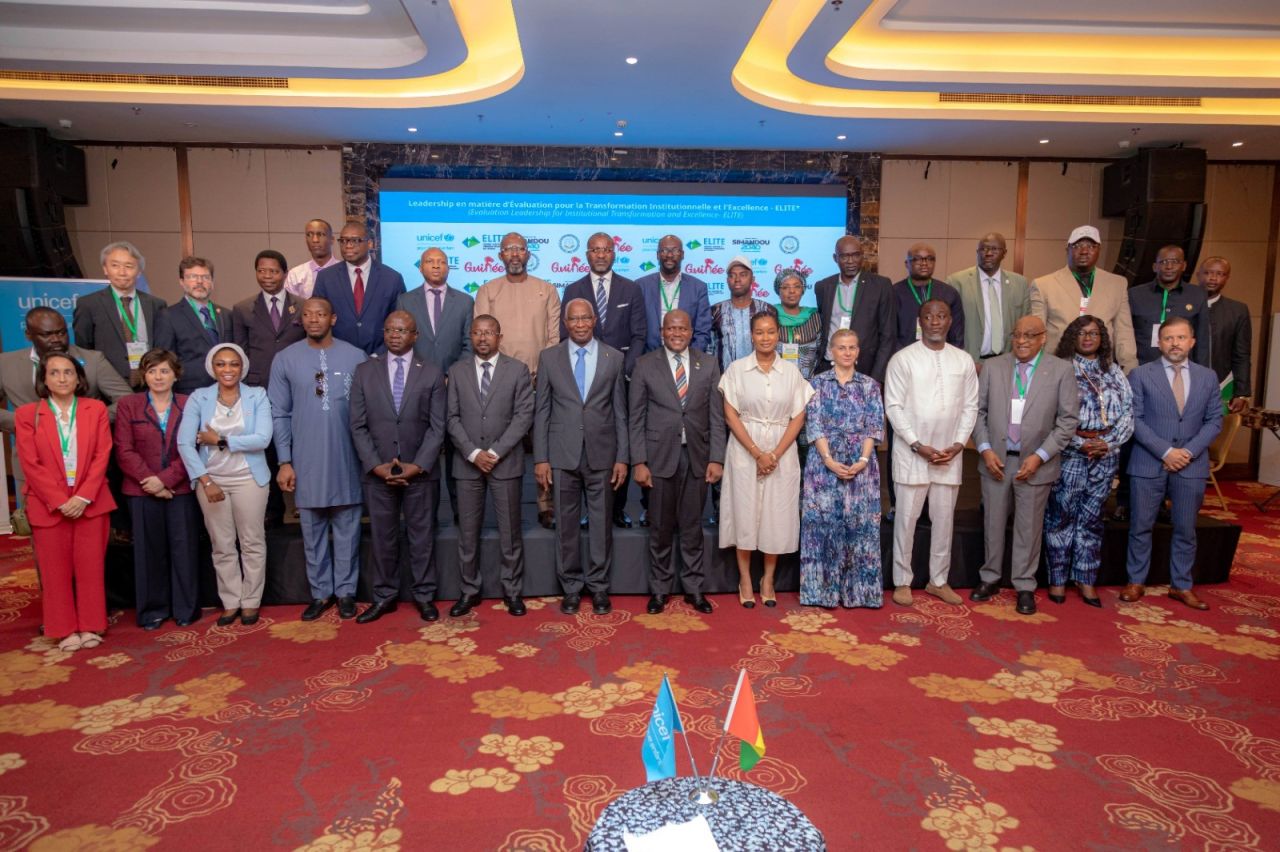
Guinea has
entered a new era of evaluation with the launch of its flagship programme ELITE
(Evaluation Leadership for Institutional Transformation and Excellence), under
the high patronage of the Prime Minister. Discussions focused on strengthening
the culture of evaluation, the use of evidence in public decision-making, and
the development of a National Monitoring and Evaluation Policy in support of
the Simandou 2040 programme. UNICEF welcomed the Guinean authorities’
commitment to results-based governance, and the Prime Minister was recognised
as a Regional Champion of Evaluation.
|
|
|
|
|
|
CLEAR FA: 5th Regional Round Table (TREPP 2026) |
|
The 5th Regional Round Table on the Effectiveness of Public Policies (TREPP 2026), hosted by CLEAR FA at CESAG in Dakar, concluded successfully in April 2026 under the theme “Evidence for regional integration in West and Central Africa: local evidence, regional impact.” |
|
|
|
The event gathered over 100 experts and policymakers across three panels and six case studies, producing a joint roadmap for evaluation in the service of African integration.
|
|
|
|
UNICEF: ExCEL Training Concludes in the DRC |
|
The Executive Course for
Evaluation Leaders (ExCEL), developed with the Lee Kuan Yew School of Public
Policy and the National University of Singapore, concluded its DRC edition on
24 April 2026, completing Phase II of the programme. The 10-day intensive course
brought together 40 high-level participants from the Democratic Republic of the
Congo and Niger. At the closing, the Secretary General of the Ministry of
Planning reaffirmed commitments to institutionalise National Evaluation Days
and establish a Community of Practice on public policy evaluation, signalling
strong national ownership.
Read More |
|
|
|
|
|
LEAP Africa Celebrates Excellence in Monitoring, Evaluation and Learning |
|
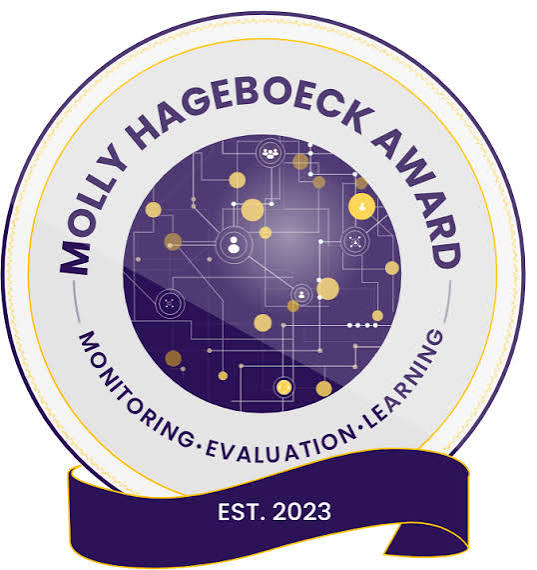
On 28th April 2026, LEAP Africa received The Molly Hageboeck Award for Excellence in Monitoring, Evaluation, and Learning (MEL) in the category of Advancement in Monitoring, Evaluation and Learning Training and Capacity building. This award recognises exceptional contributions of LEAP Africa to the field of monitoring, evaluation and learning as well as its commitment to advancing the principles of MEL aligned with Molly Hageboeck’s vision.
|
|
|
|
The Molly Hageboeck Award stands as a prestigious recognition of extraordinary contributions that embody the highest standards of practical, rigorous, and impactful work in international development. Hosted by the Institute of Development Impact, United States of America, this distinguished award honors those who are truly moving the needle in the field.
Beyond the recognition, the award carries a transformative benefit, a grant of $3,500 dedicated to further strengthening the vital work of building the capacity of development professionals in Monitoring, Evaluation, and Learning (MEL) across Africa. This investment reflects a deep commitment not only to celebrating excellence, but to sustaining and amplifying its impact for years to come. Learn More |
|
|
|
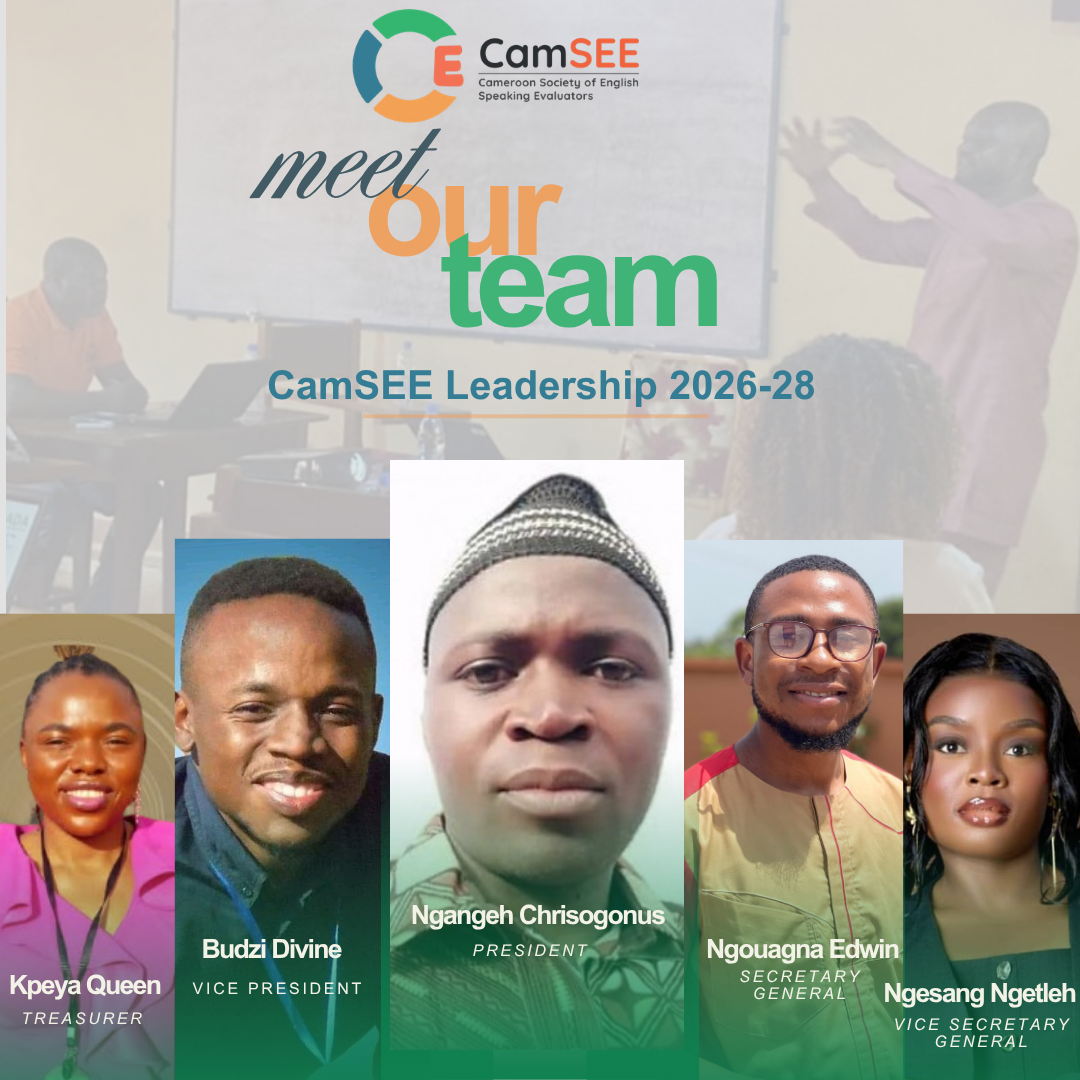
CamSEE Election and Inauguration of the New Executive Bureau
|
|
The Cameroon Society of English-Speaking Evaluators (CamSEE) has marked an important institutional milestone with the successful conduct of elections at its Annual General Meeting, ushering in a new Executive Bureau to guide the association over the 2026 to 2028 term. The elections reflect CamSEE's continued commitment to democratic governance, member participation, and leadership renewal.
|
|
|
|
an opportunity to reaffirm the association’s mission of advancing evaluation practice, strengthening professional capacity, and promoting evidence-informed decision-making in Cameroon. In his inaugural address, the newly elected President emphasized a vision of inclusivity, collaboration, and collective growth, highlighting the importance of ensuring that “no evaluator is left behind.” The transition marks a new chapter for the association as it continues to expand opportunities for professional development, knowledge sharing, and engagement within the national and continental evaluation community.
Read more |
|
|
|
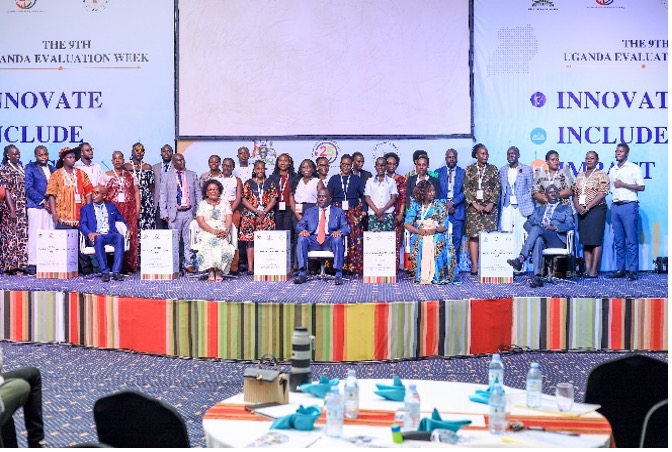
The 9th Uganda Evaluation Week Celebration |
|
|
|
The 9th Uganda Evaluation Week, held from 4 - 8 May 2026, marked the 25th anniversary of the Uganda Evaluation Association (UEA) and brought together evaluators, government officials, academics, and development partners to advance evaluation practice and evidence-based decision-making. The event focused on leveraging emerging technologies such as Artificial Intelligence and Big Data, strengthening Monitoring, Evaluation, Research and Learning (MERL) capacity, promoting inclusion and equity, and supporting the implementation of Uganda's Fourth National Development Plan (NDP IV). Participation was strong, with 348 attendees at pre-conference workshops and 179 at the main conference. A major highlight was the launch of the UEA Commemorative Handbook, Evidence to Impact: 25 Years of Evaluation Learning, Practice and Influence in Uganda. Supported by the African Evaluation Association (AfrEA) and edited by Dr. Josephine Watera, the publication documents Uganda's evaluation journey and includes a digital repository of evaluations conducted between 2000 and 2022. Special recognition was given to contributors including Dr. Awuor Ponge and Howard White. The conference also hosted the Eval Indigenous Network Dinner, which brought together practitioners and policymakers to discuss the role of indigenous knowledge systems in promoting culturally responsive and inclusive evaluation practices. The event reinforced the value of local knowledge and cultural diversity in evaluation.
Youth engagement was highlighted through the Uganda National Evaluation Case Competition, which recognized outstanding Young and Emerging Evaluators. Winners included Mr. Norman Musoke Kibalama, Ms. Evelyn Mwebebesa, and Mr. Amos Oyete for their exceptional performance and contribution to strengthening MERL capacity among young professionals.
The report also highlighted the launch of the National Evaluation Capacities Index (INCE), a joint initiative of the Office of the Prime Minister and UEA, supported by DEval and WFP. The index provides a framework for assessing and strengthening Uganda's national evaluation systems, enhancing accountability, public service delivery, and evidence-based governance. Finally, the event celebrated the leadership and legacy of UEA by recognizing founding and past presidents, including Ms. Margaret Kakande, Ms. Rosetti Nabbumba Nayenga, Dr. Josephine Watera, Mr. Matthew Lubuulwa, and Mr. Timothy Lubanga. Several members were also recognized for their regional and international contributions, particularly within the African Evaluation Association. UEA extends its sincere appreciation to AfrEA for supporting the event and contributing to the publication of the conference and 25-year commemorative handbook.
|
|
|
|
|
|
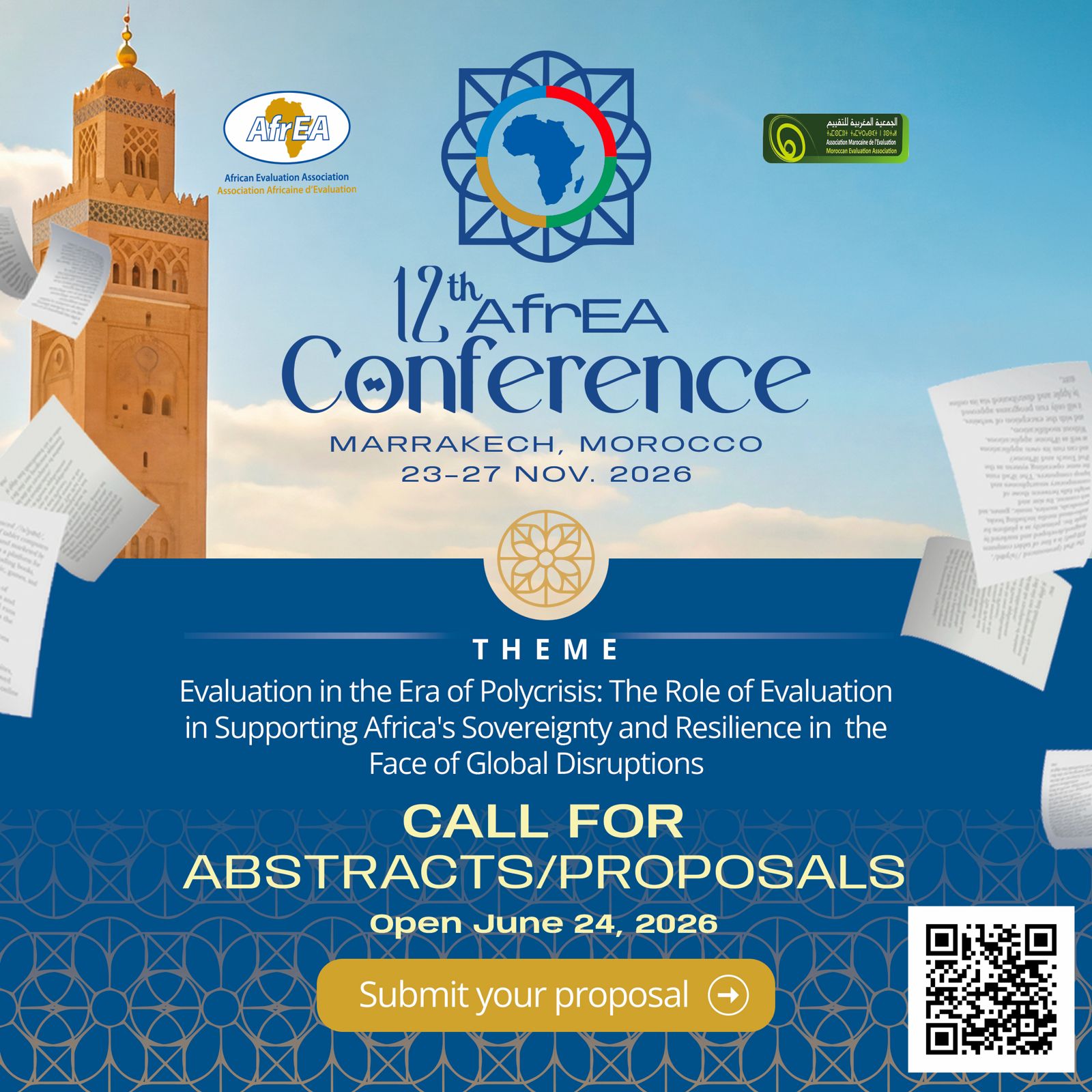
12th AfrEA International Conference - Call for Proposals
|
|
|
|
The African Evaluation
Association (AfrEA), in collaboration with the Moroccan Evaluation Association
(AME) and the Kingdom of Morocco, has opened the Call for Proposals for the
12th AfrEA International Conference, under the theme:
“Evaluation in the Era of
Polycrisis: The Role of Evaluation in Supporting Africa’s Sovereignty and
Resilience in the Face of Global Disruptions.”
Proposals are welcome for paper
presentations, panel discussions, workshops, roundtables, and poster sessions.
Key dates: Abstract submission opens: 24 June 2026 Abstract submission closes: 30 July 2026 Notification of acceptance: 10 September 2026 Full paper submission closes: 30 September 2026
Full details and Submission Portal
For specific enquiries, contact: conferences@afrea.org
We look forward to welcoming you to Marrakech.
|
|
|
|
Call for Participation – 5th Tanzania Monitoring, Evaluation and Learning (MEL) Week 2026 |
|
The Prime Minister’s Office, in collaboration with the Tanzania Evaluation Association (TanEA), warmly invites government institutions, development partners, researchers, academia, civil society organizations (CSOs), voluntary organizations for professional evaluation (VOPEs), private sector actors, students, young and emerging evaluators, policymakers, and all stakeholders interested in evidence-based development to participate in the 5th Tanzania Monitoring, Evaluation and Learning (MEL) Week 2026. |
|
|
|
This year’s conference will be held from 22–26 September 2026 at Ngurdoto Mountain Lodge, Arusha, Tanzania, under the theme:
“From Evidence to Action: Strengthening Human-Centered Evaluation for Sustainable Development.”
The conference provides a unique platform for knowledge sharing, learning, networking, innovation, and dialogue on how monitoring, evaluation, and learning can drive sustainable development and improve the lives of people through evidence-informed decision-making.
We encourage all interested stakeholders to register and actively participate in this important national and international gathering of MEL professionals and practitioners.
Abstracts are submitted to any of the following emails:
mel...@pmo.go.tz
melcon...@pmo.go.tz
tzme...@pmo.go.tz
|
|
|
|
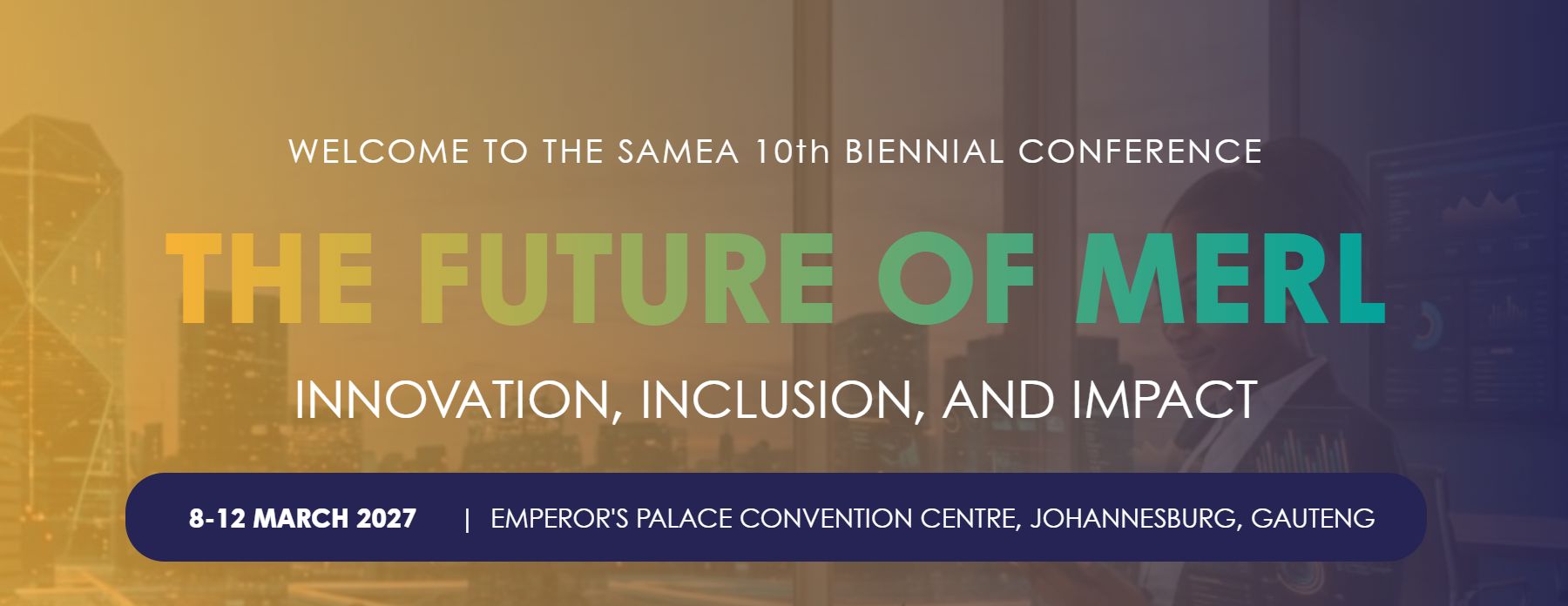
SAMEA's 10th Biennial Conference Comes to Johannesburg in March 2027 |
|
|
|
The SAMEA 10th Biennial Conference is coming to Johannesburg from 8–12 March 2027 at the Emperors Palace Convention Centre.Join monitoring, evaluation, research and learning (MERL) professionals, policymakers, academics and development practitioners from across Africa and beyond as we explore the theme:The Future of MERL: Innovation, Inclusion, and Impact.
Whether you're looking to strengthen your technical skills through our pre-conference workshops, present your work, or connect with leaders shaping the future of evaluation, this is the premier MERL event in South Africa.Planning to attend? Early bird registration rates for SAMEA members, non-members, NPOs and students/EEs are now available, making it easier to secure budget approval and plan ahead.
Visit the conference website for registration information, abstract submission updates and everything you need to know.
|
|
|
|
|
|
|
|
AfrEA is excited to announce the launch of a dedicated newsletter for its Young and Emerging Evaluators (YEE) network. Called the The YEE HUB, the newsletter will spotlight the voices, achievements, and opportunities shaping the next generation of African evaluators, featuring member profiles, career and funding opportunities, event updates, and reflections from young evaluators across the continent.
Coordinated by the YEE team, Baraka Mfilinge and Madeleine Brou, the newsletter aims to strengthen connection and visibility within the YEE community and to ensure young evaluators are well informed and well represented within AfrEA's wider network.
Watch this space for the first edition, coming soon. |
|
|
|
|
|
|
|
|
|
|
|
|
|
|
|
|
|
|
|
|
|
|
|
|
|
July 2026 African Evaluation Association (AfrEA) 36 Kofi Annan Avenue, North Legon, Accra, Ghana |
|
|
|
|
|
|



.png)
.jpg)
.png)
_(1).jpeg)
.jpg)
.jpg)
.jpg)
.jpg)

.png)

.png)