| |
|
|
|
|
Reflecting on a mandate of growth and empowerment
|
|
Dear AfrEA members and partners, |
|
The past two years have been
truly transformative for evaluation practice across Africa. Since March 2024,
when the 12th AfrEA Board of Directors was elected, we have witnessed a series
of efforts that have elevated African evaluation to new heights, with AfrEA
firmly at the centre of these initiatives. As we conclude our mandate as the 12th
Board of Directors of AfrEA, this Newsletters provides me with an opportunity to
reflect on the remarkable journey we shared throughout this period. |
|
|
|
Honoring Our Roots, Preparing
Our Future: AfrEA@25
One of the most unforgettable
moments of this mandate was gathering with so many of you in Addis Ababa in
June 2025 to celebrate AfrEA’s Silver Jubilee. It was a beautiful moment to
honor a quarter-century of advocacy, but more importantly, it was a springboard
for our future. The energy of that celebration fueled some of our proudest
achievements: the launch of the African School of Evaluation in November 2025,
the inauguration of the first edition of the Made in Africa Evaluation
Handbook, and the signing of our historic partnership with the African Union
Commission. This celebration demonstrated our commitment to the next
generation, ensuring that emerging evaluators are equipped with cutting-edge
skills deeply rooted in the "Made in Africa Evaluation" (MAE)
paradigm.
Measuring What Matters: The
INCE Rollout
We recognized the urgent need to
move from theoretical discussions to actionable metrics leading to the successful
launch and rollout of the National Evaluation Capacities Index (INCE) in six
African nations, and eventually extending it to 4 additional countries. Through
this initiative, we have established a standardized, contextually relevant
baseline for institutional evaluation capacity across the continent.
From Grassroots to the Global
Stage
From day one, this Board knew
that AfrEA’s true power lies in its grassroots members. We made it a priority
to increase our field visits to Voluntary Organizations for Professional
Evaluation (VOPEs) across the continent. These visits were not just formalities;
they were opportunities to listen, learn, and tailor our support to the
realities on the ground. Simultaneously, we have worked
tirelessly to amplify our collective voice on the international stage. Through
active involvement in global evaluation initiatives, we have ensured that
African perspectives are no longer just invited to the table, they are actively
shaping the global M&E agenda.
Forging Strategic Alliances
Vision requires resources, and I
am deeply encouraged by the unprecedented success of our resource mobilization
initiatives. We have forged powerful new partnerships with a coalition of
global actors who believe in our mission. I want to extend my heartfelt thanks
to the African
Union, Mastercard Foundation, Ford Foundation, African Capacity Building
Foundation (ACBF), German Institute for Development Evaluation (DEval), African
Development Bank, West African Development Bank, New Development Bank, European
Bank for Reconstruction and Development, Conrad N. Hilton Foundation, International Fund
for Agricultural Development (IFAD), UNFPA, UNICEF, UNDP, the OECD EvalNet
network, the World Food Programme (WFP), Lanzhou University, and all
the other partners who in one way or another, contributed to the success of
AfrEA’s initiatives in the past two years. Your support has injected vital
energy into our initiatives and validated global confidence in AfrEA’s
operational integrity.
A Digital Renaissance
One of my proudest moments in
2025 was seeing AfrEA become truly inclusive. We recognized that to lead
Africa, we must speak all its major languages. Our new website was boosted with
the addition of Portuguese as a language option. Today, the website serves our
English, French, and Lusophone members with equal vigor. This ensures that our
Lusophone members have the same access to knowledge and opportunities as their
peers. We have also held strategic meetings to onboard and empower more
Portuguese-speaking VOPEs, ensuring that from Angola and Mozambique to Cabo
Verde and Guinea-Bissau, no evaluator is left behind.
We have completely digitalized
our membership procedures, making it seamless for professionals to join.
Furthermore, the site now hosts the Africa Evaluators Database, whose imminent
launch will provide the premier directory for connecting our continent's top
talent with global opportunities.
Preparing Tomorrow’s Top
Evaluators Today
All the progress we have achieved
will have very little value and impact if we do not prepare the younger generation
to take the relay tomorrow. We continued to prioritize the empowerment of our Young
and Emerging Evaluators (YEEs). Through specialized mentorship, webinars, and
support to participate in initiatives like the Emerging Evaluators Camp, and
through dedicated scholarship to participate in the African School of
Evaluation, we invested in the brilliance of our youth. I am confident that we
have young people capable of carrying the "Made in Africa" banner for
the next 25 years.
As we look ahead, the state of
our alliance is strong. We are more connected, more inclusive, and more skilled.
I take this opportunity to express my profound appreciation to our Board
Members, whose strategic guidance and collective leadership have shaped AfrEA’s
direction; to our members and evaluation practitioners, whose engagement and
expertise continue to energize our work; to our partners and donors, whose
trust and collaboration have strengthened our programmes and institutional
resilience; and to our dedicated Secretariat, whose commitment has ensured the
smooth and consistent implementation of AfrEA’s activities.
I also extend special gratitude
to Dr. Awour Ponge, the Vice President, and Mrs. Eddah Kanini, Treasurer of
AfrEA whose diligence, professionalism, and unwavering support as members of
the Executive Committee were instrumental in overseeing the effective running
of the Secretariat. Working closely with me, they ensured that AfrEA remained
stable, responsive, and aligned with its mission throughout our mandate.
Our achievements are truly worth
celebrating. In honour of our collective success, let us watch the documentary
below, which captures AfrEA’s remarkable 25‑year journey. As you watch, I
invite you to see yourself reflected in this story, in the milestones we have
reached, the challenges we have overcome, and the legacy we continue to build
together.
Most importantly, I invite you to
help shape the next 25 years of AfrEA. Whether through new grants, strategic
partnerships, or sustained advocacy, your support remains the driving force
that will propel AfrEA to even greater heights.
The groundwork is set, the
partnerships are strong, and our community is more connected and visible than
ever before. The future of evaluation in Africa is incredibly bright, and I
cannot wait to see where we go next.
Thank you for being part of AfrEA’s
story.
Dr. Miché Ouedraogo President, African Evaluation Association (AfrEA)
|
|
|
|
|
|
|
|
The AfrEA website: A Digital Home Without Borders
|
|
|
|
The new AfrEA website is a
sophisticated digital tool designed to reinforce the association’s mission and
better showcase its core values to the global community. It represents a
significant upgrade in how AfrEA engages with stakeholders, offering a cleaner,
more intuitive experience that mirrors the professionalism of the evaluation
sector.
Breaking down linguistic
barriers, the platform is now fully accessible in English, French, and
Portuguese. This ensures that members across all regions of the continent, including
the growing Lusophone and Francophone communities, have equal access to
resources and news.
The site serves as the primary
hub for the latest developments from the Secretariat and national VOPEs. From
groundbreaking initiatives to collaborative efforts, the platform keeps the
network informed and synchronized.
The new AfrEA website is a
professional tool designed to make your journey as an evaluator easier. At the
heart of this is our revitalized Membership Portal, which acts as your personal
"key" to the best resources on the continent.
Exclusive Access Through
Active Membership
We’ve structured the system so
that being a member truly pays off. When your membership is valid and up to
date in our records, the website automatically "unlocks" high-level
content just for you. This includes amongst others, specialized toolkits and
evaluation guides, and exclusive grant listings and project opportunities.
If your membership is active,
these doors are wide open. If it’s expired, the system will gently remind you
to renew so you don’t miss out on these vital tools.
Simple, Hassle-Free Payments
for Everyone
We know that in the past, paying
for membership across different countries could be a headache. We’ve fixed
that. We have moved away from complicated bank wires and long wait times. Now,
you can seek and pay for your membership entirely on the website using methods
that work for you:
- Mobile Money: Depending on your location, you can use
your local mobile wallet to pay in seconds.
- Debit Cards: This is the most accessible payment
method. Wherever you are in the world, you can use your Visa or Mastercard
for an instant, secure transaction.
- Simplified Portals: The system is designed to be
"hassle-free" meaning it guides you through the payment
step-by-step, sends you an instant receipt, and updates your status in our
database immediately.
Be Part of the Africa
Evaluators Database
When you have an active AfrEA
membership, you are featured in the Africa Evaluators Database. This is where
international partners and donors look when they need experts for projects in
Africa.
Head over to www.afrea.org/membership today.
Whether you want to become an AfrEA member or want to renew your membership,
our simplified payment system ensures you can get it done in minutes. Stay
active, stay visible, and keep your exclusive access to the best evaluation
opportunities in Africa!
|
|
|
|
|
|
AfrEA
President Calls for a New Era of African Evaluation at 15th EEvA AGA
|
|
|
|
“A nation that evaluates is a
nation that learns, adapts, and advances.”
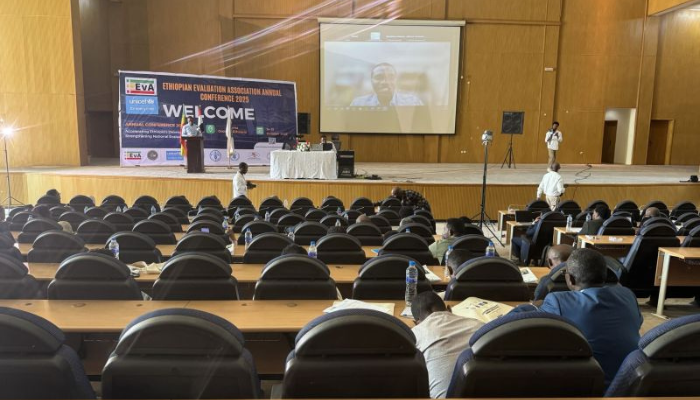
These words, delivered by Dr.
Miché Ouédraogo, President of the African Evaluation Association (AfrEA), set
the tone for a pivotal moment in African governance. Speaking at the 15th
Annual General Assembly of the Ethiopian Evaluation Association (EEvA), held
from 14 to 15 October 2025, Dr. Ouédraogo outlined a bold vision for the future
of development in the region.
Under the theme “Accelerating
Ethiopia’s Development: Strengthening National Evaluation Capacities,” the
assembly brought together key stakeholders to discuss how evidence-based
governance can drive tangible progress.
A Unified Ecosystem for
Development
While celebrating Ethiopia’s
existing leadership in evidence-based governance, Dr. Ouédraogo emphasized that
the next step requires breaking down silos. He called for a coordinated
institutional framework where three critical components operate as one cohesive
ecosystem:
- Planning bodies
- Monitoring agencies
- Oversight institutions
Professionalization and
Accountability
Dr. Ouédraogo stressed that for
evaluation to be effective, it must be credible. This requires the
professionalization of evaluators, grounded strictly in ethics, independence,
and technical excellence.
Furthermore, he advocated for a
shift in national culture—one where accountability is not just a top-down
mandate, but a demand from the bottom up. He envisions a society where citizens
actively demand evidence and help co-create public policy.
A powerful message from the
intervention was the call to reframe the purpose of evaluation itself. Dr.
Ouédraogo highlighted that evaluation should not be a tool for sanction or
punishment, but rather a catalyst for transformation. Ethiopia is positioning
itself as a continental model for how African nations can own their data and
their future.
|
|
|
|
“Ghana’s
Journey is Africa’s Journey”: AfrEA President Headlines Inaugural Ghana
Evaluation Week
|
|
|
|
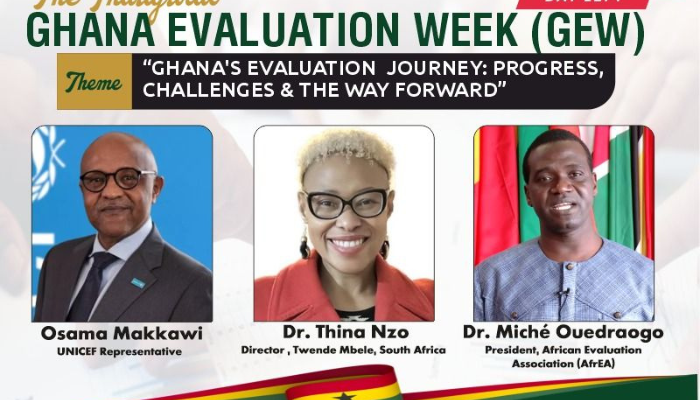
History was made at the Accra
International Conference Centre (AICC) when the development community gathered
for the opening of the Inaugural Ghana Evaluation Week. Delivering the keynote
address (virtually), African Evaluation Association (AfrEA) President Dr. Miché Ouédraogo
championed a vision of robust, indigenous evaluation systems as the bedrock of
the continent’s future.
The two-day event (22–23
October), organized under the theme “Ghana’s Evaluation Journey: Progress,
Challenges & the Way Forward,” marked a critical milestone in the country’s
quest to institutionalize Monitoring and Evaluation (M&E) as a tool for
public accountability and transformational growth.
A Model for the Continent
In his address, Dr. Ouédraogo
commended Ghana’s longstanding commitment to evidence-based governance,
acknowledging the pivotal roles played by the National Development Planning
Commission (NDPC) and the Ghana Monitoring and Evaluation Forum (GMEF). “Ghana’s evaluation journey
reflects the resilience and ambition of our continent,” Dr. Ouédraogo stated.
“By institutionalizing these practices, you are not just checking boxes for
compliance; you are building a mirror in which the nation can see itself,
correct its course, and accelerate its development.”
Empowering the Next Generation
A central pillar of the
President’s message was the necessity of inclusion. Aligning with the event’s
focus on capacity building, he highlighted the importance of engaging young
professionals. He praised the involvement of the Young Evaluators Community of
Practice (YECOP), noting that sustainable development requires handing the
“EvalTorch” to a new generation equipped with digital tools and fresh
perspectives.
Dr. Ouédraogo emphasized that
collaboration is the essence of the Made in Africa
Evaluation approach, solving African challenges through shared African
expertise and global solidarity. He reminded participants that evaluation is
not an end in itself, but the compass that guides us toward a more equitable,
transparent, and prosperous Africa.
|
|
|
|
A
Landmark Success for the Inaugural African School of Evaluation (ASE)
|
|
|
|
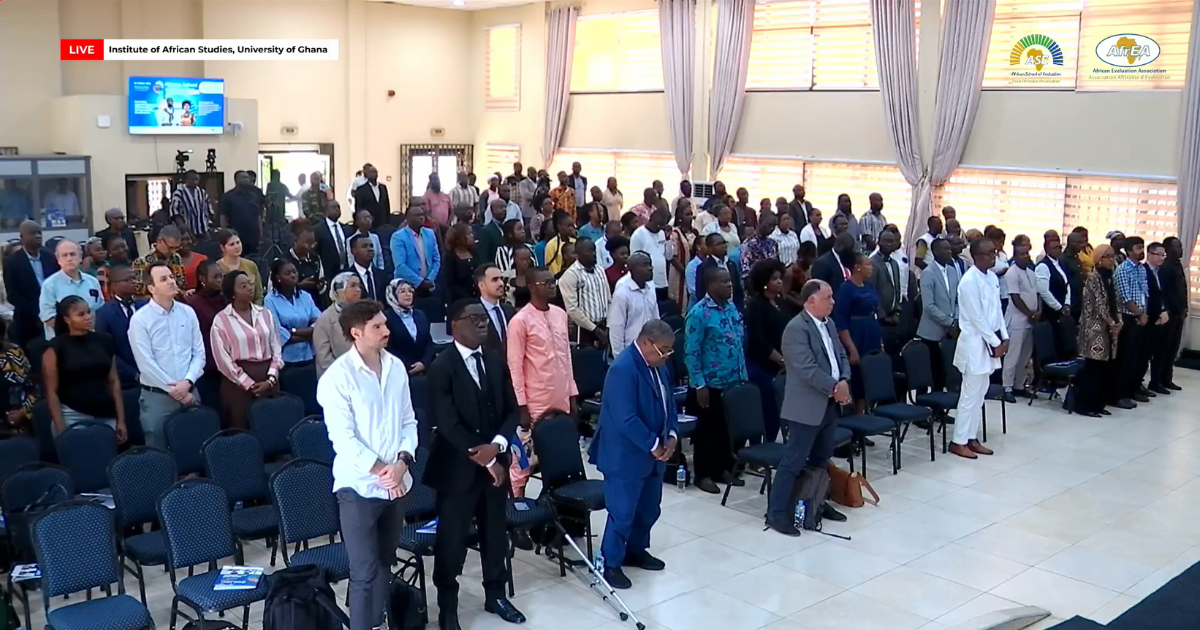
A new chapter in the continent’s
development history was written at the Institute of African Studies, University
of Ghana from November 24 to 28, as the first-ever African School of Evaluation
(ASE) successfully brought together a new generation of practitioners to
professionalize African evaluation practice.
The ASE was conceived to bridge a
critical gap: while the demand for evidence-based policy has surged, formal and
structured evaluation training has remained scarce across the continent.
The school’s mission is to move
beyond “donor-satisfaction” and instead contribute to good governance by
equipping African professionals with the skills to lead evaluations “by and for
Africans.” This initiative directly supports the “Made in Africa Evaluation”
(MAE) approach, ensuring that rigorous international standards are rooted in
African cultural and social realities.
A Week of Intensive,
High-Level Specialized Training
The 2025 edition offered five
days of immersive learning, featuring thematic tracks facilitated by
world-renowned institutions. These modules were designed to be immediately
applicable to the complex challenges facing African public administrations and
NGOs.
1. Evaluation in the Service
of Equity
Facilitated by CLEAR Anglophone
Africa, this track challenged participants to view evaluation as a tool for
social justice. By exploring “Equitable Evaluation” approaches, practitioners
learned to address structural inequalities—economic, political, and social—that
persist despite decades of development interventions.
2. Impact Evaluation: Theory
and Applications
Led by the American Institutes
for Research (AIR), this technical module focused on the “how-to” of measuring
true program impact. Participants engaged in hands-on STATA sessions, mastering
experimental designs, matching, and discontinuity designs to ensure that
African development projects are backed by the highest level of statistical
evidence.
3. M&E in the Age of
Artificial Intelligence
CLEAR Francophone Africa
spearheaded a forward-looking module on the digitalization of M&E systems.
In the context of the shift toward program budgeting, participants explored how
AI and digital dashboards can modernize public administration, moving away from
manual, fragmented data collection to real-time, interoperable systems.
4. Mixed Methods in Action
The National School of Public
Administration (ENAP, Quebec) delivered a balanced track on integrating
qualitative and quantitative techniques. This module emphasized the importance
of entering the field with appropriate tools—such as surveys and observations—to
ensure that findings are credible and contextually relevant.
5. Specialized Tracks for
Youth and Children
With support from UNICEF and
other partners, the program also emphasized thematic evaluations focused on
social sectors, ensuring that the needs of Africa’s most vulnerable populations
remain at the heart of the evaluative process.
The school has birthed a
pan-African network of evaluators who will continue to share resources, data,
and methodologies long after the closing ceremony, and the success of this
first edition paves the way for the AfrEA Secretariat and its partners outline
a clear roadmap for the future:
- Annualization: The ASE will become a
permanent annual fixture, to ensure a consistent pipeline of evaluation
talent.
- Theme Evolution: Future sessions will
adapt to emerging continental priorities, such as climate change
evaluation and the continued integration of AI in governance.
- Institutionalized Funding: Transitioning
to a sustainable model with the support of national governments and
international partners to ensure the school remains accessible to Young
and Emerging Evaluators (YEEs).
“Evaluation is the pulse of
development. Through the ASE, we are ensuring that Africa’s heart beats with
accuracy, equity, and excellence.”
|
|
|
|
|
|
GMEF and NDPC hold inaugural Ghana Evaluation Week
The Ghana Monitoring and Evaluation Forum (GMEF), in
partnership with the National Development Planning Commission (NDPC),
successfully hosted the first-ever Ghana Evaluation Week. Under the
theme "Ghana’s Evaluation Journey: Progress, Challenges, and the Way
Forward," the event brought together over 300 stakeholders. A major
highlight was the focus on AI in Evaluation, equipping young evaluators
with modern tools to enhance data analysis and reporting.
Access the official report on the inaugural Ghana Evaluation
Week
|
|
SAMEA and the DPME convene the 2025 National Evaluation
Seminar
On the margins of South Africa’s G20 Presidency,
the South African Monitoring and Evaluation Association (SAMEA) and the Department
of Planning, Monitoring and Evaluation (DPME) convened the 2025 National
Evaluation Seminar. The country's Minister for Planning, Monitoring and Evaluation Maropene Ramokgopa emphasized evaluation as a
"strategic pillar of a capable state." A landmark Memorandum of
Understanding was signed with the New Development Bank (NDB) to strengthen South-South
learning and evaluation capacity across the BRICS+ network.
|
|
|
|
|
|
UEA celebrates winners of the 2025 Uganda National
Evaluation Case Competition
The Uganda Evaluation Association (UEA) has congratulated Team
Synergizers, the winners of the 2025 Uganda National Evaluation Case
Competition (UNECC). After a rigorous and inspiring competition, UEA celebrated
the incredible talent and creativity of outstanding student teams from
universities across Uganda and beyond!
Team Synergizers emerged as the national
champions, demonstrating exceptional analytical rigor, creativity, and the
application of evaluation principles to tackle the case on Climate Change and
Resilience in Karamoja. They represented Uganda at the 8th Annual World
Evaluation Case Competition (WECC), in November 2025, joining top student teams
from around the world to solve a global evaluation challenge.
|
|
|
|
|
|
AfrEA
President Closes High-Level OECD Learning Event
|
|
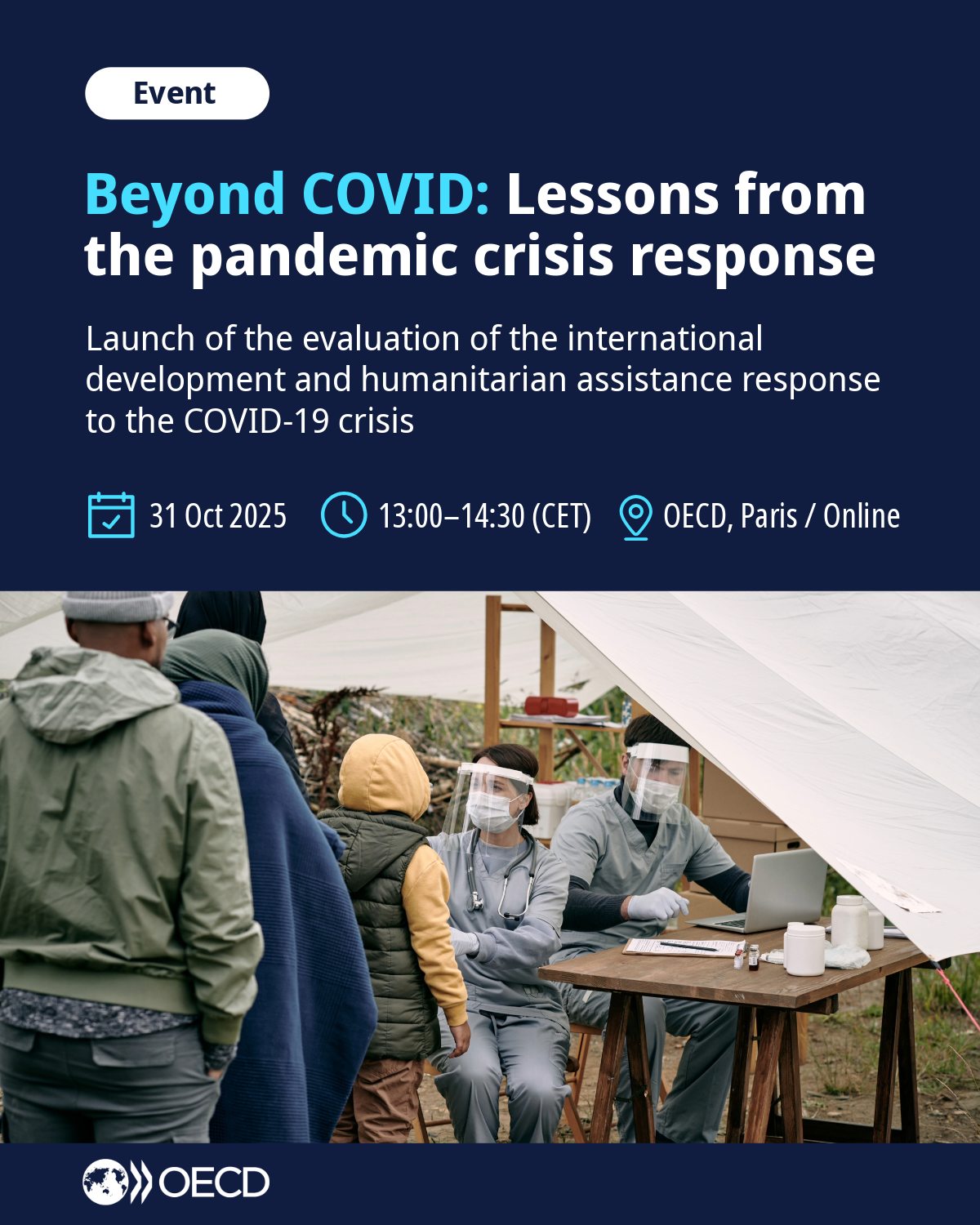
The President of AfrEA, Dr. Miché
Ouédraogo delivered the closing remarks at the OECD COVID-19 Global Evaluation
Coalition Learning Event on October 31, 2025. This high-level hybrid gathering
brought together leaders from the OECD, World Health Organization
(WHO), other United Nations agencies, and partner countries. The objective was
to critically reflect on the global evaluations of development co-operation and
humanitarian responses to the COVID-19 crisis. |
|
|
|
Championing African Leadership
Dr. Ouédraogo’s closing address
was a powerful call to action, ensuring that African perspectives remain
central to the post-pandemic development agenda. His remarks spotlighted
several critical themes:
- African Leadership: He emphasized AfrEA’s
commitment to seeing African institutions take the lead in evaluation and
global health decision-making.
- Inclusive Cooperation: He highlighted the
necessity of evidence-based cooperation that truly spans borders and
sectors.
- Equity & Context: He argued for
global responses that are not “one-size-fits-all,” but are shaped by local
contexts, equity, and authentic African voices.
A Mandate for the Future
The event served as a reminder
that while the crisis period of 2020–2022 has passed, the lessons must endure.
By closing this major international forum, Dr. Ouédraogo reaffirmed AfrEA’s
position on the global stage.
|
|
|
|
AfrEA and EBRD Champion the Made in Africa Evaluation Vision
|
|
|
|
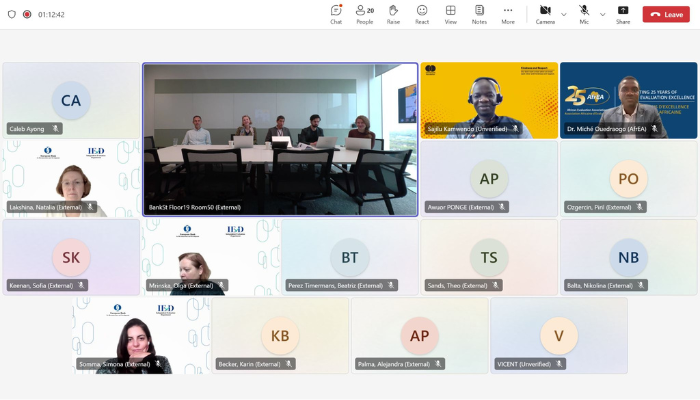
On 15 October 2025, the digital
stage was set for a pivotal exchange of ideas as the Independent Evaluation
Department (IEvD) of the European Bank for Reconstruction and Development
(EBRD) hosted a powerful virtual dialogue with the African Evaluation Association
(AfrEA).
At the center of this
conversation was AfrEA President, Dr. Miché Ouédraogo, who reflected on a
transformative 25-year journey defined by resilience, innovation, and a
steadfast commitment to the Made in Africa Evaluation concept.
A Gateway to Strategic
Collaboration
This session was more than a
retrospective; it marked a significant milestone for future cooperation. With
the EBRD planning to expand its evaluation interventions across the African
continent, this dialogue served as a strategic gateway for partnership.
The discussion opened new doors
for shared learning, signaling a move towards a more interconnected global
evaluation community where African perspectives are not just included, but
prioritized.
Voices of Impact
The session was further enriched
by the insights of Sajilu Kamwendo from the Mastercard Foundation.
His intervention was a source of inspiration, reaffirming the critical need for
African-led evaluation systems that center on:
- Equity: Ensuring fair and inclusive
assessment frameworks.
- Youth: Engaging the next generation of
evaluators.
- Local Knowledge: Valuing indigenous
context over imported metrics.
As AfrEA continues to champion
inclusive, context-driven evaluation, this engagement signals a promising step
toward both continental impact and global recognition.
The Made in Africa
Evaluation journey is gaining global momentum, shifting the narrative from
external oversight to internal empowerment.
|
|
|
|
AfrEA
President Spotlights “Made in Africa Evaluation” at Global Frontier Lecture
|
|
|
|
In November 2025, the African
Evaluation Association (AfrEA) took a significant step forward in bringing
African perspectives to the global academic stage. Our President, Dr. Miché
Ouédraogo, served as the distinguished guest for the Frontier Lecture
Series on Evidence-Based Social Science (No. 52).
The prestigious event was jointly
hosted by the Center for Evidence-Based Social Science at Lanzhou University
and the Global Evaluation Initiative (GEI).
A Bold Vision for African
Evaluation
During the lecture, Dr. Ouédraogo
spotlighted the evolving vision for Made in Africa Evaluation (MAE). Moving
beyond standard methodologies, he presented MAE not merely as a technical
framework, but as a movement deeply rooted in African agency, indigenous
knowledge, and local leadership.
He provided a comprehensive
overview of the current state of the field, addressing:
- The epistemology and foundations that underpin
African evaluation methods.
- Distinct MAE approaches that differentiate African
evaluation from Western-centric models.
- The challenges currently facing evaluators and
institutions across the continent.
From Theory to Practice:
AfrEA’s Initiatives
Dr. Ouédraogo highlighted how
AfrEA is actively operationalizing this vision. He detailed several key
initiatives designed to institutionalize and promote MAE, including:
- The African Evaluation Principles: Guidelines
ensuring evaluations are culturally relevant and ethically sound.
- The African Evaluation Journal: A platform for
scholarly discourse and documenting African evaluation evidence.
- AfrEA Conferences: The premier gathering for
networking and capacity building.
- The African School of Evaluation: An upcoming
initiative set to train the next generation of evaluators.
Dr. Ouédraogo’s participation in
the Frontier Lecture Series reinforces our commitment to shifting the
narrative, ensuring that evaluation in Africa is defined, led, and executed by
Africans.
|
|
|
|
AfrEA Takes the Global Stage at UNEG Evaluation Week 2026
|
|
In February 2026, the African Evaluation Association (AfrEA)
took the global stage at the UNEG Evaluation Week ensuring that the Global
South, and Africa in particular, held a decisive voice in future-focused
discussions. Amidst conversations surrounding global reforms and heightened
expectations, AfrEA’s presence highlighted the critical need for regional
perspectives in shaping the evolving role of evaluation on the international
stage.
Championing the continent's interests, AfrEA’s President
actively participated in a high-level panel alongside other leaders from
national and regional evaluation associations. During this intervention, the
President shared essential insights on how regional organizations are adapting
to the growing demands for evidence, transparency, and results. By directly
injecting Afro-centric evaluation paradigms into these top-tier policy dialogues,
AfrEA emphasized that international frameworks must respect and integrate local
African contexts and methodologies to achieve true evaluation success.
This high-level engagement represents a significant
milestone for the African evaluation community, moving beyond merely having a
seat at the table to actively driving global standards. Fostering deeper
collaborations with international entities, AfrEA is paving the way for more
inclusive initiatives while elevating the "Made in Africa Evaluation"
(MAE) approach globally and validating the profession at home. AfrEA remains
committed to bridging the gap between global standards and local realities,
ensuring the future of evaluation is co-created with Africa, for Africa.
|
|
|
|
|
|
Uganda Evaluation Week 2026
(25th Anniversary Celebration)
|
|
|
|
|
|
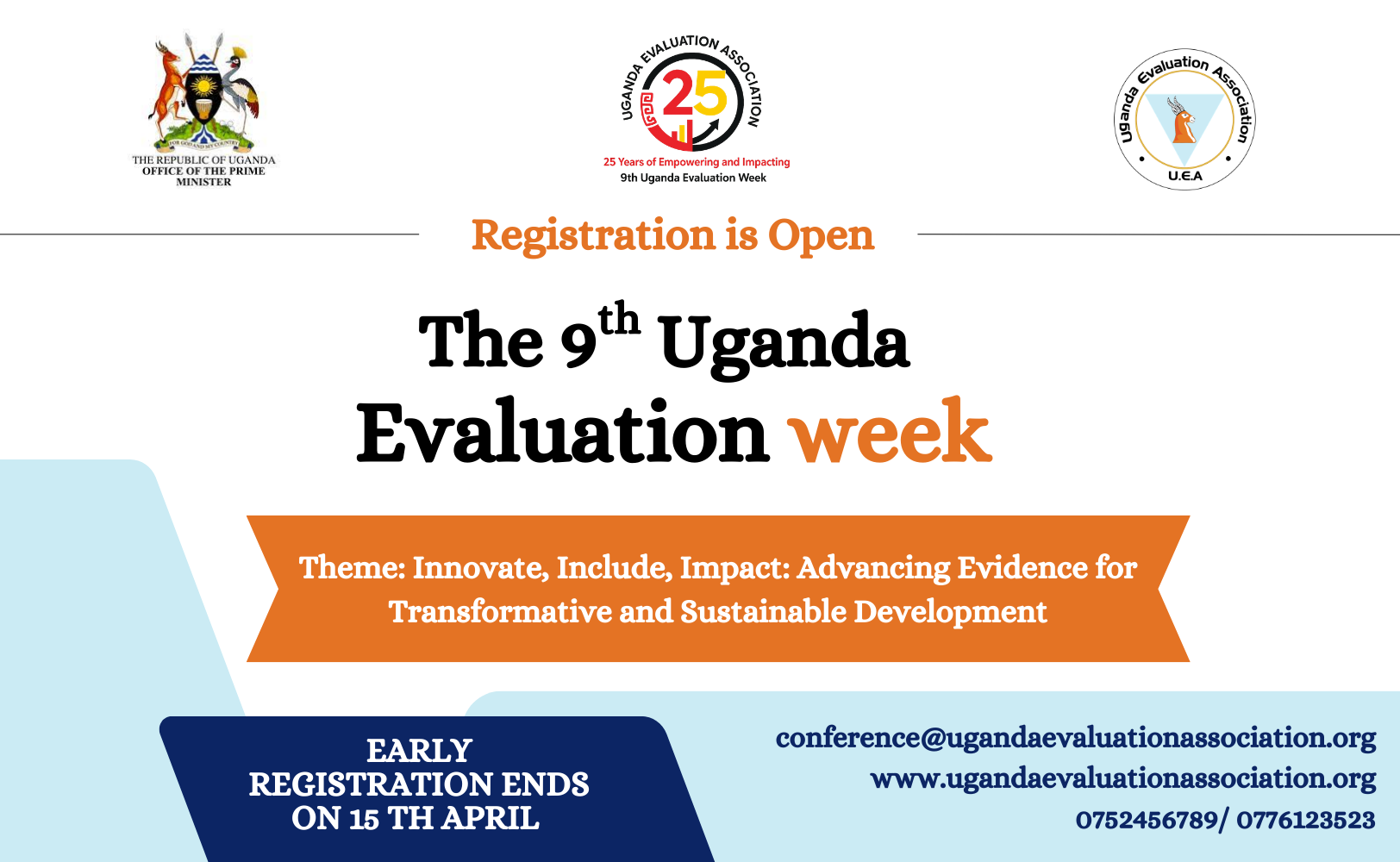
The UEA, in collaboration with
the OPM and partners, is organizing the 9th Uganda Evaluation Week. The week is
unique as it marks 25 years of commemoration of UEA's existence. The Uganda
Evaluation Week is an annual event that provides a platform for evaluation
practitioners from Government, Civil Society, the Private sector, Young and
Emerging Evaluators (YEEs), academia, and development partners to discuss and
share evidence and lessons arising from development evaluation in Uganda and
beyond. It is an opportunity to reflect on ongoing initiatives to understand
their effectiveness and impact.
The Week is scheduled to start
with pre-conference workshops on the 4th and half day of 5th
of May 2026, followed by the main conference from 5th May to 8th
May 2026 in Kampala, Uganda.
Know more about 9th Uganda Evaluation Week
|
|
|
|
|
|
AfDB Development Evaluation Week 2026
|
|
|
|
The African Development Bank Group’s Development Evaluation Week 2026 (EvalWeek 2026) will take place from 15 to 17 June 2026, under the theme “Catalyzing Impact Across Africa’s Borders.”
EvalWeek 2026 will bring together policymakers, development practitioners, evaluators, researchers, and development partners to reflect on lessons from evaluations and explore how evidence can better inform regional integration strategies, cross-border initiatives, and Africa’s development agenda.
Know more about the AfDB Development Evaluation Week 2026
|
|
|
|
The
9th Evidence to Action (E2A) Conference and Exhibition
|
|
|
|
The Evidence to Action Conference and Exhibition 2026 will be co-hosted with the Institute of Statistical Social and Economic Research (ISSER) of the University of Ghana, with the theme of “Reimagining the Evidence-Informed Policy and Decision-Making Ecosystem in Africa.”
Taking place from 22 to 26 June 2026, the conference will bring together researchers, policymakers, practitioners, and partners to advance an Africa-led approach to evidence-to-action, strengthening the use of contextually grounded knowledge for equitable and sustainable development, and positioning Africa as a global leader in evidence-informed policymaking.
Know more about Evidence to Action 2026
|
|
|
|
Glocal Evaluation Week 2026
|
|
|
|
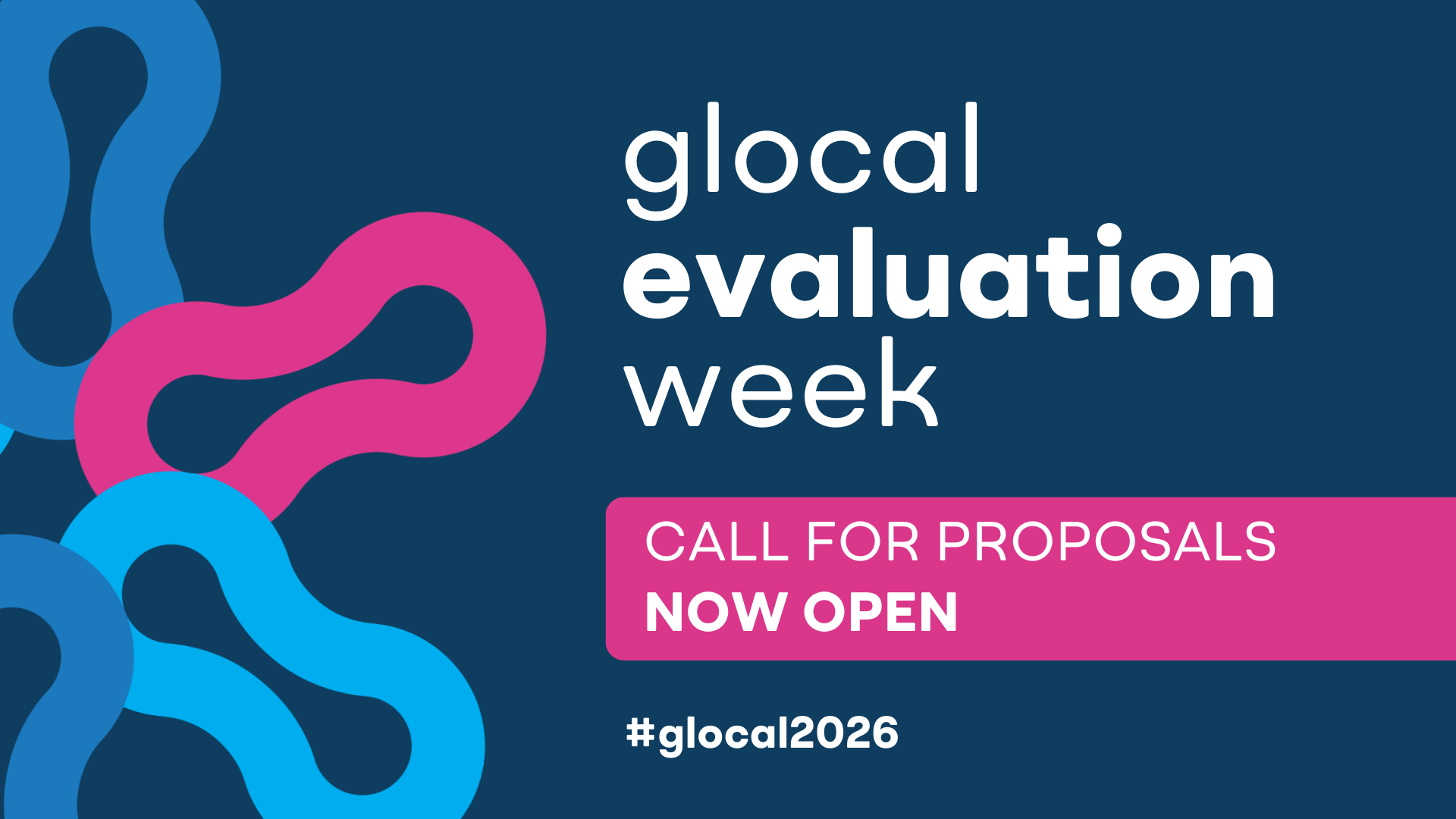
From June 1–5, 2026, Glocal Evaluation Week 2026 invites us to come together to reflect, question, and shape the future of our field under this year’s theme: “Evaluation, Evidence, and Trust in the Age of AI.” As artificial intelligence transforms how information is created and consumed, we face both opportunity and responsibility. How do we embrace innovation without compromising rigor? How do we protect credibility in an era of instant answers and blurred lines between fact and fabrication? Convened by the Global Evaluation Initiative (GEI) and the Clear centres, Glocal 2026 creates space for honest, practical conversations about what this moment means for evaluators, commissioners, policymakers, researchers, and communities alike. Over the years, Glocal has grown into a vibrant, global movement, connecting thousands across regions and sectors who believe in the power of evidence to improve lives. Now, the call for proposals is officially open, and we warmly invite you to be part of it. Whether you host a panel, workshop, roundtable, or training (virtually or in person) your voice and experience can help strengthen our shared practice. Applications close 26 March, 2026. Join us in shaping a thoughtful, resilient, and forward-looking evaluation community. Register and submit your proposal at www.glocalevalweek.org.
|
|
|
|
|
|
Toolkit
for Impact Evaluation of Public Credit Guarantee Schemes
|
|
Source: World Bank Group
The Toolkit for Impact
Evaluation of Public Credit Guarantee Schemes for SMEs has been created
with the objective of identifying a set of uniform methodologies for assessing
the financial and economic impact of public CGSs as systematically and
objectively as possible. A uniform methodology set can ensure comparability
across time and countries, and therefore can provide a global reference for
impact evaluations of CGSs.
The Toolkit is intended to provide guidance to
CGS managers, policymakers and stakeholders on how to design and implement an
effective and efficient CGS impact evaluation. Impact evaluations assess
whether or not a program has achieved its intended results. Impact evaluations
can help strengthen the evidence base for developing CGSs around the world and
help direct resources to be spent more effectively to improve access to finance
for SMEs.
Access the toolkit
|
|
|
|
|
|
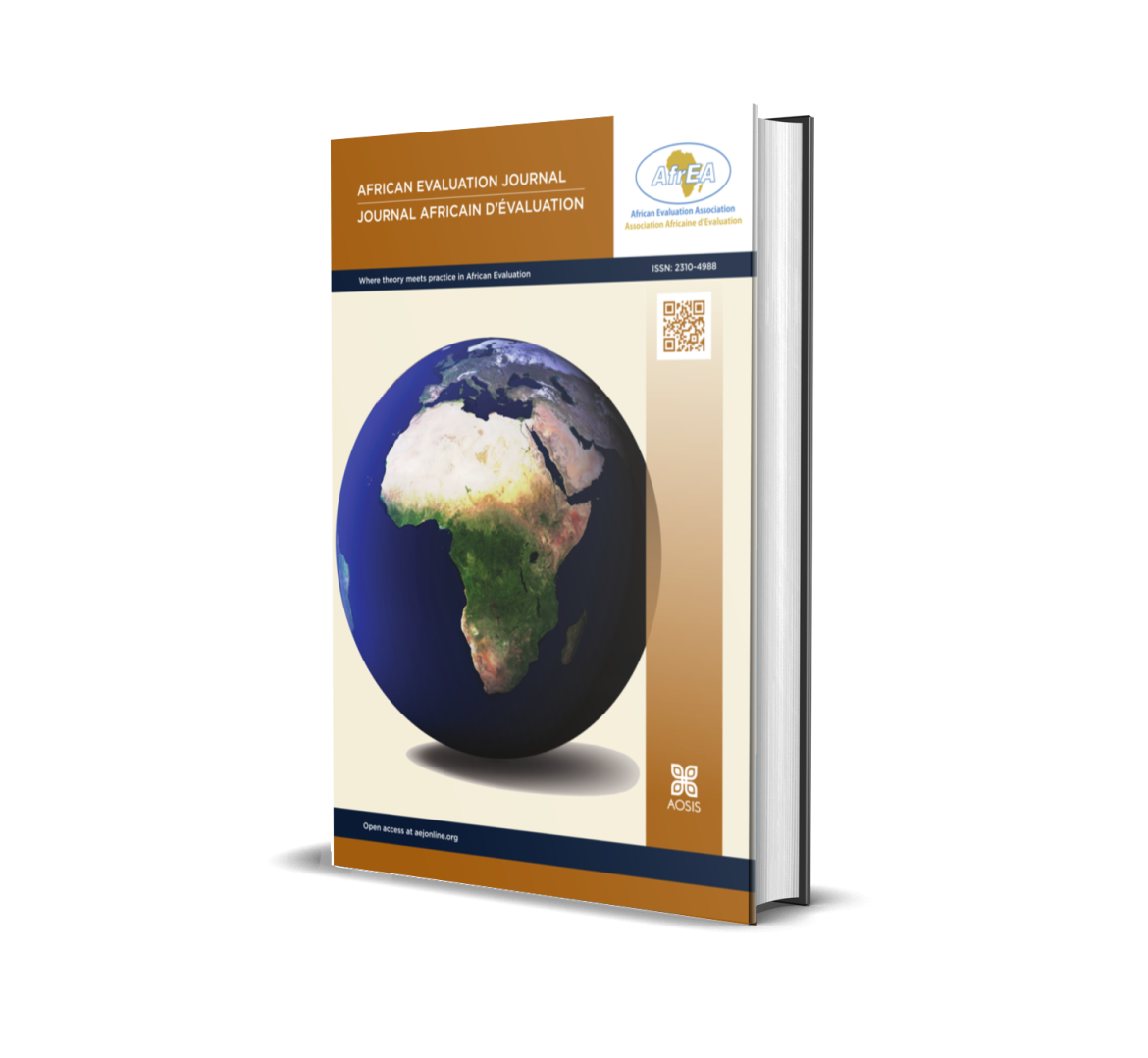
This edition of "AfrEA Insights" brings to you the most recent publications in the African Evaluation Journal (AEJ), an initiative of the African Evaluation Association.
|
|
|
|
|
|
|
|
|
|
|
|
March 2026 African Evaluation Association (AfrEA) 36 Kofi Annan Avenue, North Legon, Accra, Ghana |
|
|
|
|
_(1).png)


.png)
.png)

_(1).png)

.png)
.png)
.jpg)
.png)

.png)
.png)