| |
|
|
|
|
Thoughts on the Wilton Park Conference 2024 |
|
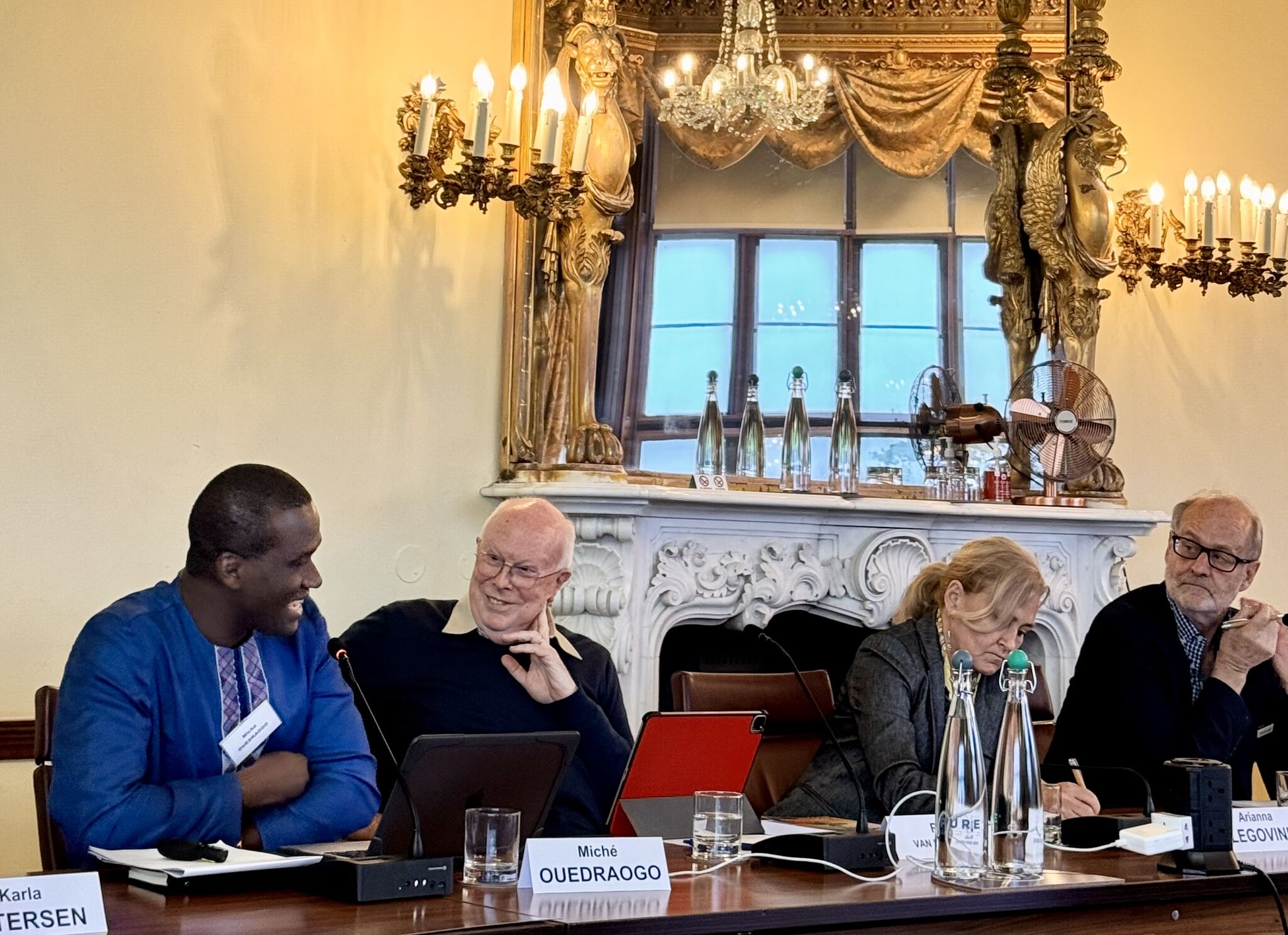
One of the notable events that concluded
2024 was my participation in the esteemed Wilton Park conference in the United
Kingdom, cantered on 'Evidence-led and Impact-driven Development'. It was a
privilege to engage in discussions on the 'Generation and Use of Robust
Evidence' alongside distinguished experts Arianna Legovini, whom I now fondly
refer to as my mentor in impact evaluation, and Rob D. van den Berg, under the
adept moderation of Myles Wickstead.
I am pleased to share some insights from
this enriching experience:
- It must be recognised that even
though there is still work to be done, evidence in the field of development is
increasingly available thanks to the contribution of various actors and
numerous initiatives.
- To encourage the generation and
use of evidence, it is important to map out the key actors, identify their
rationales, needs, and interests, and activate the essential levers.
- It is also important to take
into account the different perspectives and epistemologies involved, especially
regarding the perception of what evidence is and how it should be generated.
This approach encourages its appropriation and use, which is one of the
foundations of the African Evaluation Association’s promotion of #MadeInAfricaEvaluation.
Diversity must be seen as a strength.
- Synchronising collaboration and
cooperation through locally led and country-led evaluation is essential for
co-constructing evidence, as well as ensuring appropriation and capacity
building.
|
|
|
|
During the meeting, I emphasized the
importance of establishing platforms at national, regional, and international
levels to support the promotion and dissemination of evidence.
On behalf of the African Evaluation Association
(AfrEA), I extend my gratitude to Wilton Park and the various partners of this
significant event, which undoubtedly paves the way for large-scale
collaborative actions.
Dr. Miché Ouédraogo President, African Evaluation Association
|
|
|
|
|
|
The African Evaluation Journal (AEJ) |
|
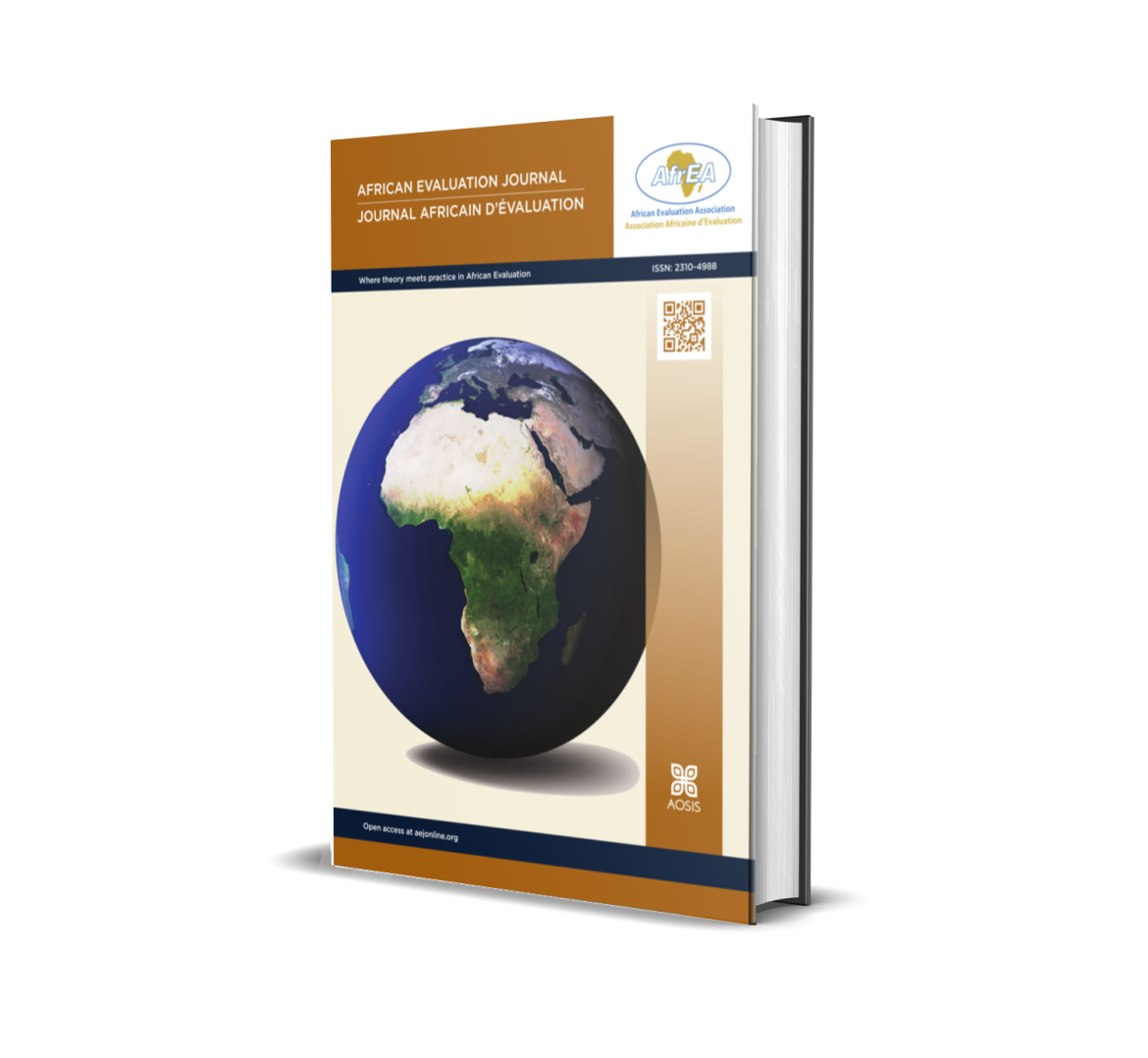
The African Evaluation Journal (AEJ) is a flagship initiative of the African Evaluation Association. It publishes high quality peer-reviewed articles merit on any subject related to evaluation and provides targeted information of professional interest to members of AfrEA and its national associations.
Aims of the African Evaluation Journal (AEJ): - AEJ aims to be a high-quality, peer-reviewed journal that builds evaluation-related knowledge and practice in support of effective developmental policies on the African continent.
- AEJ aims to provide a communication platform for scholars and practitioners of evaluation to share and debate ideas about evaluation theory and practice in Africa.
- AEJ aims to promote cross-fertilisation of ideas and methodologies between countries and between evaluation scholars and practitioners in the developed and developing world.
- AEJ aims to promote evaluation scholarship and authorship, and a culture of peer-review in the African evaluation community.
Publication frequency
The journal publishes at least one issue each year. Articles are published online when ready for publication and then printed in an end-of-year compilation. Additional issues may be published for special events (e.g. conferences) and when special themes are addressed.
Review process
The journal has a double-blinded peer review process. Manuscripts are initially examined by editorial staff and are sent by the Editor-in-Chief to two expert independent reviewers, either directly or by a Section Editor. Read the journal's full peer review process.
Know more about the submission procedure of the AEJ Know more about the submission guidelines of the AEJ
AEJ hits 1 million downloads
In November 2024, the AEJ reached a remarkable 1 million downloads milestone, underscoring its great impact and global reach. In this edition of AfrEA Insights, the former Editor-in-Chief, and current Editor-in-Chief of the journal, as well as the President of AfrEA, speak on this remarkable milestone
|
|
Dr. Mark Abraham, Former Editor-in-Chief
|
|
Dr.
Mjiba Frehiwot, Current Editor-in-Chief |
|
|
|
|
|
|
|
Join us in Addis as we celebrate AfrEA@25 |
|
|
|
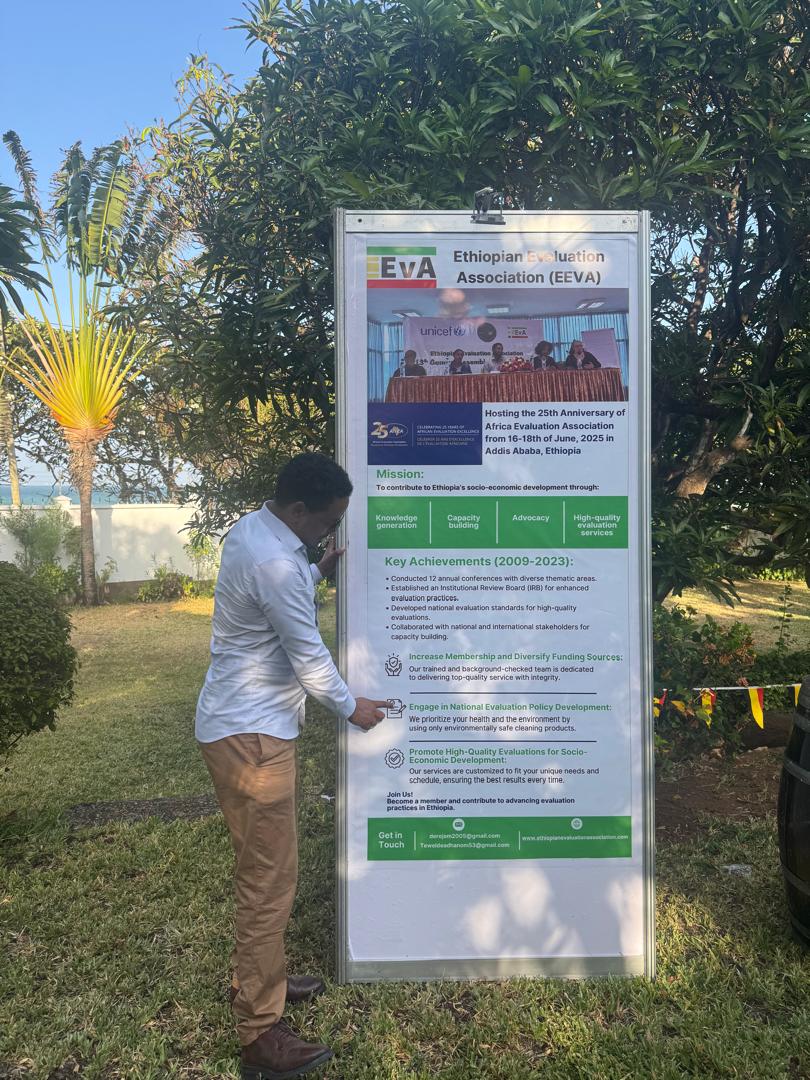
Preparations are on course for the organization
of the solemn ceremony to commemorate the 25th anniversary of the African
Evaluation Association (AfrEA) which will take place from 16 to 18 June 2025 at
the UNECA Conference Centre in Addis Ababa, Ethiopia. The event will be organised
in collaboration with the Ethiopian Evaluation Association (EEval).
Join us as we reflect on AfrEA's journey
over the past quarter-century, celebrating our achievements in fostering a
vibrant evaluation community, building capacity, and promoting African
evaluation expertise on international platforms. This event will bring together
evaluators, policymakers, academics, government officials, researchers,
development practitioners, and other stakeholders from across the continent and
beyond.
The anniversary celebration will feature
keynote speeches, panel discussions, workshops, and networking opportunities,
providing a platform to share experiences, learn from one another, and envision
the future of evaluation in Africa.
Be part of this momentous occasion as we honour
our past, celebrate our present, and look forward to a future of continued
growth and impact in the field of evaluation.
Stay tuned for more details and
registration information. We look forward to celebrating with you in Addis
Ababa!
|
|
|
|
AfrEA Board Member Presents at Le Barometre Webinar |
|
|
|
On Thursday 27 February 2025, Mr. Alphonse
Boyogueno, AfrEA's Board member representing Central Africa, participated in a
highly engaging webinar hosted by Le Baromètre.
The webinar, conducted in French, revolved around the theme "Professional networks in impact monitoring and
evaluation: Why and how to become an active, committed and influential member"
Mr. Boyogueno's
presentation was a highlight of the event, focusing on the pivotal role of
professional networks like AfrEA and the substantial impact they can generate
in the field of evaluation.
- He emphasized how professional networks
serve as vital platforms for knowledge exchange, capacity building, and
fostering collaboration among evaluation practitioners.
- He provided practical advice on how
individuals can become active, engaged, and influential members of these
networks, highlighting the benefits of active participation and
contribution.
- He illustrated how robust professional
networks can drive impactful evaluation practices, enhance the quality of
evaluations, and ultimately contribute to more effective development
outcomes.
Mr. Boyogueno's
expertise and passion for the subject were evident throughout his presentation,
inspiring attendees to leverage professional networks to their fullest
potential.
We extend our
heartfelt thanks to Le Baromètre for organizing this insightful webinar and
providing a platform for such meaningful discussions. AfrEA remains committed
to promoting the value of professional networks in advancing the field of
evaluation.
|
|
|
|
Capacity Building: Stakeholders Converge for Evaluation Workshop in Dar es Salaam, Tanzania
|
|
|
|
From 25 to 28 February 2025, national VOPE representatives from several African countries, joined evaluations experts from all over
the world in a three-day intensive seminar in
Dar es Salaam. The training was organized by the Institute
of Development Policy, University of Antwerp with
Special Evaluation
Office of Belgium and Mzumbe University. More than 75 M&E experts came together to exchange ideas, share knowledge, and build lasting
networks.
|
|
Held at the embassy of Belgium in Tanzania, the intensive co-creation workshops and poster sessions aimed to 'shape the future of evaluation’. Prominent on the program was the hosting of an inspiring Evaluation Fair, by the Ambassador of the Kingdom of Belgium to Tanzania.
Fifteen M&E experts showcased their work during the poster
reception presentation, demonstrating the impact of M&E and data-driven decision-making.
Two awards were provided; one to Ms. Soukeyna OUEDRAOGO, from Cameroon, winner of the
COMMUNITOR 2025; while Dr. Isaack Michael Nguliki, from Tanzania was conferred the Jury Award, being voted for the COMMUNITOR 2025 Audience Award.
|
|
Ethiopian Evaluation Association (EEval), an AfrEA VOPE presenting during the workshop. |
|
|
|
|
|
SENEVAL undertakes evaluation capacity building at several levels |
|
In November and December
2024, SenEval, an AfrEA VOPE in Senegal, in conjunction with its partners, carried out several capacity building activities. An overview of these activities is as follows:
1. Methodological workshop to capitalize on experiences
in the participation of Children, Adolescents and Young People (EAJ) in Senegal
As part of its partnership with UNICEF, SenEval, through the
Thematic Group-Childhood and Youth Evaluation, organized a methodological workshop from November 14 and 15, 2024 at IED Africa (Innovation,
Environment, Development). This session focused on sharing information on
methodologies adapted for capitalizing on experiences in terms of EAJ
participation.
2. Capacity building session on writing abstracts and articles for evaluation
On November 21, 2024, SenEval in collaboration with the USAID MEL Platform held
a second training workshop on writing abstracts and articles for evaluation.
This session targeted around twenty participants (SenEval members) and was
co-hosted by Dr. Alassane Ouattara and Dr. Nassibou Bassongui (CESAG, CLEAR FA).
|
|
3. Training workshop for CEP agents on Qualitative
Research Methods (MQL) for performance evaluations
SenEval in partnership with UNICEF, organized a training
workshop on the use of qualitative methods in evaluating public policies
intended staff of the Research and Planning Units (CEP) of the various governments ministries of
Senegal. This was during a residential seminar in Thiès on November 26, 27 and 28, 2024.
4. Public Policy Evaluation Day in Senegal
SenEval, CLEAR-FA (Centers for Learning on Evaluation and
Results/ Francophone Africa) and AFD (French Development Agency) organized the
Public Policy Evaluation Day in Senegal. It was held at the CESAG campus on November 28,
2024.
5. Capacity building workshop for journalists dealing with issues of the economy
SenEval in partnership with UNICEF organized a capacity
building workshop on the evaluation of public policies for journalists dealing with issues related to the economy. The workshop was held on December 10 and 11, 2024 in
Thies.
|
|
|
|
|
|
|
|
AfrEA Participates in the 32nd OECD DAC Network on Development Evaluation Meetings in Paris
|
|
|
|
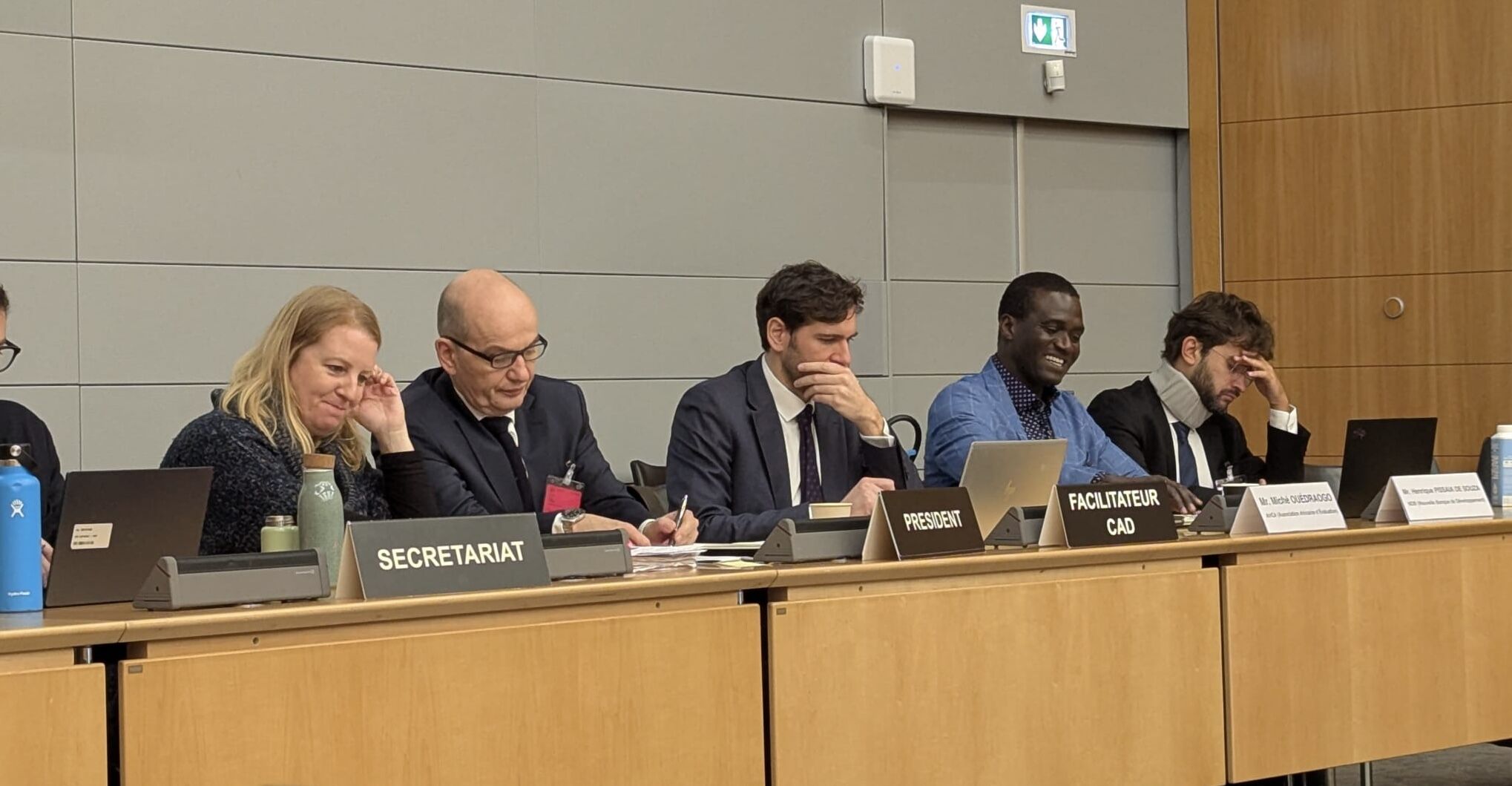
From 26 to 27 February 2025, AfrEA's President, Miché Ouédraogo participated in the 32nd OECD Development Assistance Committee (DAC) Network on Development Evaluation (EvalNet) meeting, an event that occurs every eight to nine months. These meetings bring together government and non-government evaluation practitioners and experts from the development community, to share experience and insights on evaluating development policies and programmes.
Speaking during a panel session on the theme "OECD evaluation norms today: A common foundation for global action", the AfrEA President commended the OECD for formulating norms (Principles, Standards, and Criteria) that are very useful for practice of evaluation globally. He highlighted that these norms are generally appreciated by the evaluation community and provide useful guidance for anyone undertaking evaluation. He pointed out, however, that the standards need to be more appropriated to local contexts, spotlighting the African Evaluation Principles developed by AfrEA, as a solution to this shortfall.
President Miché expressed AfrEA's availability and willingness to support any potential revision of these OECD Principles, Standards, and Criteria in a bid to ensure that the African perspective is taken into consideration.
Our participation in this prestigious event underscores AfrEA's role as the trusted African evaluation partner on the global stage, and our involvement in such high-level discussions highlights our commitment to advancing evaluation practices and fostering impactful collaborations worldwide.
|
|
|
|
|
|
Meet Dr. Candice Morkel, IPDET's New Head of Program
|
|
In February 2025, Dr. Candice Morkel officially took charge as the new Head of Program for the International Program for Development Evaluation Training (IPDET), GEI's executive training program for development and evaluation practitioners worldwide.
Dr. Morkel’s appointment comes at a critical juncture for IPDET. Her leadership builds on a distinguished career of over 25 years, during which she has become a globally recognized expert in monitoring and evaluation (M&E), public sector governance, and capacity building.
Read more.
|
|
Candice Morkel (PhD) Program Manager, International Program for Development Evaluation Training (IPDET)
|
|
|
|
|
|
|
|
AfrEA Evaluation Excellence Exchange - January 2025
Theme: 25 Years of Organising for Evaluation in Africa by AfrEA: Achievements, Challenges, and Lessons
Date: 22 January 2025
Moderator: Ms. Rosetti Nabbumba Nayenga
Speakers: - Dr. Zenda Ofir
- Dr. Florence Etta
- Mr. Serge-Eric Yakeu-Djiam
|
|
AfrEA Evaluation Excellence Exchange - February 2025
Theme: Innovative approaches to strengthen evaluation capacity in Africa
Date: 19 February 2025
Moderator: Ms. Jennifer Norins
Speakers: - Mr. Dugan Fraser
- Ms. Sakina Mwinyimkuu
- Mr. Abdoulaye Gounou
|
|
|
|
|
|
|
|
Inaugural Workshop on the National Evaluation Capacities Index
|
|
Date: 25 - 28 March 2025 Venue: Accra, Ghana Partners:
- World Food Programme (WFP)
- German Institute for Development Evaluation (DEval)
Background information:
The development of national evaluation capacities has been a priority on the international development agenda in recent years. This effort complements initiatives led by governments in respective countries to establish structures, regulations, and practices for evaluating public action.
The German Institute for Development Evaluation (DEval) and the World Food Programme (WFP) promote the implementation of an index that assesses and reports on the evolution of capacities within National Evaluation Systems (NES). This instrument, known as the National Evaluation Capacities Index (INCE), has been successfully implemented in an increasing number of Latin American countries since 2020.
The African Evaluation Association (AfrEA) aims to institutionalize and strengthen the NES of African countries as a strategic objective. To this end, AfrEA is interested in applying a diagnostic tool similar to the INCE. Given that the INCE was developed in Latin America, a pilot application of the instrument is necessary in selected African countries before scaling it to others in the region.
WFP, AfrEA, and DEval have agreed to pilot the INCE in six countries within the African region in 2025: Benin, Ghana, Morocco, Congo, South Africa, and Tanzania. For this pilot application, a national consultant in each country is required to provide support following initial training on the INCE and its application (scheduled for March 25-28), ensuring the measurement process is conducted in April and May 2025.
|
|
|
|
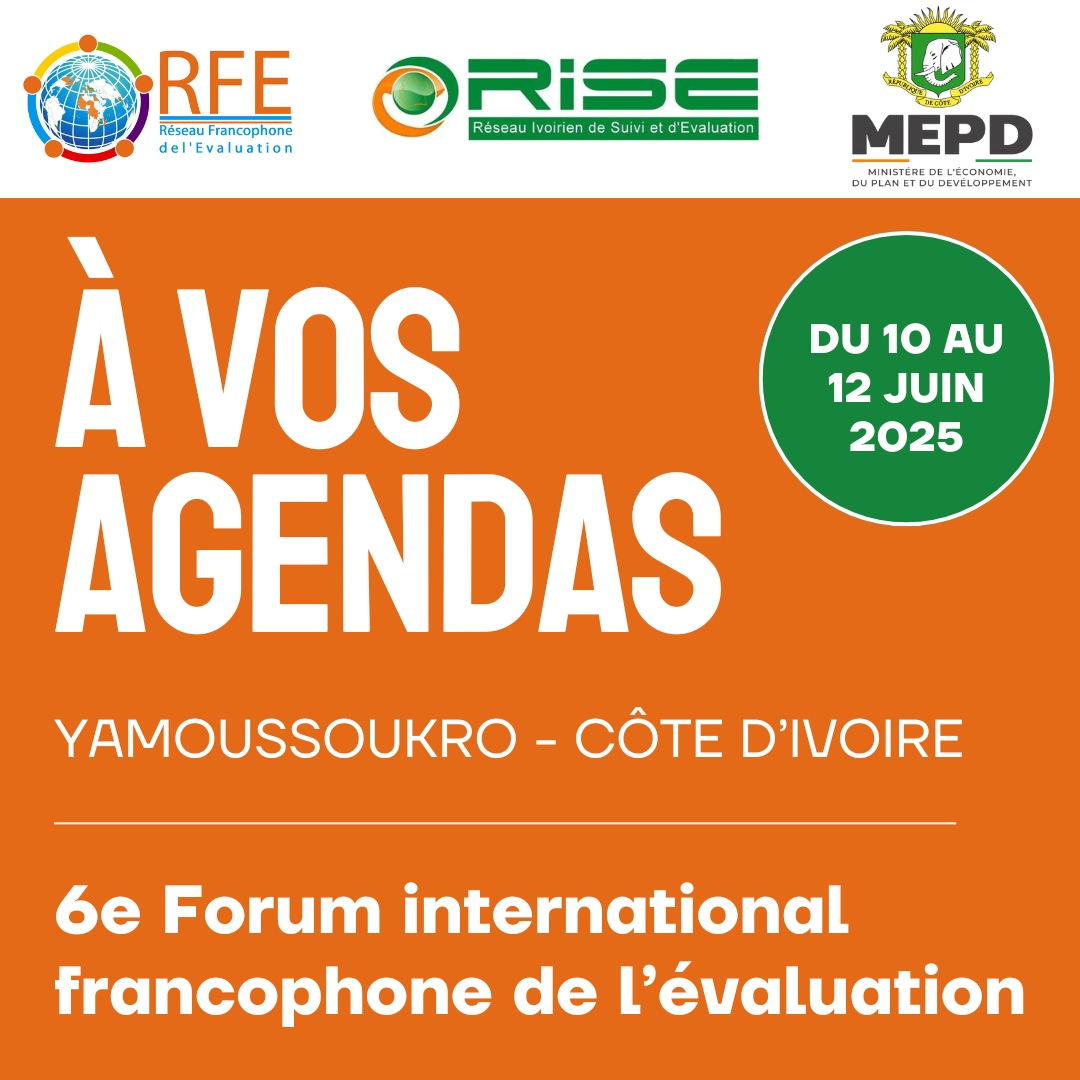
6th International
Francophone Evaluation Forum
|
|
|
|
The International
Francophone Evaluation Forum (Forum International Francophone de l'Évaluation -
FIFE) will be held from 10 to 12 June 2025 in Yamoussoukro, Côte d'Ivoire.
Organised by the Ivorian Monitoring and Evaluation Network (RISE), the Ministry
of Planning and Development of Côte d'Ivoire and the Francophone Evaluation
Network (Réseau Francophone de l'Evaluation - RFE), the event, dedicated to the
evaluation of public policies and programmes, will be held under the theme, “Navigating
the complexity of transitions: evaluation issues and methods.”
FIFE is organised every two years and brings together
political and institutional decision-makers from the North and South,
representatives of national evaluation associations, evaluation practitioners,
sponsors, users and researchers from all over the French-speaking world.
Through its content and audience, it constitutes a high point in the promotion
of evaluation and the development of evaluative practices as vectors of good
public governance. This strategic aim of the FIFE makes it a unique event, different
from an ordinary congress that is only aimed at practitioners or experts.
Know more about FIFE (in French)
|
|
|
|
|
|
|
|
|
|
|
|
#EvalTorch: Ignite the future of evaluation
|
|
#EvalTorch is a symbol and a call to action, uniting the evaluation community to build a future where evaluation contributes to a more just and sustainable world. Starting its journey during the International Year of Evaluation in 2015, #EvalTorch carried the light of influential and transformative evaluation to over 70 countries and 92 events. Now reignited, #EvalTorch is travelling the world once again to celebrate the progress made and inspire action to make evaluation future-fit to address global challenges and opportunities. Aligned with the vision of the United Nations Pact for the Future, #EvalTorch also serves as a central and dynamic element of the upcoming Summit for the Future of Evaluation.
|
|
|
|
|
|
|
|
|
|
November 2024 African Evaluation Association (AfrEA) 36 Kofi Annan Avenue, North Legon, Accra, Ghana |
|
|
|
|
.png)

.png)

_(1).png)
.png)
.png)

.png)

.png)
.png)
.png)